


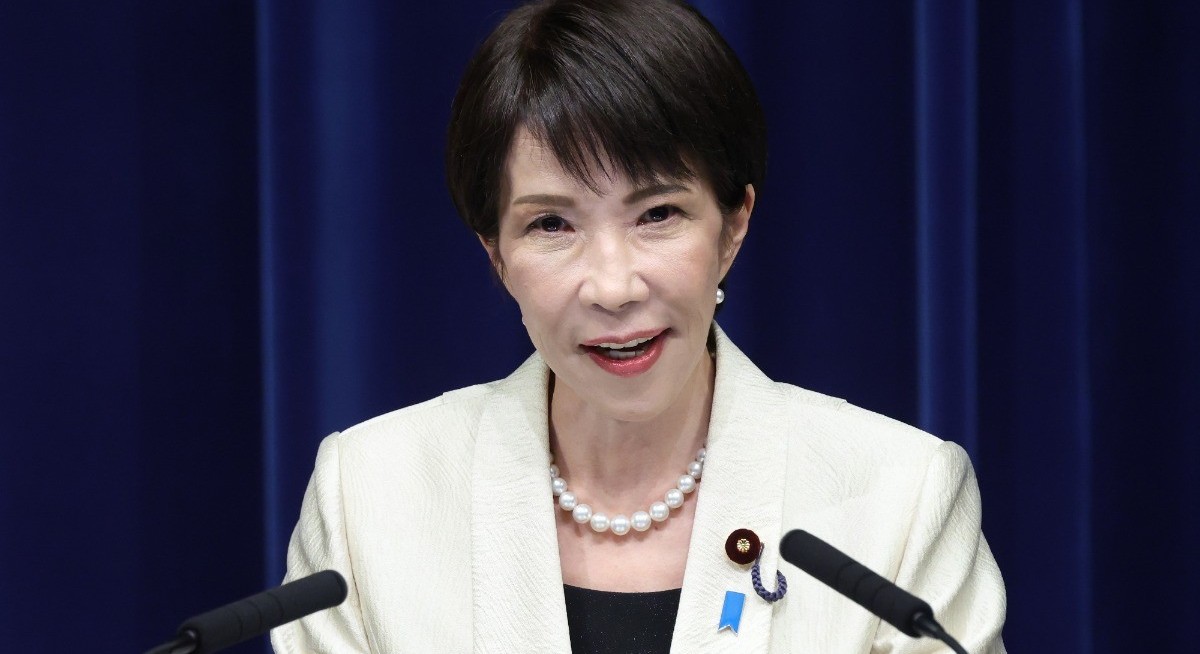


(Feb 20): Japanese Prime Minister Sanae Takaichi vowed to repeatedly “hit the button” on economic growth and adopt a bolder diplomatic stance without spooking markets during a speech setting out her policy vision.
Speaking in Parliament after her historic election landslide earlier this month, Takaichi said she would boost strategic investment, carry out active fiscal policy responsibly and pursue assertive diplomacy.
“We will not pursue reckless fiscal policies that would undermine market confidence,” she said in her first parliamentary address since her Liberal Democratic Party secured its supermajority in the lower house.
“We will ensure the pace of increase in our debt is within the range of Japan’s growth and steadily lower the ratio of public debt to gross domestic product. That’s how we will ensure our finances are sustainable, thereby securing market trust,” she added.
Still, she stressed that more domestic investment was crucial for expanding the economy. Her comments highlight the fine line she is walking as she seeks to avoid stoking fears in the market over her spending plans while also touting her vision of accelerating growth through bold spending and investment.
As part of her bid to coax more domestic investment, she pledged to create a new approach to government spending that would span multiple years and obviate the need to roll out extra budgets every year. The predictability of public spending patterns would hopefully encourage more private investment in capital along with research and development, she said.
See also: Mizuho Securities says it’s being probed by financial watchdog
Takaichi also said that Japan’s growth would be spurred by two key pillars — risk management industries that include energy and cybersecurity, and growth industries that span artificial intelligence, semiconductors, and shipbuilding.
She said she would give more details of her road map for investment next month. Before that her first order of business will be the budget for the coming fiscal year, set to be discussed in Parliament from next week.
Finance Minister Satsuki Katayama said on Friday she will endeavour to ensure it wins passage in Parliament in a timely fashion.
See also: Japanese investors stay wary Takaichi will spur another bond crash
“We are making every effort to get the budget passed by the end of the fiscal year,” Katayama told reporters after submitting the budget to Parliament.
Takaichi also called for a bold stance not only on the economy, but also in diplomacy and defence as well.
“We must take the initiative in fundamentally strengthening our defence capabilities,” she said.
Revisions are already underway for the three security documents underpinning Japan’s defence posture that pertain to security strategy, defence strategy and a programme for building defence capabilities.
Takaichi said the documents would be revised this year, adding that she will accelerate discussions of an overhaul in Japan’s strict military export rules as an effort to create a security environment that is desirable for Japan.
“This will contribute to the deterrence and response of our allies and friends, while also strengthening the industrial and technological base of our defence industry,” she said. The overhaul could see more defence outlays, however, raising again the question of how expensive plans would be funded.
In touching on these topics, Takaichi will likely burnish the image she has maintained of being a diplomatic hawk on China while also seeking to avoid needlessly inflaming tensions between the two nations.
To stay ahead of Singapore and the region’s corporate and economic trends, click here for Latest Section
In her four months in office, she has already shown a glimpse of how she might deal with China. Despite pressure from Beijing, the premier has refused to retract comments she made in November indicating that a Chinese invasion of Taiwan could constitute a legal justification for Japan to deploy troops.
Over the weekend, officials from both countries continued their verbal sparring. After Chinese Foreign Minister Wang Yi warned Takaichi against a return to militarism, authorities in Tokyo refuted the insinuation, with Chief Cabinet Secretary Minoru Kihara citing global recognition of Japan’s “consistent contribution to the peace and stability of the international community”.
Takaichi’s defiant stance has been received relatively well domestically, where her strong approach to diplomacy has been among factors keeping her support levels at historically high levels.
In the speech, she said she aimed to build a constructive and stable relationship with China.
“We will continue to communicate with China precisely because there are concerns and challenges in our relationship,” she said. “We will respond calmly and appropriately, in light of our own national interests.”
Uploaded by Tham Yek Lee




