


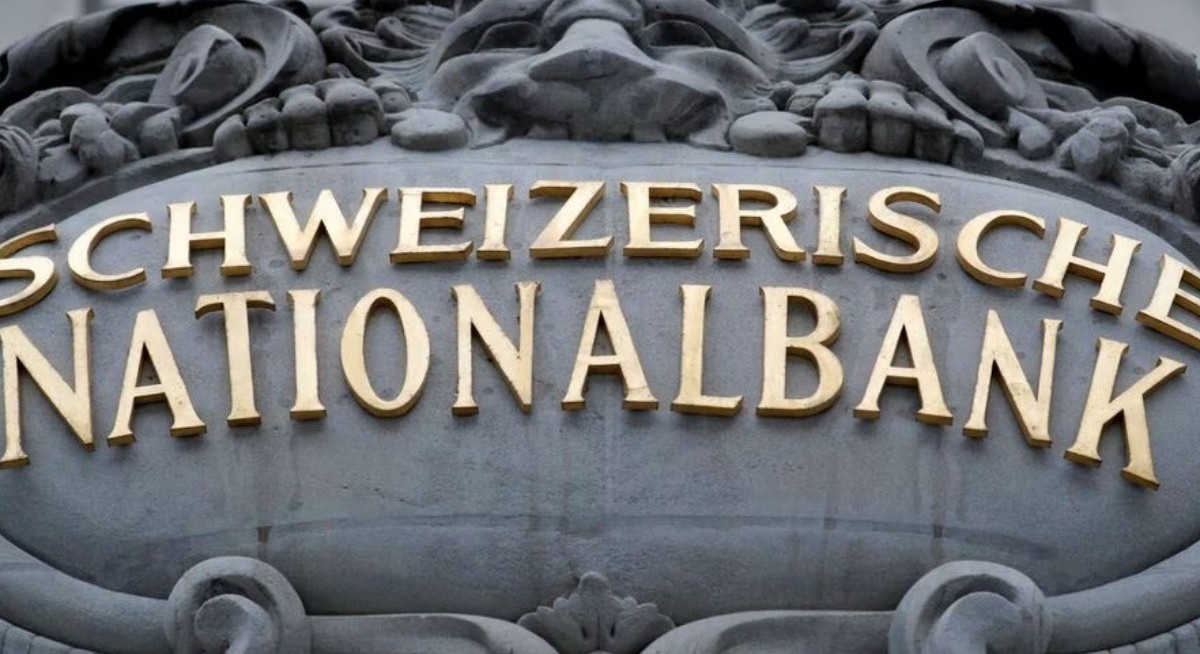


(March 4): Switzerland had only a minimum of inflation in February for a third month, highlighting the challenge for the central bank as it tries to avoid reintroducing negative interest rates.
Consumer prices rose 0.1% from a year earlier, matching the readings in December and January, the country’s statistics office said on Wednesday. That’s slightly better than the median forecast of zero in a Bloomberg survey of economists.
The reading is the last before the Swiss National Bank’s (SNB) quarterly policy decision on March 19. It keeps up pressure on officials, who are facing the risk that the strengthening of the franc will depress prices.
Their alarm about the haven currency prompted them to issue an unsolicited threat of market intervention on Monday, in the wake of the US and Israeli attacks on Iran.
The SNB has predicted that Swiss inflation will average just 0.3% in 2026. As recently as last week, President Martin Schlegel reiterated his warning that negative readings for consumer-price changes are possible in some months, though such outcomes wouldn’t be a cause for immediate worry.
Officials have kept borrowing costs unchanged at zero since June, and have insisted that there remains a substantially higher bar to cutting rates into negative territory compared with a conventional reduction. Most economists don’t expect the SNB to move for the rest of this year.
See also: Global inflation expected to pick up from Iran war, survey shows
The statistics office report showed that a measure of underlying inflation slowed to 0.4%, in a setback for policymakers. That was the lowest since November.
The franc will remain a key input for officials as its strength reduces import costs. Since the start of the year, the currency has rallied to repeated decade highs against the euro. It breached the mark of 0.91 francs per euro as recently as last week, surging further on Monday before the SNB issued its intervention remarks.
Inflation remains much stronger in the surrounding euro area. Based on the European Union’s harmonised measure, the Swiss inflation rate was 0.5% in February.
Uploaded by Liza Shireen Koshy




