


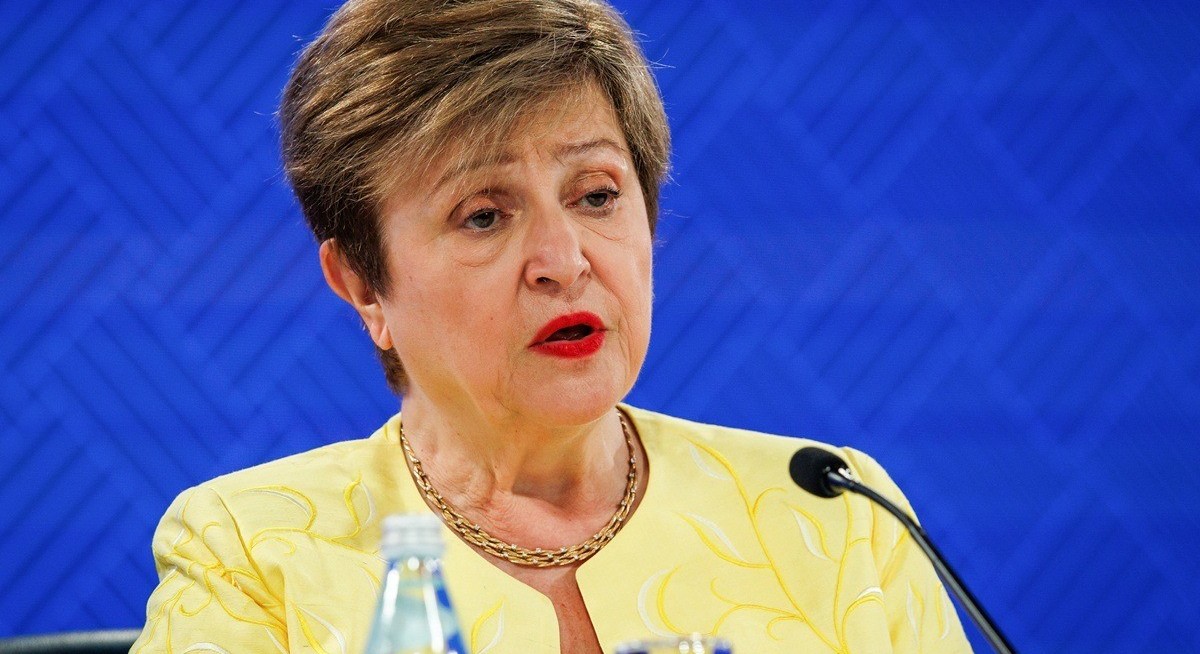


(June 8): International Monetary Fund (IMF) managing director Kristalina Georgieva said that after facing crisis upon crisis in recent years, the world needs to build foundations that can withstand shocks that have become more frequent.
“I am worried that we are not completely internalising yet that this is how the world is going to be,” Georgieva said on Bloomberg’s podcast Leaders with Francine Lacqua. “We are not going to get to a place where shocks are gone.”
Georgieva, who’s been at the helm of the Washington-based lender since 2019, has been through the Covid pandemic, the war in Ukraine, the tariffs turmoil and now the conflict in the Middle East. The IMF has a lending capacity of just under US$1 trillion dollar and her job — as she described it — is keeping the fund’s 191 members focused on working together for the greater good of the world economy.
“The best ammunition we have is objective analysis,” she said.
One major transformation underway is the spread of artificial intelligence and its impact on labour markets and local economies. Georgieva said organisations including hers failed to recognise inequalities arising from globalisation and she wants to make sure it won’t happen with AI.
“We collectively, including the fund, did not appreciate the backlash against globalisation that came from the fact that, yes, the world economy is doing better as a whole, but many communities were hollowed out because their jobs disappeared and there was not enough attention to them,” she said. “I’ll tell you what I’m very keen not to see repeated is the same with artificial intelligence.”
See also: Eurozone economy shrank at start of year due to Ireland contraction
The fund will update its outlook for the global economy in July, after downgrading its growth projection for the year in April amid the war in the Middle East. The lender also performs annual economic revisions of member countries, among other reports under its surveillance mandate.
Russia assessment
In 2024, two years after Russia invaded Ukraine, the IMF announced it would restart its annual review of Russia’s economy — the so-called Article IV — for the first time since the start of the war.
See also: UK’s biggest retailers cut 18,000 jobs since Labour’s tax rises
The plan was met with backlash from several European Union countries who challenged Georgieva over the decision. They said engaging Russia on economic issues would legitimise Kremlin efforts to evade sanctions.
“It was a very tricky moment because bombing was going in both directions. We decided to delay,” she said. “We need to collect data on trade, import, export. Russia was very reluctant to provide this data.”
She added that “at some point, we will have the regular assessment restarted,” without providing details on timing.
The fund has been supporting Kyiv with financing tied to key reforms since Russia’s invasion, with two programmes for US$15.6 billion in 2023 and US$8.1 billion this year.
Uploaded by Liza Shireen Koshy




