


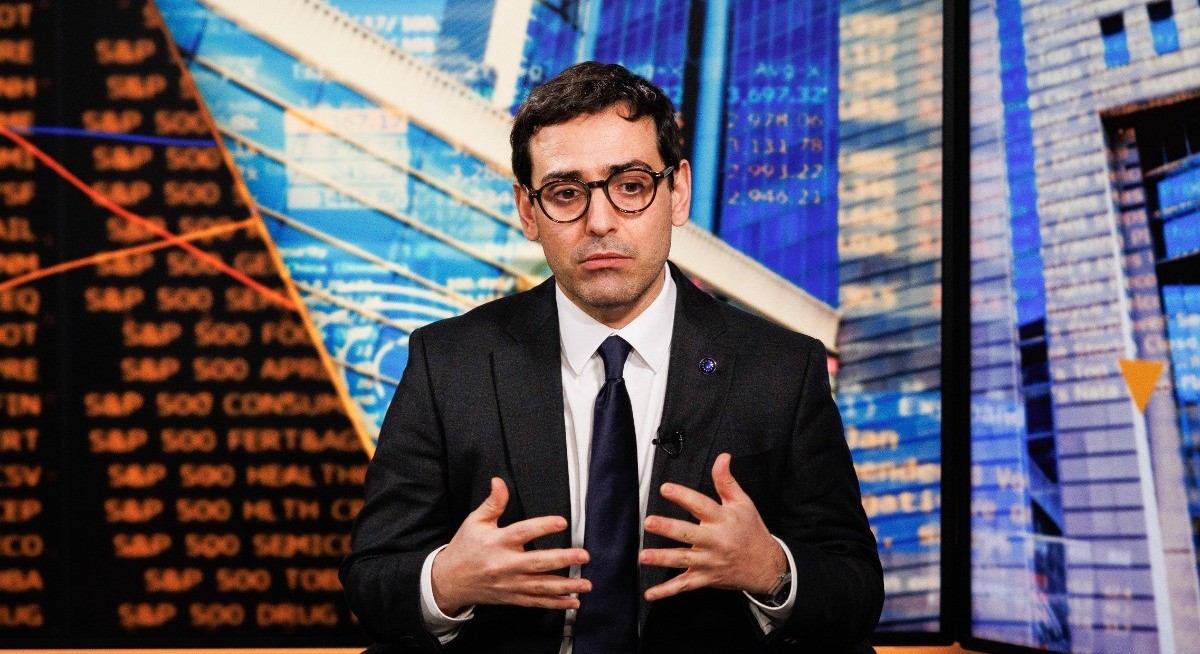


(May 22): The European Union’s (EU) industry chief said that businesses on the continent haven’t done enough to reduce major dependencies on China.
The European Commission’s Stephane Sejourne on Friday called on companies to diversify supply chains more quickly and not to rely on just a single country for inputs.
“Too few businesses in Europe integrate the geopolitical risks, the supply chain risks into their thinking,” Sejourne told reporters in Brussels after a meeting of EU trade ministers. “We are really calling businesses to modernise their business plans.”
The commission, which handles trade matters for the EU, has been pushing member states to diversify supply lines, particularly when it comes to critical materials. The European economy is particularly vulnerable to supplies from China, which has used its exports as leverage in political disputes.
The EU’s top economy chief Valdis Dombrovskis, told Bloomberg News this week that the commission will discuss ways to reduce risky dependencies from Beijing in the coming days.

See also: Canada retail sales up 0.6% in April as gas lifts receipts
“It’s clear that resilience and security has a certain price, but in current geopolitical context, it’s important to ensure that we have this resilience, we have diversification, because we see that a different kind of vulnerabilities and dependencies are being exploited,” Dombrovskis said.
In its first ever economic security doctrine, the commission told firms last December that they should systemically factor in a “security premium” to reduce vulnerabilities and enhance Europe’s overall security. But officials and industry representatives say that firms are ignoring the calls as they balance the need to remain competitive and meet short-term profit targets.
In fact, European carmakers lobbied the commission to temporarily suspend sanctions on Yangzhou Yangjie Electronic Technology Co, a major Chinese semiconductor supplier, Bloomberg reported earlier. Without an exemption, the companies warned that they’d run out of stock in a matter of weeks.
See also: German business outlook improves for first time since Middle East war
The commission will propose as soon as this week to lift those sanctions for months.
Yangjie Electronic was included in the EU’s 20th sanctions package, which listed entities based in China that the bloc says provided dual-use goods or weapons systems to Russia. The Chinese semiconductor firm was sanctioned in April after dozens of shipments of its technologies allegedly reached Russia and its products were found in drones and glide bombs used against Ukraine.
The auto industry suffered severe supply strains last year, when an internal corporate feud at Chinese-owned chipmaker Nexperia spilled into the public domain. The Dutch government took control of operations located in the Netherlands, invoking a Cold War-era law designed to protect national security.
Beijing hit back by blocking exports from Nexperia’s China unit, which led to chip shortages and hampered production at several automotive companies, even though Nexperia makes so-called legacy chips — low-tech semiconductors that control power supplies.
Since then, a demand surge for memory chips led by artificial intelligence applications has also crimped supplies and pushed prices sharply higher.
“We have seen very clearly what reliance on one source of anything can do to us,” Michal Baranowski, Poland’s undersecretary of state, said on Friday in Brussels. “We saw it very clearly with the war in Ukraine and reliance on Russian energy.”
Uploaded by Felyx Teoh




