


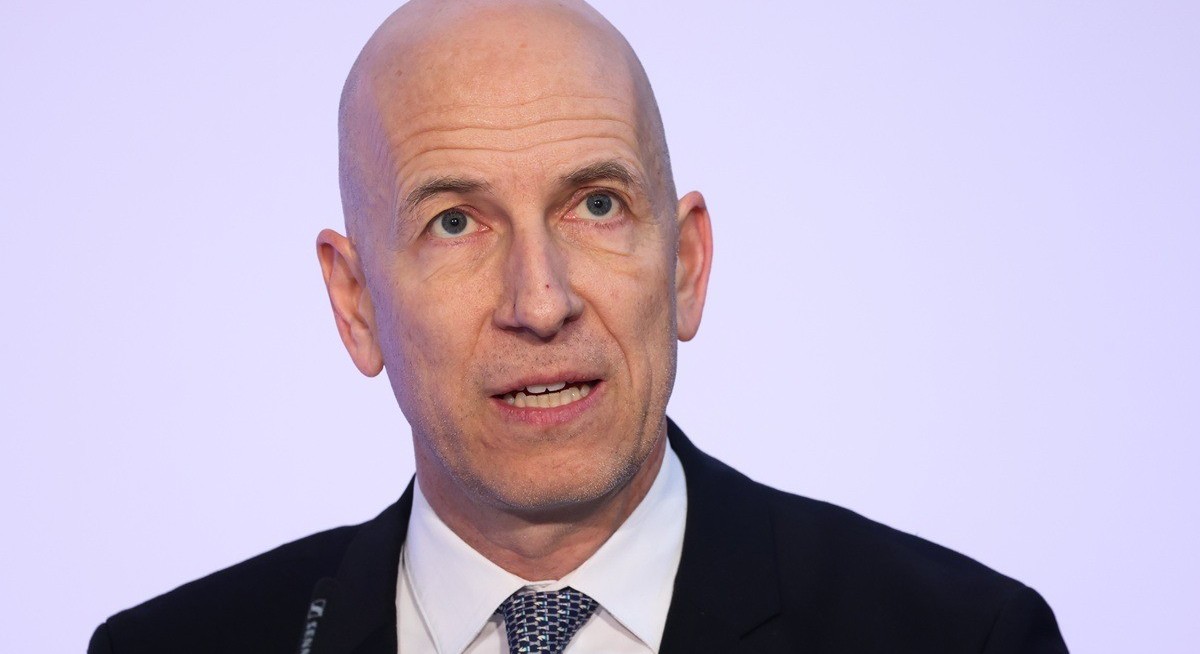


(May 24): The European Central Bank (ECB) is heading for an interest-rate increase next month unless a sustainable peace deal between the US and Iran can be found, according to Governing Council member Martin Kocher.
Inflation will probably turn out higher this year than previously expected, spooking consumers still grappling with the previous price shock, Kocher said on the sidelines of a May 22-23 meeting of European finance chiefs in Nicosia, Cyprus. At the same time, the economy is proving reasonably resilient.
“There are always scenarios with very low probabilities that lead to a different assessment of the situation, but at the moment, everything points to us deciding between holding and raising rates,” Kocher said. “And it’s clear to me that if the situation doesn’t improve, we will have to focus our discussions on acting.”
The ECB’s next policy meeting is less than three weeks away and even some of the more dovish officials are conceding that a rate hike may be the most likely outcome to ensure longer-term inflation expectations don’t become unhinged. They’re less willing to comment on what happens beyond that, even as economists and markets bet on at least one more step before year-end.
“It would not be appropriate to commit to anything just yet, and I don’t think that makes sense at the moment, either,” said Kocher, who also heads Austria’s central bank. “Uncertainty is high, so we shouldn’t rule out too many options in advance. We’ll see what happens. The hope, of course, is that positive developments will emerge.”
Several Arab nations have joined Pakistan in trying to push for a resolution to the Iran war, and US President Donald Trump said on Saturday that a peace deal with Iran has been “largely negotiated”. Yet details haven’t been announced.
See also: EU wants companies to speed up diversifying supply lines from China
In Europe, signs are increasing that uncertainty over the back and forth in talks is weighing on confidence and demand. Growth was weaker than expected in the first quarter and a gauge measuring activity in the private sector is indicating contraction.
Kocher suggested that he isn’t too worried just yet.
“It appears that the economy — though this is still very anecdotal and should be viewed with great caution — is relatively resilient,” he said. “But we really need to wait and see how the projections play out.”
See also: Canada retail sales up 0.6% in April as gas lifts receipts
Fresh forecasts will be available at the Governing Council’s June 10-11 meeting. They will help guide policymakers in assessing the growth outlook, as well as the damage to inflation, which had just returned to the ECB’s target before the war.
“Everything points to prices rising somewhat more sharply than was expected back in March,” said Kocher, pointing out that households are coping with the second such shock in a relatively short period of time. “It’s also clear that this increases the pressure to act on interest rates.”
Uploaded by Liza Shireen Koshy




