


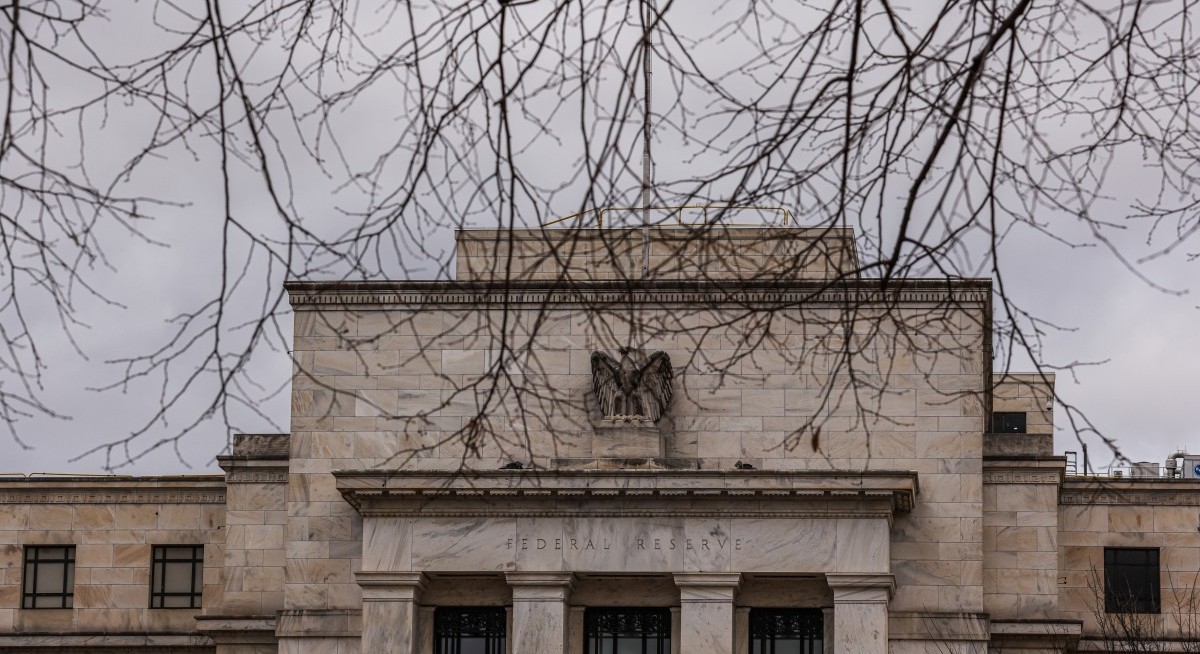


The Federal Open Market Committee (FOMC) voted 9-3 on Dec 10 (Wednesday) to lower the benchmark federal funds rate by a quarter point to a range of 3.5%–3.75%. It also subtly altered the wording of its statement suggesting greater uncertainty about when it might cut rates again.
Speaking to reporters after the meeting, Chair Jerome Powell suggested the Fed had now done enough to bolster the threat to employment while leaving rates high enough to continue weighing on price pressures.
“This further normalisation of our policy stance should help stabilise the labour market while allowing inflation to resume its downward trend toward 2% once the effects of tariffs have passed through,” he said.
When asked if it were a foregone conclusion that the Fed’s next move would be a cut, Powell demurred, but added that he did not see a rate hike as any official’s base case.
See also: S&P Dow Jones signals possible frontier-market cut for Indonesia
Investors reeled in their expectations for rate cuts next year, from three to two. The S&P 500 index of US stocks closed 0.7% higher on the day, just short of all-time highs, and the yield on 10-year US Treasury notes fell modestly to about 4.15%.
Wednesday’s dissents and the rate projections highlight divisions among policymakers that have emerged over whether weakness in the labour market or stubborn inflation represent the larger danger to the US economy.
In its October statement, the FOMC described what it would take into account “in considering additional adjustments” to its benchmark. In Wednesday’s statement the committee reverted to language used last December — just before a pause in rate cuts — to say “in considering the extent and timing of additional adjustments”.
See also: Forced-labour hearing begins, paving way for more Trump tariffs
The result marked the first time since 2019 that three officials voted against a policy decision, with dissents on both ends of the policy spectrum. The S&P 500 rose while Treasury yields and the dollar declined. No major changes were seen in market expectations for interest-rate cuts in 2026.
Two regional Fed presidents — Austan Goolsbee from Chicago and Jeff Schmid from Kansas City — voted against the decision, preferring to keep rates unchanged. Governor Stephen Miran, whom Trump appointed to the central bank in September, dissented again in favour of a larger, half-point reduction.
Fed officials also authorised fresh purchases of short-term Treasury securities to maintain an “ample” supply of bank reserves. The decision to lower rates comes after divisions on the committee spilled into public view. in recent weeks. Following the last rate cut in October, several officials warned of persistent inflation, indicating their hesitancy to support another reduction. Others remained focused on a weakening labour market, calling for at least one more cut.
Conflicting data helps explain why there has not been a unanimous vote on the FOMC since June. Unemployment moved to 4.4% in September, up from 4.1% in June. But prices — as measured by the Fed’s preferred gauge of inflation — rose 2.8% in the year through September, still meaningfully higher than the central bank’s 2% target.
The government shutdown has further complicated the policy outlook by delaying the release of key data.Despite the divisions on the committee and economic uncertainty, investors had expected a cut on Wednesday after New York Fed President John Williams, who is viewed as close to Powell, signalled his support for a December reduction in a Nov 21 speech.
In their new economic forecasts, officials’ median projections pointed to one cut in 2026, and one in 2027. The rate outlook remained deeply divided, however. Seven officials indicated they favoured holding rates steady for all of 2026, while eight signalled support for at least two.
Officials upgraded their median outlook for growth in 2026, to 2.3% from the 1.8% they projected in September. They also foresaw inflation declining to 2.4% next year, from the 2.6% they projected in September. — Bloomberg
To stay ahead of Singapore and the region’s corporate and economic trends, click here for Latest Section
Intel, AMD accused of allowing chips in Russian missiles
Microchip manufacturers Intel Corp, Advanced Micro Devices (AMD) and Texas Instruments were accused in a series of lawsuits of failing to keep their technology out of Russian-made weapons used to kill and wound civilians in Ukraine.
Those companies — along with a company owned by Warren Buffett’s Berkshire Hathaway — demonstrated “wilful ignorance” as third parties resold restricted chips to Russia to power drones and missiles in violation of US sanctions, according to one of the five suits, filed on Dec 10 in state court in Texas.
The lawsuits, filed on the behalf of dozens of Ukrainian civilians by Mikal Watts and prominent law firm Baker & Hostetler, cite five attacks between 2023 and 2025 that killed dozens of people. One attack allegedly involved Iranian-made drones with components associated with Intel and AMD, while the others involved Russian-made KH-101 cruise missiles and Iskander ballistic missiles.
“These companies know their chip technology is making its way into Russia,” Watts, a veteran US mass-tort lawyer, said at a news conference in Washington on Dec 10 morning.
Texas Instruments, AMD and Intel did not immediately respond to requests for comment. In the past, they have said they fully comply with sanctions requirements, ceased business in Russia when the war broke out and have stringent policies to monitor compliance.
In congressional testimony last year, Shannon Thompson, the assistant general counsel at Texas Instruments, said the company “strongly opposes the use of our chips in Russian military equipment” and any such shipments “are illicit and unauthorised”. — Bloomberg
SpaceX to pursue 2026 IPO raising far above US$30 billion
SpaceX is moving ahead with plans for an IPO that would seek to raise significantly more than US$30 billion ($38.91 billion), people familiar with the matter said, in a transaction that would make it the biggest listing of all time.
The Elon Musk-led company is targeting a valuation of about US$1.5 trillion for the entire company, which would leave SpaceX near the market value that Saudi Aramco established during its record 2019 listing. The oil major raised US$29 billion at the time.
SpaceX’s management and advisers are pursuing a listing as soon as mid-to-late 2026, said some of the people, who asked not to be identified because the matter is confidential. The timing of the IPO could change based on the market and other factors, and one of the people said it could slip into 2027.
A representative for SpaceX did not respond to a request for comment.
SpaceX’s IPO plans sent shares in other space companies higher on Dec 9. EchoStar Corp, which has agreed to sell spectrum licences to SpaceX, rose as much as 12% in New York, hitting a fresh intraday record. Space transportation company Rocket Lab Corp extended gains to as much as 4.3%.
SpaceX is exploring a possible IPO as soon as late next year, people familiar with the matter said last week. Musk and the company’s board of directors advanced plans for the listing and fundraising — including hiring for key roles and how it would spend the capital — in recent days as SpaceX firmed up its latest insider share sale, one of the people said.
SpaceX’s faster path to public markets is in part fuelled by the strength of its fast-growing Starlink satellite internet service, including the promise of a direct-to-mobile business, as well as the development of its Starship moon and Mars rocket.
The company is expected to produce about US$15 billion in revenue in 2025, increasing to between US$22 billion and US$24 billion in 2026, one of the people said, with the majority of sales coming from Starlink.
SpaceX expects to use some of the funds raised in an IPO to develop space-based data centres, including purchasing the chips required to run them, two of the people said, an idea Musk expressed interest in during a recent event with Baron Capital.
In the current secondary offering, SpaceX has set a per-share price of around US$420, putting its valuation above the US$800 billion previously reported, people familiar with the discussions said. The company is allowing employees to sell about US$2 billion worth of stock, and SpaceX will participate in buying back some shares, two of the people said.
The valuation strategy is designed to level-set the company’s fair market valuation in a precursor to the IPO, one of the people added.
“SpaceX has been cash-flow positive for many years and does periodic stock buybacks twice a year to provide liquidity for employees and investors,” Musk said in a Dec 6 post on his social media platform X.
“Valuation increments are a function of progress with Starship and Starlink and securing global direct-to-cell spectrum that greatly increases our addressable market,” he said.
SpaceX executives have repeatedly floated the idea of spinning off the Starlink business into a separate, publicly traded company — a concept President Gwynne Shotwell first suggested in 2020.
However, Musk cast doubt on the timing over the years, and CFO Bret Johnsen said in 2024 that a Starlink IPO would be something that would take place more likely “in the years to come.”
The biggest long-term investors in SpaceX are venture firms such as Peter Thiel’s Founders Fund, 137 Ventures led by Justin Fishner-Wolfson and Valor Equity Partners. Fidelity also is a significant investor, as is Alphabet’s Google.
If SpaceX sold 5% of the company at that valuation, it would have to sell US$40 billion of stock — making it the biggest IPO of all time, well above Saudi Aramco’s roughly US$29 billion listing in 2019. That company sold just 1.5% of ownership in that offering, a much smaller slice than the majority of publicly traded firms make available. — Bloomberg




