


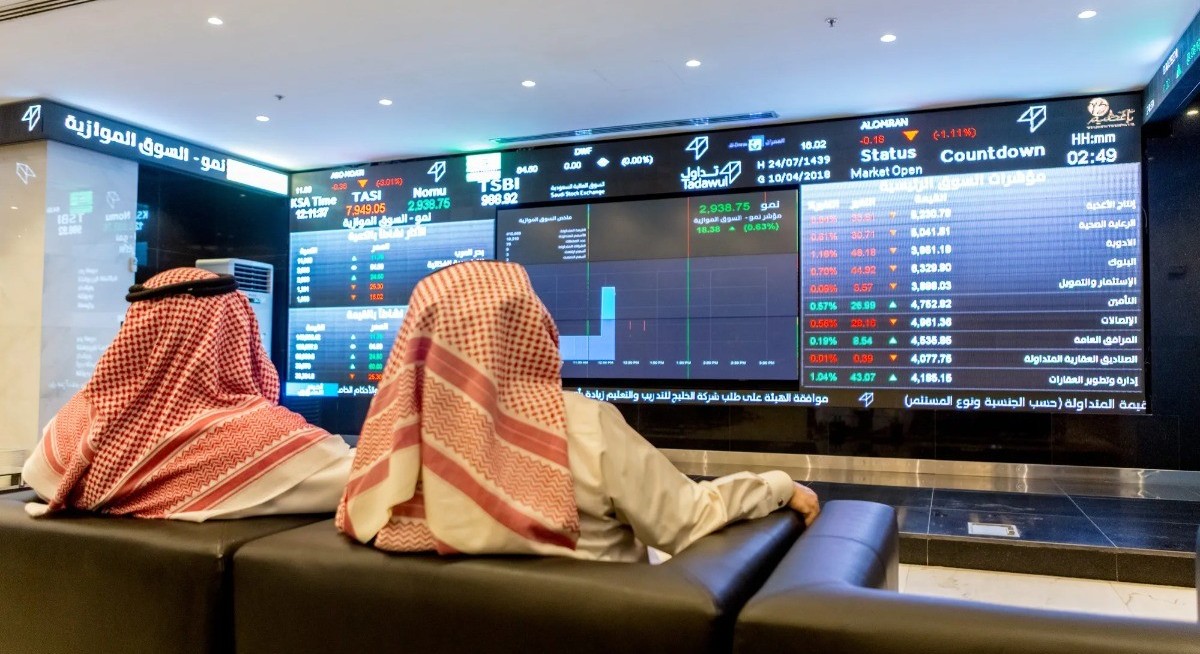


(March 1): Saudi Arabian and Egyptian stocks fell on Sunday, in one of the first signs of the US-Iran war hitting the region’s financial markets.
Saudi Arabia’s Tadawul All Share Index fell 2.2%, the biggest daily loss since April and reversing its gains for the year. The drop would have been bigger had it not been for oil-producing giant Aramco, which makes up about 16% of the exchange’s weighting, climbing 3.4%. The company’s move up was because crude prices are likely to jump when global markets open in Asia.
Egypt’s main index dropped 2.5%, extending its slump since mid-February, when the prospects of a US-Iran war rose, to more than 8%.
Omani and Bahraini equities also weakened. Kuwait’s stock exchange halted trading as a “precautionary measure”. Israel’s market wasn’t open on Sunday as it recently switched to Monday-Friday trading.
Egypt has been among the countries whose financial assets have been hardest hit by the soaring tensions in the past month. The Egyptian pound was among the world’s five-worst performing currencies last week, according to data compiled by Bloomberg. It weakened to around 48.8 per dollar on Sunday, its lowest level since mid-2025.
Since the start of the Israel-Hamas war in Gaza in late 2023, Egypt has suffered from shippers avoiding the Suez Canal, a big source of foreign revenue for the Arab country.
See also: Trump sees possible ‘friendly takeover of Cuba’
Another blow came from Israel’s decision to cut off natural gas supplies to Egypt after the Jewish state and the US struck Iran on Saturday. The Islamic Republic unleashed a wave of retaliatory attacks across the Gulf and on Israel.
Cairo, which previously received about one billion cubic feet of gas per day from Israel, is now seeking to bring forward some liquefied natural gas cargoes and buy more shipments for the summer, when demand peaks, Bloomberg reported.
It’s all a reminder of how Egypt — despite its distance from Iran and its status as a regional linchpin — is particularly vulnerable to turmoil across the broader Middle East. Those factors helped Cairo secure a US$57 billion global bailout in early 2024 as the Gaza war piled on pressures.
See also: New Iran talks set for next week as US builds up forces
What seemed like a slow revival of Suez transits after an October ceasefire in Gaza is now at risk. France’s CMA CGM SA, the world’s third-largest container line, on Sunday said it had suspended passage through the canal.
Transits first tumbled after Iranian-backed Yemeni rebels attacked international vessels in the southern Red Sea — which connects to the Mediterranean via the Suez — in solidarity with Hamas in Gaza.
Uploaded by Liza Shireen Koshy




