


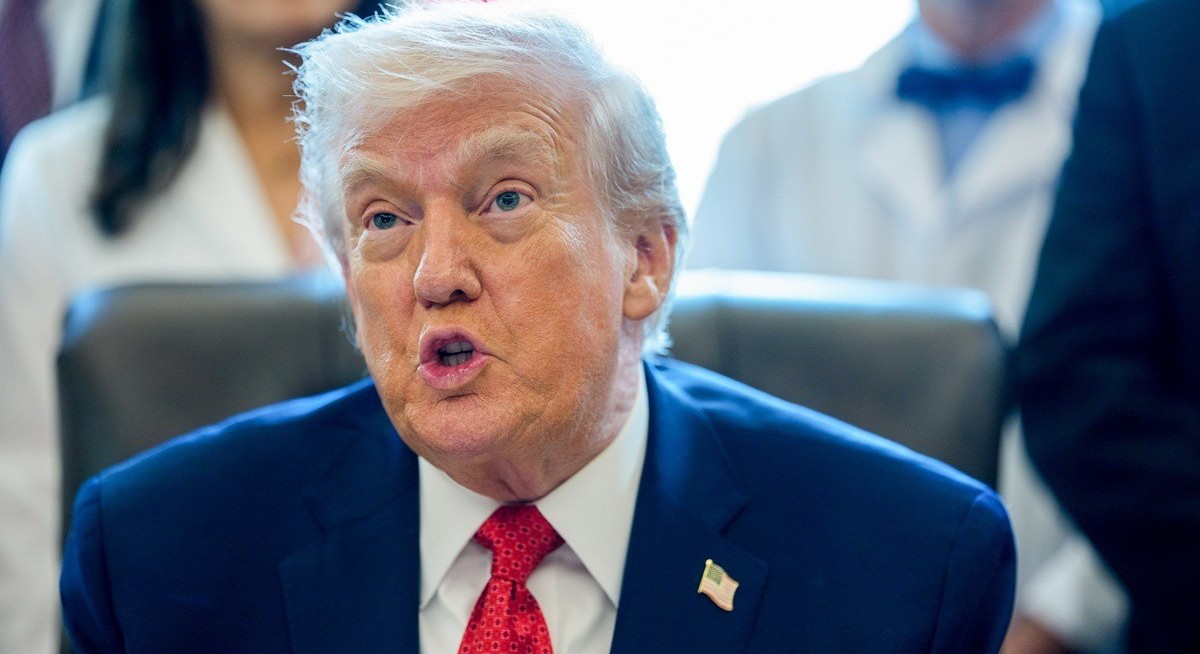


The comments follow reports that the White House is demanding Venezuela reduce its relationships with China, Russia, Iran and Cuba after capturing leader Nicolás Maduro over the weekend
The US move, reported by ABC News and the New York Times, represents a challenge to China’s footprint in Latin America even as the world’s two largest economies look to steady ties. It comes as US President Donald Trump and his Chinese counterpart, Xi Jinping, prepare to meet again in April after reaching a trade truce late last year.

ABC News reported that Venezuela was told to kick out the four countries and sever economic ties, citing three unnamed people familiar. A separate report by the New York Times, citing unspecified US officials, said Washington is pressuring interim leader Delcy Rodríguez to force out spies and military personnel from those countries, though some diplomats would be allowed to stay.
See also: Trump privately weighed quitting trade pact he signed with Canada, Mexico — Bloomberg
The White House did not immediately respond for requests for comment on the reports.
It’s not immediately clear to what extent the US would be seeking to remove China, Russia and others from Venezuela’s economy. Any move to cut ties would represent a full political realignment for Venezuela, which has heavily relied on the quartet for economic and security stability in recent years under the governments of both Maduro and his predecessor, Hugo Chavez.
While senior US officials have said the US doesn’t seek to occupy Venezuela following Maduro’s capture, Trump has repeatedly made it clear that he intends to play a leading role in steering its future — and that much of that future would be financed by oil revenues.
See also: US tells American ships to keep away from Ïran amid tensions
Trump on Tuesday evening said Venezuela would start by sending the US as much as 50 million barrels of oil — worth upwards of US$2.8 billion ($3.6 billion) at current benchmark prices for West Texas Intermediate — declaring it would be sold at market price. The administration plans to meet with US oil companies within the next week to discuss investing in the South American nation.
The US’ growing assertiveness in Latin America could force China to recalibrate its approach to the region, though it’s likely to stop short of direct confrontation with the US. Beijing has deepened its trade and economic ties in Latin America for more than a decade as it seeks to expand its global influence as well as secure critical resources.

Venezuela, in particular, maintains close ties with Beijing, which in 2023 upgraded relations to a high-level “all-weather strategic partnership.” China is Venezuela’s largest buyer of crude and biggest creditor, consistently backing Maduro’s government and offering it support against US sanctions and isolation.
“China will have to react; it cannot risk being seen as weak,” said Dylan Loh, an associate professor at Nanyang Technological University. Loh noted that the tension may affect future trade negotiations even if it’s unlikely to disrupt the truce immediately.
“The US will see this as a bargaining chip. It could seek to also strike a deal with China to continue to sell oil and allow Venezuela to repay their loans,” he said.
The maneuver is viewed by some as more than just a struggle over energy supplies. Josef Gregory Mahoney, a professor of international relations at Shanghai’s East China Normal University, described the US strategy as a “nested game” designed to establish regional dominance while neutralising foreign influence in the Western Hemisphere.
To stay ahead of Singapore and the region’s corporate and economic trends, click here for Latest Section
“One might imagine that part of objective is to gain control over not just oil but strategic mineral wealth,” Mahoney said. He warned that forcing a Chinese exit would set a “bad precedent” for investments across Latin America and could trigger a cycle of retaliation.
“If it does come to the point where China is forced out, then we might see some sort of reciprocation — a seizure of American assets or some sort of litigation to recover value,” Mahoney added.
Uploaded by Magessan Varatharaja




