


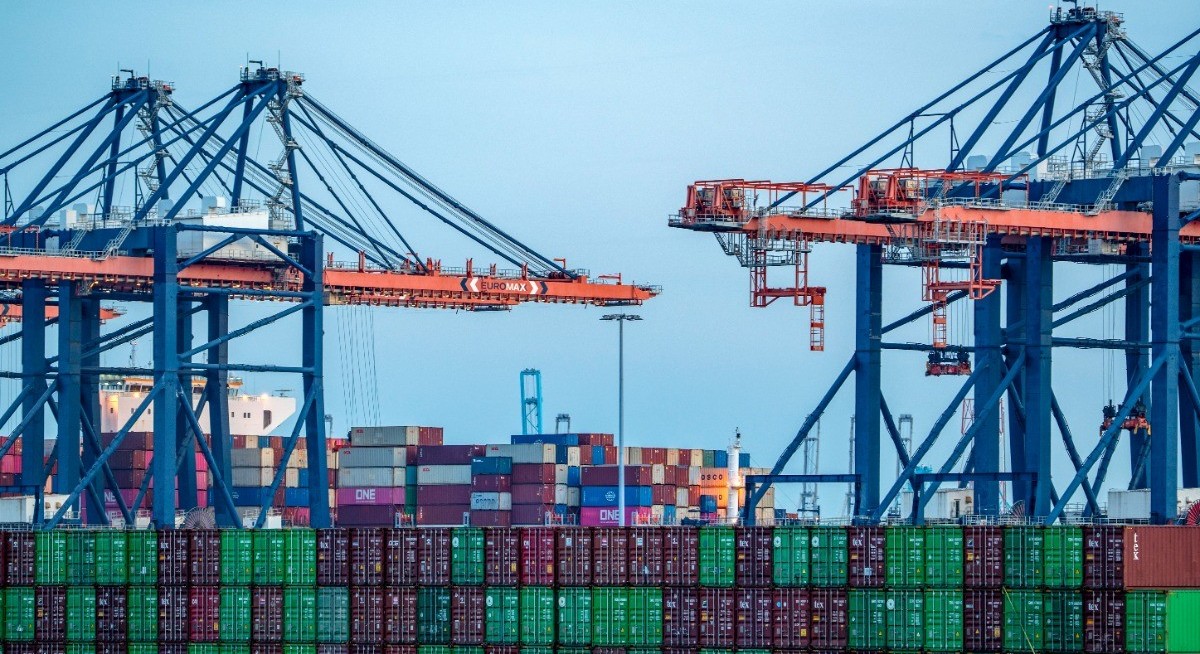


(March 4): The European Union’s (EU) trade deal with the US will stay frozen after the European Parliament decided to keep its ratification paused in the wake of a court ruling invalidating President Donald Trump’s global tariffs.
Top EU lawmakers on the parliament’s trade committee made the choice on Wednesday, saying they wanted more information from Washington about how it will preserve a 15% ceiling on most EU products — a level both sides agreed to in last summer’s trade pact. Parliament initially halted ratification several days after the ruling.
“We will communicate towards the US we want to have clarity that they are sticking to the deal,” Bernd Lange, who chairs parliament’s trade committee and is leading negotiations on the issue, told Bloomberg News.
Lange added that EU lawmakers will also seek more specifics on the trade deal’s status next Tuesday from the European Commission, which handles trade for the bloc. They will then reconvene on March 17 to decide whether to move forward with ratification, which could happen later that week.

The ongoing delay is the latest sign of turbulence in the transatlantic trade relationship, which was also jolted on Tuesday night when Trump threatened to cut off all trade with Spain over its refusal to let the US use local bases to attack Iran. The provocation has injected even more uncertainty into the US-EU deal.
See also: Spanish leader says he won’t succumb to Trump’s trade threat
Trump’s trade arrangements were thrown into disarray last month after the Supreme Court struck down the legal basis for his so-called reciprocal tariffs, which he had used to set rates on countries around the world. Since the ruling, the Trump administration has installed temporary 10% tariffs on all imports, while it conducts investigations under US Trade Representative Jamieson Greer’s Section 301 authority to create more permanent levies.
Greer has said the goal is to ultimately recreate rates the US agreed to with the EU and others under previous deals, but many questions remain over how the administration will do that.
While EU lawmakers have held back final approval of the US deal, the commission, the EU’s executive arm, and prominent EU leaders like German Chancellor Friedrich Merz have urged parliament to swiftly ratify the pact, arguing it will help avoid further trade tensions with a US president who frequently berates the EU.
See also: Europe’s economy can ride out Iran war — if it’s over in a month
“We want this agreement to last, and I have gained the impression that the president and his staff see it that way,” Merz told reporters after meeting with Trump in DC on Tuesday.
But Trump also dropped a surprise during his public appearance with Merz, threatening to bar all Spanish products. The remarks reflected a deepening rift between Trump and Spain, which has emerged as one of the president’s most pointed critics.
Spanish Prime Minister Pedro Sánchez refused to back down on Wednesday morning, reiterating his argument that the US and Israeli assault on Iran is illegal.
“We are not going to be complicit in something that is harmful to the world and contrary to our values and interests simply out of fear of someone’s retaliation,” Sánchez said in a speech.
If Trump actually tries to follow through on his embargo threat, it would raise significant questions given the EU operates as a unified trading bloc.
“Any threat against a member state is by definition a threat against the EU,” EU industry chief Stéphane Séjourné told reporters on Wednesday. “If you threaten one particular country, we’ve seen that about Greenland, I think we saw that there was a lot of unity.”
The EU-US trade deal was initially struck last summer, with the US agreeing to a 15% tariff rate on most of EU exports and the EU vowing to remove tariffs on most American industrial goods. The US also said it would keep a 50% tariff on European steel and aluminum imports.
To stay ahead of Singapore and the region’s corporate and economic trends, click here for Latest Section
The bloc struck the lopsided deal in the hopes of avoiding a full-blown trade war with Washington and to retain US security backing, particularly on Ukraine.
The agreement has never been formally ratified, however, and was only partially implemented. The US has also expanded its 50% metals tariff to hundreds of additional products, angering EU lawmakers and European officials.
The European Parliament previously paused the deal’s ratification over Trump’s threats to take Greenland, a territory of EU member Denmark. EU lawmakers are also seeking changes to the pact, including a sunset clause.
Uploaded by Felyx Teoh




