


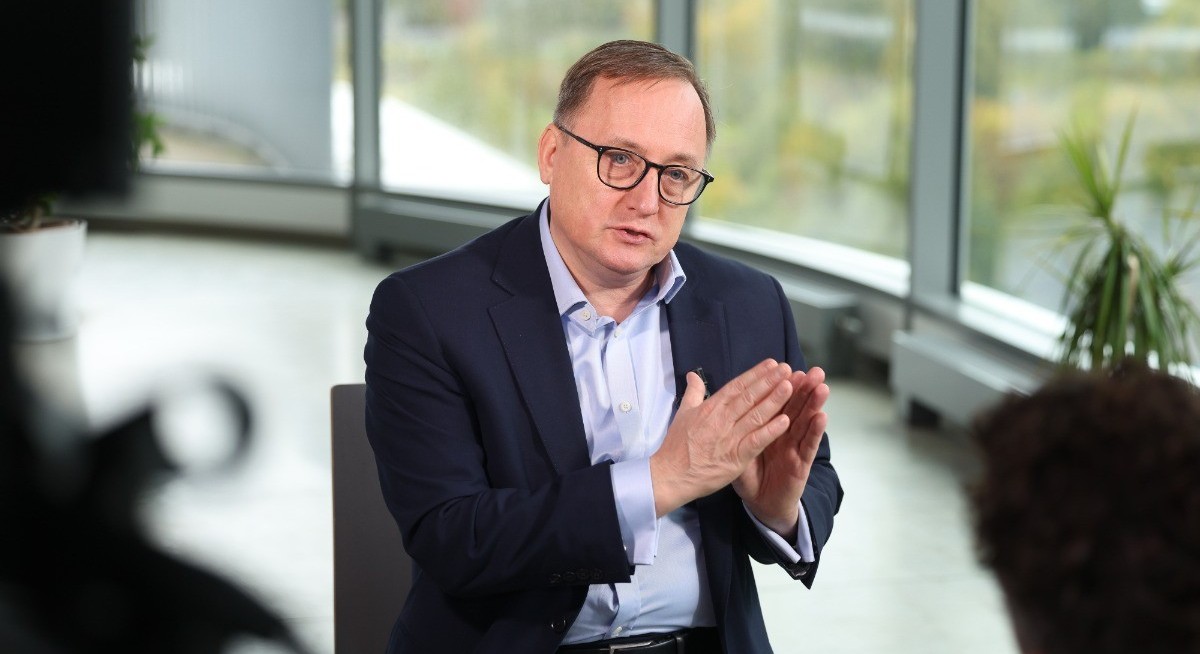


(Feb 13): The European Central Bank is still waiting to see how severely the economy will be affected by the ascent of the euro that started in 2025, according to Governing Council member Martins Kazaks.
With estimates suggesting that it takes approximately 12 months for currency shifts to trickle through, “we will likely see the full impact of the euro’s strengthening last year towards late spring,” Kazaks said in an interview in Riga.
The single currency gained 14% in the first half of 2025, as President Donald Trump’s back and forth on trade tariffs undermined confidence in the dollar and raised global uncertainty. The euro continued its rally earlier this year — breaking through US$1.20 for the first time since 2021 — in response to US threats against Greenland.
While most of the appreciation is reflected in the ECB’s latest projections that show growth accelerating over time and inflation settling at the 2% target, policymakers including President Christine Lagarde have said they’re watchful and stand ready to respond.
Kazaks argued that the current situation doesn’t require any action — and that officials are in “monitoring mode.”
“If you will, this is a kind of manifestation of attention,” he said. “It is not a verbal intervention. We are not that far.”
See also: Casino creditors offer to take over ailing supermarket chain
But he did express concern that prevailing weakness in the economy makes it harder for businesses and consumers to cope.
“My worry is very much that the euro has strengthened over the past year not because the euro-zone economy has gotten stronger but because uncertainty has increased and the US dollar has weakened,” he said.
Europe’s problem is one of low competitiveness compared with America and China, which — if addressed — would also raise the economy’s tolerance for a stronger currency.
See also: Distressed Paris office towers set to be sold at discounted price by lenders
After years of prodding from Lagarde and ECB presidents before her, heads of state are finally inching towards action. They discussed a roadmap towards strengthening the bloc’s fundamentals at a day-long retreat on Thursday.
Kazaks, who heads Latvia’s central bank, also said the ECB’s monetary policy settings are currently appropriate — and that risks to its inflation outlook “might still be balanced”.
“We are also in a good position to move in any direction if necessary,” he added. “But now is not the time.”
The ECB left its deposit rate unchanged at 2% last week and neither economists nor traders expect a move anytime soon.
Uploaded by Evelyn Chan




