


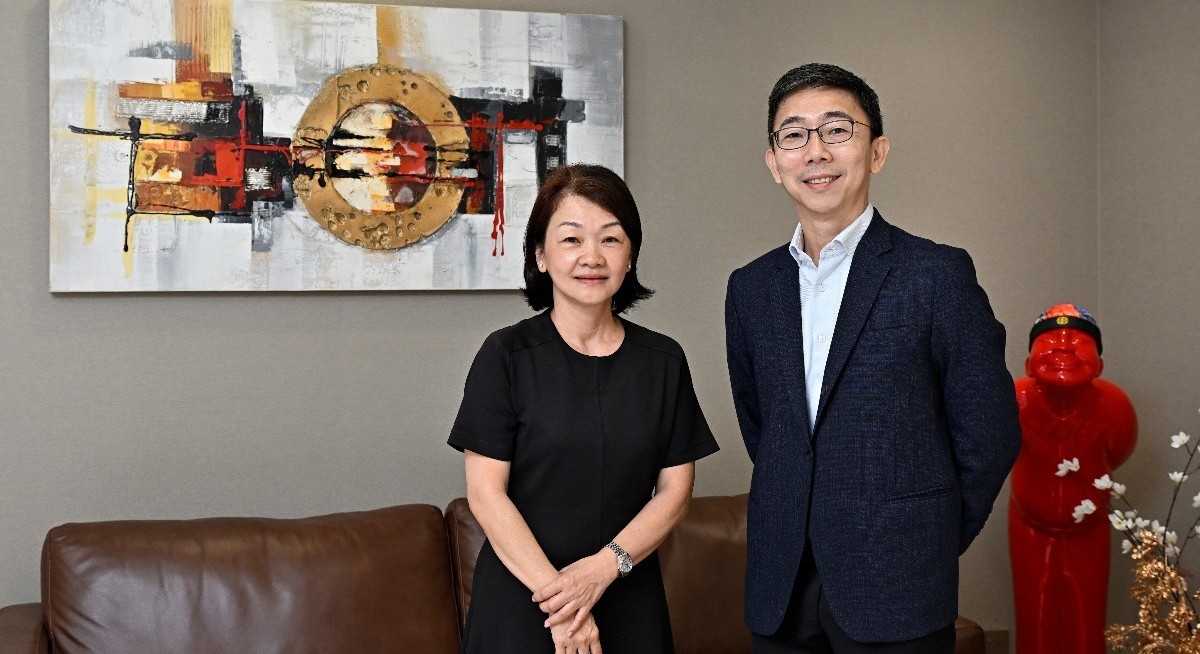


“It is important for issuers to recognise that when there are developments that constitute material information under the listing rules, they would have to disclose it on a timely basis. If there is any delay in disclosing, they would be held responsible,” says former market regulator June Sim, in an interview with The Edge Singapore.
Based on her observations and experience, the breaches, particularly governance-related ones, are mainly linked to internal controls. “Very often it is a failure to escalate material information to the board and hence there must be established protocols to ensure management team or executive officers can escalate it to the board and decide if that is material information,” says Sim, former managing director of Singapore Exchange Regulation (SGX RegCo) and one of the governing council member of Singapore Institute of Directors (SID).
Drawing on some two decades of experience at SGX RegCo, Sim says it is common to see issuers faulted for internal controls. “Of course, there are some cases where, despite internal controls being in place, the CEO or management team may intentionally conceal or hold back material information; then that’s another issue,” Sim adds.
One example she cited was a listed issuer whose sole business was a mining concession that had expired. “But that information is not released to the market; it is material information, especially if it is the only concession within the company,” Sim states.
See also: GuocoLand secures $634.7 mil green financing from OCBC, ICBC to develop Lentor Central site
She hopes listed companies recognise the need for transparency and that, even if there is negative information, they will have to announce it to the market, as it is natural for the market to react not just to good news but also to bad news. “That is the function of the capital market. If listed issuers do not make timely disclosure, it would affect investors’ ability to make informed decisions and hence result in the loss of trust and confidence,” Sim says.
While efforts have been made to boost the market, some small- and mid-cap companies remain cautious about providing more disclosures. “When I heard this feedback, I was quite surprised and thought that it was actually a myth or perception, as listed issuers have the right to provide more disclosures. In fact, if you look at the rules, there are no restrictions in publishing guidance, forward-looking statements or sharing information with analysts and media, provided it is not to a selective group,” Sim says.
In a recent column published in January by SGX RegCo’s Tan Boon Gin and Michael Tang, listed companies are encouraged to provide more disclosures, such as forward guidance and projections, to avoid running afoul of regulators.
See also: A rojak isn’t great just because you’ve thrown the pieces together
One misconception is that forward guidance must be updated immediately in response to a change in its circumstances. However, SGX RegCo clarified that listed issuers are not required to amend forward guidance immediately, as forward guidance pertains to an uncertain future and does not require an immediate update for every change.
Having said that, Sim observes that certain listed companies, such as Singapore Airlines (SGX:C6L ) , Sats (SGX:S58) and SGX Group (SGX:S68) , provide details on changes in their margins and updates on their various business segments. Not every company can be expected to go into that kind of detail, but if they do, overall transparency and investor confidence can be built.
Meanwhile, Sim believes that small- and mid-cap companies should borrow a lesson from large-cap companies and some REITs, as they are more transparent in their guidance on revenue, dividend policy, capital management and ebitda margin, among others. “Every company has its own metrics, but financial metrics are actually quite standard, so that is something that the small and mid-cap companies can work on,” Sim says.
Adding more flavours to the outlook commentary section
In a sense, companies, as part of their regular reporting, have a ready-made platform to win investors’ confidence. The outlook commentary section of their financial statement is where listed companies describe what’s visible to them and its impact on their business in the coming year.
Some companies provide just a few lines of comment with scant details. All too often, companies have been overusing the term “cautiously optimistic” — the almost catch-all description that can be used to describe if things look up, or hedge the other way if things did not pan out as nicely as expected.
“If you are confident in your outlook, you can just go ahead and state that you are confident in executing your business plans, etc,” says Ong Hwee Li, CEO of SAC Capital, a leading corporate finance firm. “I feel that the outlook commentary is very important and not just about sharing industry facts and figures alone. Listed issuers should keep the market informed on key milestones ahead and operational indicators,” says Ong at the same interview.
To stay ahead of Singapore and the region’s corporate and economic trends, click here for Latest Section
Sim agrees that the outlook commentary section of the financial statements is a good place for listcos to share their own forecasts and outlooks, rather than just citing industry facts and figures. Construction firms, for example, are famous for relying solely on official industry projections by the Building and Construction Authority.
Potentially mandate shareholder-benefitting disclosure
Sim points out that the regulatory requirement is already very clear regarding forward-looking disclosures. “At the end of the day, as long as you comply with the regulatory requirements and there is sufficient basis for the accuracy of your forward-looking disclosure, that is good enough in the eyes of the regulators.”
Stressing that she is speaking in her personal capacity, Sim says that both MAS and SGXRegco, in recent times, are considering mandating disclosures on matters relating to enhancing shareholder value, including dividend policy, investor relations policy, and the links between management remuneration and value creation for shareholders. “This is something that is lacking in our market now, and it is good to know that the regulators are looking at it,” says Sim.
Meanwhile, Ong feels that, with market-boosting measures in full swing, listed issuers cannot expect fund managers to agree not to provide guidance, as fund managers will require more details for their due diligence. “Especially the small and mid-cap companies, if they are going to continue to use the term “cautiously optimistic”, then I think fund managers will not be investing in them and they could stand to lose out on this opportunity. Their trading liquidity will then suffer and with no price discovery, valuation will suffer,” Ong explains.
The buoyant market of today is a good platform for listcos to showcase themselves. “If there is not much growth on the revenue front, they can also talk about other aspects of the business, perhaps, for example, the assets that they have.”
Especially for Catalist companies, which SAC Capital sponsors, these professionals’ advice on improving disclosures as they pursue their corporate actions can be beneficial, says Sim.
Engaging investors
Over the past year or so, the market has enjoyed a tailwind from market-boosting measures, sending the STI to a record high and spurring greater interest in smaller caps, many of which have taken advantage of the momentum to raise fresh capital.
SAC Capital, for one, has helped many of these smaller companies undertake placements. However, the field remains uneven. While many small- and mid-cap stocks have seen handsome gains in their share prices, others have languished at undervalued levels, as their stories remain untold.
Companies need to be adaptable and present themselves to different audiences. Some equity analysts like to hear a strong order-book story; others watch for cost and operational efficiencies. Others zero in on improving margins.
To better relate to different stakeholders, Ong believes that more companies need to make investor relations an integral part of their business operations, creating a “window” with investors so they can better pitch themselves to the market.
Beyond just market professionals, companies need to consider how to attract more interest from different kinds of investors, including the younger generation who have been investing in the US and whose Singapore portfolios can certainly be increased. “For them to trade your shares, they need to know what is going on and therefore listed issuers need to engage with investors; in fact, as a matter of respect, they should update all shareholders on any material matters. Singapore-listed issuers are generally too quiet, which of course is also part of our upbringing as well,” Ong laments.
Ong believes that the job of an IR is not just about doing the necessary work, but also about actively engaging with different market participants and, hopefully, bringing back trading liquidity.
Similarly, Sim believes that if listed issuers are not keen to share their growth story, they will have difficulty attracting investors’ attention. “You must be very passionate about your business and usually, business owners are the best people to sell the story,” she says.




