


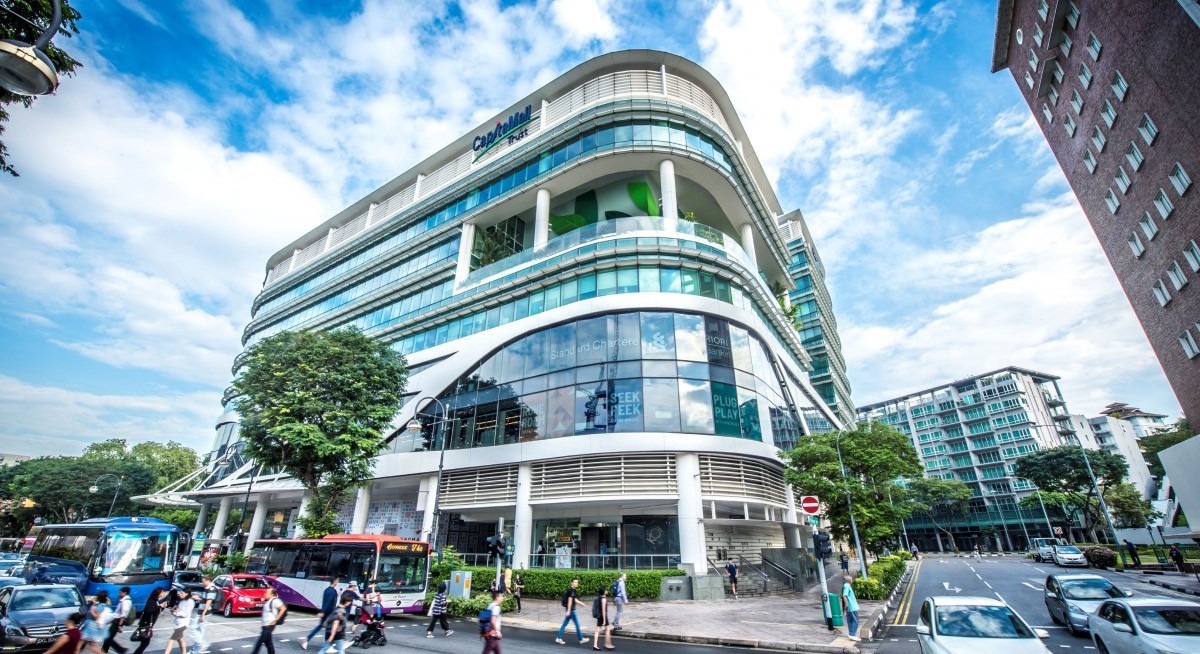


Both integrated developments are owned by CICT.
The BCA Green Mark Platinum (Super Low Energy) rating recognises top-performing buildings that achieve at least 60% energy savings while meeting high standards for renewable energy integration and intelligent energy management.
For example, a rooftop solar photovoltaic system will be installed at The Atrium@Orchard to achieve minimum annual energy generation of 385,000 kilowatt-hour (kWh) per year, equivalent to powering the annual electricity consumption of approximately 85 four-room HDB flats, according to CICT.
Another example is the implementation of the Cooling-as-a-Service (CaaS) model at both properties. The REIT manager says this enables significant energy savings and reduces carbon emissions while ensuring operational reliability.
See also: GuocoLand secures $634.7 mil green financing from OCBC, ICBC to develop Lentor Central site
Other sustainability features at both properties include the installation of variable speed drives on chilled water and condenser pumps to optimise energy efficiency, and motion and photoelectric sensors to manage lighting and maximise natural daylight.
Tan Choon Siang, CEO of the manager, says the higher green building ratings underscore his team’s dedication to sustainable asset management and operational excellence “amid increasingly stringent assessment standards by the BCA”. “CICT is committed to building a sustainable built environment by reducing carbon emissions and improving energy efficiency of the properties we manage.”
As at June 30, 100% of CICT’s portfolio by gross floor area has received green ratings.
See also: A rojak isn’t great just because you’ve thrown the pieces together
About the properties
The Atrium@Orchard comprises a retail podium and two office towers — at seven and 10 storeys high — that are connected to Plaza Singapura, a retail mall that is also in CICT’s portfolio. Its key office tenants are Temasek Holdings, Barclays and HSBC.
Meanwhile, Raffles City Singapore is CICT’s flagship integrated development. It comprises a 42-storey office tower, a five-storey shopping mall, a convention centre and two hotels.

Last month, CICT achieved a five-star rating in the 2025 Global Real Estate Sustainability Benchmark (GRESB) Real Estate Assessment, ranking among the top 20% of global participants for sustainability performance and disclosure. That said, CICT slipped from its position as sector leader in the sustainability benchmark for real estate.
GRESB performance is among a handful of sustainability key performance indicators that lenders use to determine interest rate savings on sustainability-linked loans (SLLs). CICT sponsor CapitaLand Investment said in an Oct 13 media release that its listed funds — CICT included — will still receive interest rate savings from their respective SLLs linked to GRESB performance.
In a Nov 3 media release, CICT also claimed the mantle of Asia’s largest listed REIT. Buoyed by the strength of the Singapore dollar, CICT’s market capitalisation of some $17.6 billion overtook that of Hong Kong’s Link REIT at the start of October.
To stay ahead of Singapore and the region’s corporate and economic trends, click here for Latest Section
CICT had issued some 284.4 million new units at $2.11 apiece in a private placement in August, where the gross proceeds of $600 million were mainly used to finance the proposed acquisition of the remaining 55% stake in the office and retail component of CapitaSpring.
As at 10.23am, units in CICT are trading 2 cents lower, or 0.84% down, at $2.35. CICT units have gained some 21% year to date.
CICT’s market cap is now around $17.96 billion, above Link REIT’s HK$105.05 billion ($17.59 billion).
Photo: CICT




