


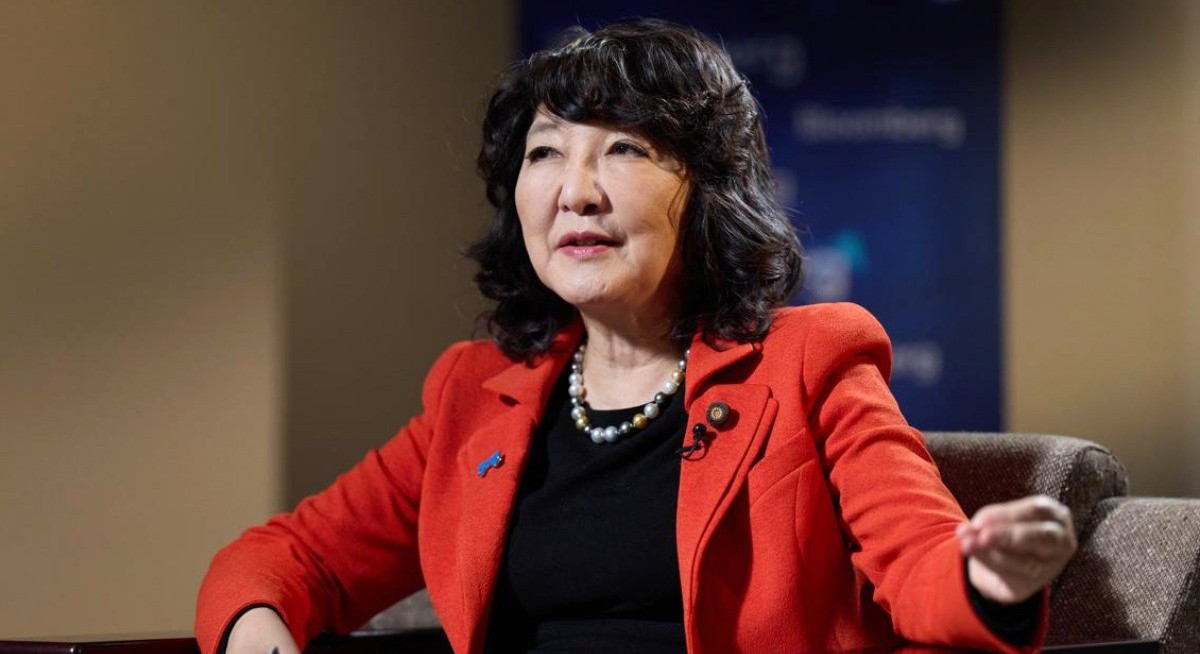


While hinting at the possibility of direct currency intervention, Katayama also touched on the likelihood of Japan’s financial predicament worsening over the short term as Prime Minister Sanae Takaichi’s government pushes for stronger economic growth, another key focus for investors.
Katayama’s remarks come amid renewed speculation that her ministry might intervene in the currency market after the yen weakened following a heavily telegraphed move by the Bank of Japan (BOJ) to hike borrowing costs to the highest level in 30 years. BOJ governor Kazuo Ueda’s remarks at a post-decision briefing helped trigger a slide in the currency as he left some market players disappointed that he didn’t give a stronger message on raising rates again.

The finance minister’s reference to the joint statement with the US suggests she already has a tacit green light from Washington to take action if needed without further negotiation.
See also: Yen carry trade a ‘ticking time bomb’, warns BCA Research
Her predecessor Katsunobu Kato and US Treasury Secretary Scott Bessent signed the joint accord on currencies in September. The statement outlines the countries’ commitment to allowing markets to determine exchange rates, while confirming that there remains scope for intervention in certain circumstances including periods of excess volatility.
“That means we have a free hand,” Katayama said.
Japan’s Finance Ministry spent around US$100 billion last year to prop up the yen in the foreign exchange market, with the moves coming around the ¥160 mark against the dollar. The yen was trading around ¥157.40 against the greenback on Monday evening.
See also: Alphabet taps sterling, Swiss franc markets in mega debt deal
Katayama refrained from commenting on current FX levels, adding that there was no specific benchmark for what constitutes excessive or disorderly moves.
“Each situation is different, so it would be wrong to expect the same pattern every time,” she said, referring to how the ministry’s strategy concerning intervention changes. Former top currency official Masato Kanda said last year that a ¥10 move in a month could be considered too rapid.
“We’re always fully prepared,” Katayama said when asked if authorities might intervene in the market as the holiday season approaches and trading volumes are expected to thin.
Touching on the Takaichi administration’s agenda to fuel growth over the coming years, Katayama said the government’s extra budget and its forthcoming annual budget were both aggressive.
Local media reported that the overall size of the coming budget for the year starting in April will likely expand to a record ¥120 trillion or more, compared with ¥115 trillion in the initial budget for the current fiscal year.
That follows Japan’s approval last week of Takaichi’s extra budget, the largest since pandemic curbs were eased. The ¥18.3 trillion package includes spending on measures ranging from price relief to security enhancements, and requires an additional ¥11.7 trillion in bond issuance.
Partly driven by concerns about public finances, Japan’s 10-year benchmark yield climbed to 2.1% on Monday, the highest level in 27 years.
To stay ahead of Singapore and the region’s corporate and economic trends, click here for Latest Section
Katayama said any weakening of the government’s finances would only be temporary. She said she expects investment to surge and tax revenue to grow over the next year or two as government spending helps spur the economy.
“By switching to active fiscal policy, we knew before we started that in the first fiscal year some of the finance numbers would deteriorate, but that isn’t the problem,” Katayama said.
“We’ve spent 10, 20, even 30 years in a situation where economic growth barely picked up no matter what we did,” Katayama said. “So there’s no point in just doing the same things as before.”
Uploaded by Felyx Teoh




