


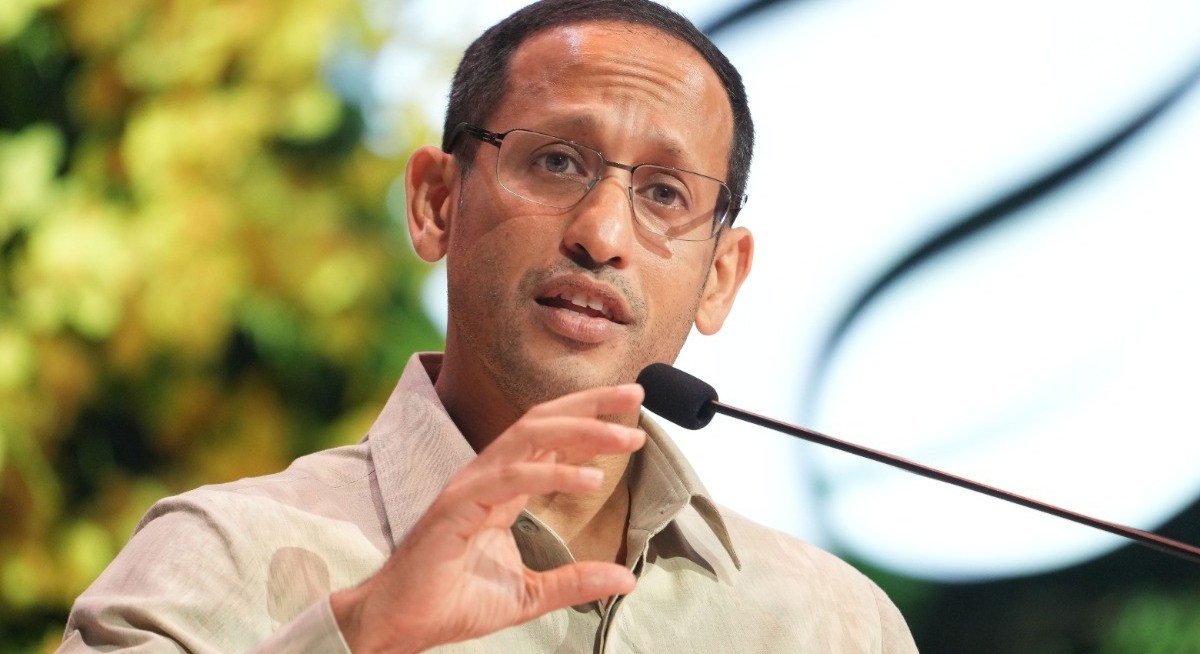


They alleged the procurement between 2019 and 2022 was flawed, arguing it did not go through a proper feasibility assessment, and said the actions were carried out with three other defendants who are also on trial. They alleged that Makarim received about 809 billion rupiah in connection with the procurement decision, and that he sought to conceal a conflict of interest, pointing to investment ties between Google and companies he founded before becoming a minister.
Makarim has denied the allegations and Google has not been accused of wrongdoing.
“Based on the indictment we have just heard, it is clear that its narrative is dominated by assumptions and interpretations rather than concrete facts,” Dodi Abdulkadir, a member of Makarim’s legal team, told reporters. “Secondly, what actually took place was a procurement process in which Mr Nadiem, as minister, was not involved.”
Makarim, dressed in a long-sleeve batik shirt, responded by filing an objection — a preliminary challenge that typically argues a case should not proceed in its current form due to procedural or legal defects. His legal team argued that the ministry had involved the Attorney General’s Office before the Chromebook procurement began, rejecting allegations of any conflict of interest in the project.
See also: Singapore ex-minister is jailed, won't appeal in landmark case
Prosecutors will have a chance to respond to the objection, after which the judges panel will decide whether the case proceeds to witness hearings.
Makarim’s lawyers have said technical teams handled procurement decisions, and that the program was intended to support remote learning during the pandemic.
Makarim, a Harvard Business School graduate who founded ride-hailing firm Gojek before joining former President Joko Widodo’s cabinet in 2019, was detained in September and has since been held at Jakarta’s Salemba detention center.
See also: Ong Beng Seng to continue being managing director of Hotel Properties
The case adds to heightened scrutiny of corruption allegations involving former cabinet members in Southeast Asia’s largest economy. For investors, it is also a bellwether for legal predictability, especially where prosecutors are effectively asking courts to treat a contested policy and procurement choice as criminal graft.
Former trade minister Thomas Lembong was convicted in a years-old sugar import case in July — a move that sparked debate over political influence in anti-graft efforts in the world’s third-largest democracy. President Prabowo Subianto later granted him clemency, ending the prosecution.
Bivitri Susanti, a legal expert and lecturer at the Indonesia Jentera School of Law, cautioned that prosecuting policy decisions as corruption cases risks deepening legal uncertainty, noting that corruption charges require clear proof of intent and money flows to defendants.
“We have seen policymakers criminalised for their policies before,” she said, adding that inconsistent interventions — such as presidential clemency granted before judicial processes are complete — undermine confidence in the rule of law, including among foreign investors. “What we’re seeing is legal populism,” she added.
Uploaded by Magessan Varatharaja




