




In June 2011, less than a year after its $22 million IPO, Nordic announced the $28.9 million acquisition of Multiheight Group, a scaffolding services provider. In an interview with The Edge Singapore, Chang recalls facing a room full of analysts, amused at why he was acquiring such a low-tech business for a relatively large sum.
Chang was unfazed by the less-than-positive reception. Multiheight operates mainly on Jurong Island, which has tighter security measures that restrict access to visitors and new businesses alike. The key reason is that it serves the onshore oil and gas industry, specifically companies like Shell and Chevron, which could help Nordic diversify away from its existing offshore customer base. In addition, Nordic could reduce its reliance on project-based earnings, as ongoing maintenance and scaffolding were required. “Nordic’s revenue was previously driven by projects and income streams were lumpy. Multiheight gave us recurring income and we could diversify our income stream,” he reasons.
More than a decade on, Chang would later apply the same strategy numerous times. In June 2015, Nordic acquired Austin Energy, a specialist in thermal insulation, fireproofing and fire protection services, for $26 million. In April 2017, Nordic acquired Ensure Engineering, a provider of maintenance services, for $17 million. In November 2019, Nordic made its fourth acquisition in eight years, paying $14.8 million for Envipure, which provides environmental engineering services, including air pollution control and water and waste treatment, to customers such as semiconductor companies like Micron Technology, Intel, GlobalFoundries and Infineon.
In 2022, Nordic made two more acquisitions in quick succession. First, it conducted its largest acquisition to date, buying then-listed Starburst Holdings for $59.1 million. This company specialises in building and maintaining firearms training facilities used by law enforcement and the military in Singapore and across the region. Later in the year, it spent $10 million to buy Eratech, a precision metal-machining company.
See also: Indonesia’s Danantara wealth fund sees senior management shakeup
These acquisitions have not only given Nordic a diverse customer base but have also changed the company’s earnings profile, with a growing proportion of recurring income from maintenance services. The company’s market cap has grown from $80 million at its IPO to $195.15 million, based on the March 31 closing price of 49 cents.

Nordic Group's revenue contribution by services / Photo: Nordic Group
See also: Relocation specialist Chasen rides chip growth; eyes more solar panel projects
No longer a passive investor
With decades of banking experience and an economics degree, Chang was probably not a natural fit to run an engineering firm like Nordic Group. Fresh from school, Chang started as a management trainee at Standard Chartered Bank and took on various roles over the years. After two years at Citibank, he rejoined StanChart as its global head of trade and supply chain finance. However, he found the travel schedule hectic, rejected an offer to be redesignated to a local role and left the corporate world, turning his attention to investing his own money in other businesses.
Nordic Group was founded as Aciapac Automation in 1998 and Chang first invested in the company in June 2003. As Chang recalls, his initial plan was to be a passive investor. “However, I realised that the people there siphoned out some of the company funds and I realised maybe it was time for me to roll up my sleeves and join the company,” he says. Having assumed a more active role, he bought out other shareholders and spent seven years reorganising and restructuring the company.
Industry tailwinds were on his side. As the marine industry was in one of its upcycles, Chang was able to double Nordic’s earnings to $4.86 million between FY2007 and FY2008 and raised it further the following year, even as the global financial crisis was in full swing, when banks had to pull credit lines and governments had to step in as guarantors.
In a way, Chang’s extensive banking experience helped Nordic sail through the market crisis and subsequent market cycles. Unlike some other offshore engineering firms that got caught up in the hype, he was careful not to get too carried away, take on more debt, or spend lavishly on capex to chase bigger order books.
Chang maintains his focus on a key business fundamental: cash flow. “This is something that I feel is very important, not only as a banker when it comes to lending money, but also as a businessman. My philosophy is to manage cash flow tightly and my number one priority is cash flow, followed by profits,” Chang shares.
From his perspective, cash flow should take priority over the bottom line. Chang believes that earnings quality is good only if cash flow — the lifeblood of companies — is decent as well. “I always make sure I manage my cash flow first before building a sustainable and profitable business in the long term,” he says.
To stay ahead of Singapore and the region’s corporate and economic trends, click here for Latest Section
While Chang will not hesitate to take on debt if he finds a compelling acquisition target, he is also focused on paying off the borrowings as soon as possible. After acquiring Starburst and Eratech within a year, Nordic turned from net debt to net cash in FY2025 ended December. Assets acquired in acquisitions are to be put to work to generate cash, not merely to pad the left side of his balance sheet. “Our philosophy has always been to prevent our balance sheet from being over-geared and end up accumulating unproductive assets. We want to keep an asset-light balance sheet that is flush with cash,” Chang says.
Multiple sector tailwinds
The multiple acquisitions have also expanded Nordic’s customer base and reduced its exposure to industry concentration risks. At the same time, because of the relatively niche nature of its capabilities, Nordic often combines initial installation with follow-up maintenance contracts, ensuring a steady recurring income stream. As of December 2025, Nordic has built up an order book worth $201.9 million, including $119 million recorded in FY2025 alone.

Nordic Group's FY2025 contracts win / Photo: Nordic Group
What makes the company interesting today is its exposure to industries that are riding their respective tailwinds. First, Nordic’s original core marine sector has put behind a previous cyclical downturn and is picking up steadily. The company’s business of supplying automation equipment to vessels is seeing a healthy level of orders. “Right now, there are almost 2,000 vessels that are floating and moving around out there. What does that mean for us? This means whenever our automation equipment is installed on a vessel, it has to come back to us for replacement,” Chang explains.
Meanwhile, Chang says that bulk carriers typically have lower margins than floating production, storage and offloading (FPSO) vessels. “You do want FPSOs as the margins can be equal to many bulk carriers out there. In a year, if you do four FPSOs, that is a very good result,” Chang comments.
Chang also shares that he would welcome more FPSO orders, but given their complexity and the broader scope of work, current orders are fewer in volume than those for bulk carriers and containerships.
Next, Nordic is riding the semiconductor boom, which, in turn, is largely driven by the massive AI-driven capex cycle. Specifically, Envipure, acquired by Nordic in 2019 for $14.8 million, provides cleanroom, air and water engineering services for the semiconductor and other sectors.
US chipmaker Micron Technology, one of the largest foreign investors in Singapore, together with Intel, GlobalFoundries and Infineon, are among Nordic's longtime customer.
On Jan 27, Micron announced plans to invest another $30.5 billion to expand its production facilities here, adding 65,000 sqm of cleanroom space upon operationalisation in the second half of 2028. Presumably, Nordic stands a good chance of securing more installation and maintenance contracts.

Envipure, acquired by Nordic in 2019 for $14.8 million, provides cleanroom, air and water engineering services for the semiconductor and other sectors / Photo: Nordic Group
Meanwhile, over the past year or so, as countries have rearm themselves amid heightened geopolitical tensions, global defence stocks have regained favour with investors. Numerous US, German and Korean stocks have made multifold gains and, at home, Singapore Technologies Engineering is making new highs, becoming a top performer on the Straits Times Index (STI).
Nordic is not quite near STI component status, but investors are starting to take note of the company’s defence and security niche. Specifically, Starburst, its subsidiary, builds and maintains firing ranges for militaries and law enforcement customers. It has another unit which builds and maintains oil supply systems for air bases.
Starburst was acquired in 2022, with most of its revenue generated in Singapore. It has customers in the Middle East, where current geopolitical conditions are expected to force countries to spend more on defence and security.
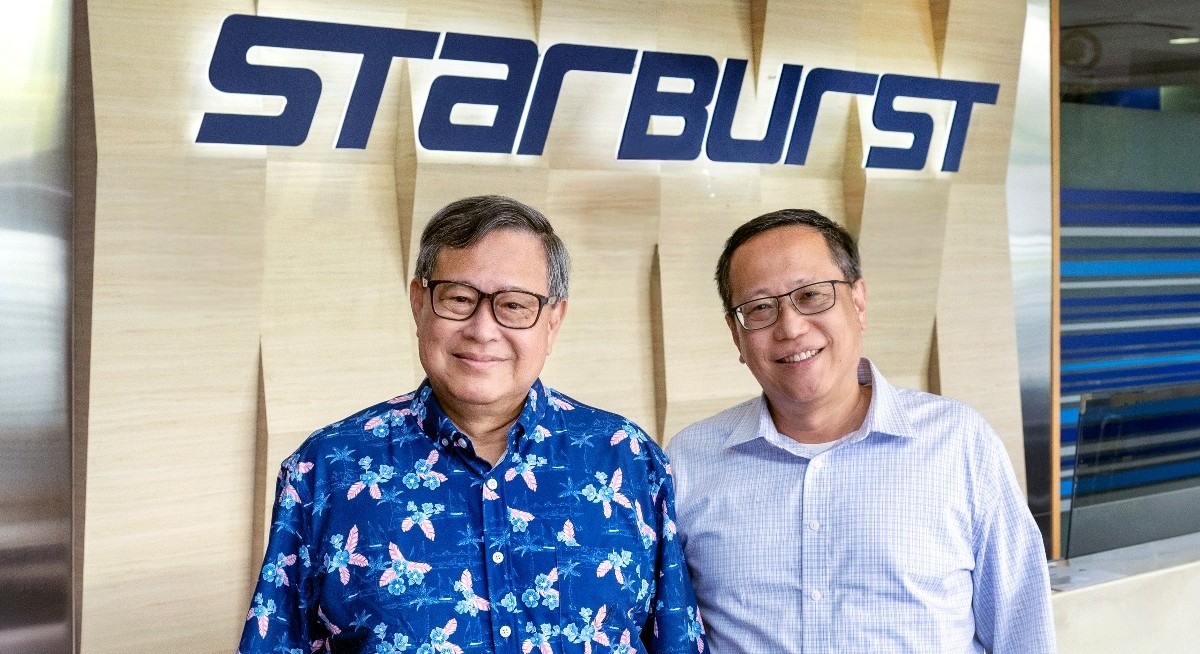
Besides building and maintaining firing ranges for the military, which require installing ballistic materials as safety features to absorb bullets, Starburst also builds mock-up training facilities such as train stations, ships and even aircraft to better simulate warfare in today’s environment, says Astro Chang Yeh Fung, Starburst’s CEO and Chang’s younger brother.
A significant contract may be in the potential pipeline. On Feb 27, Defence Minister Chan Chun Sing announced that the army plans to build an indoor live-firing complex near an upcoming MRT station in Bedok. According to Astro, the Multi-Mission Range Complex 2, as the project is called, will only happen in the next few years, although he points out that Starburst will still have to go through a tendering process, which is typical for all government projects.
Nonetheless, Chang and Astro acknowledge that Singapore prefers local companies to undertake various defence-related projects due to sensitivity issues. However, both say that the respective companies’ track records must also be considered during the tendering process.
Avon Industries, another Nordic subsidiary, can be seen as another defence contractor of sorts. It provides and maintains fuel hydrant systems and fuel tanks in Singapore’s air bases. Tengah Air Base is set to expand to accommodate the relocation of Paya Lebar Air Base by 2030. “We are looking forward to building more fuel tanks on the expanded site,” says Chang, who expects the tender to be called in another couple of years.
Besides its Singapore home market, Nordic is keen to build on previous wins across the region. The fighting between the US, Israel and Iran is stretching on, but Chang does not see a long-term impact on the company. While he expects the markets to be hurt in the short term by developments in the Middle East, he expects eventual improvement.
Chang is looking past near-term volatility. For him, the Middle East is a market with long-term growth potential. “This war-prone area will want to invest more in defence and this is where it is an opportunity for us,” he says.
Chang believes Nordic also benefits from the diversity of its business. Besides serving customers across industries, Chang sees the cross-deployment of his people from one subsidiary to another, depending on project requirements, as a key competitive advantage in productivity and efficiency. This has helped Nordic maintain a net margin between 10% and 13% over the past five years.
In addition, to cope with rising costs, specifically for workers’ accommodation, Nordic is investing in its own dormitory. “Back in the days when rentals were low, we just paid for it, but since they have gone up so much, it does not make sense for us to keep renting,” he laments.
Chang shares that the upcoming dormitory will house at least one third of his workforce and is not built for speculative purposes. “We do not want to build something so big and rent out the excess capacity to others; this upcoming dormitory is strictly for our people. As I have said, our biggest cost component comes from labour and therefore any cost saving initiatives are targeted for this component,” Chang says.
Dividend, liquidity and placement
Nordic’s multi-sector growth ahead has drawn the attention of some analysts. In the past year, Nordic’s share price has gained 36% to 49 cents on March 31.
Troy Cheng of OCBC Group Research observes stronger growth momentum ahead for the company, with its larger order book comprising a higher proportion of recurring contracts. He points out that Nordic’s book-to-bill ratio has improved to 1.32 times, signalling strong demand visibility and underpinning potential revenue contribution for the next two financial years. “Coupled with $119 million in contract wins across FY2025 and spanning deliveries through FY2028, the group remains well positioned to sustain steady topline momentum,” says Cheng in his March 6 note, who has raised his fair value for this counter from 59 cents to 60 cents.
Separately, Hashim Osman of PhillipCapital has kept his target price unchanged at 63 cents, which is more bullish than Cheng’s. He likes how Nordic is riding an upcycle in new projects from defence, marine, and the semiconductor sector, which is seen to drive earnings growth.
Hashim notes that the company’s total sales pipeline is now around $305 million, with project services accounting for $260 million and maintenance services $46 million. Upon project delivery, Nordic would usually then convert these into maintenance contracts, implying further recurring earnings down the road.
Even as Nordic’s share price reached as low as 28 cents in June 2024 before recovering to current levels, its payout ratio has remained pretty consistent at around 40% — not too shabby, but not too enticing either.
Asked whether there was any possibility of raising the payout ratio, Chang prefers a more conservative stance. Given that a key growth strategy is to acquire new businesses, he believes it is always preferable to keep more cash on hand so he can move more quickly when opportunities arise.
“Of course, we can rely on bank borrowings to do everything which we don’t have a problem with because we have an excellent track record with the banks. But I will prefer building up our reserves so that we can have the flexibility in terms of financing any potential acquisitions,” says Chang, who adds that he is not opposed to paying out a one-off special dividend to shareholders as and when appropriate.
Meanwhile, Chang recognises that the low trading liquidity for Nordic shares is an issue. “Given that our counter is very tightly held by the management team and our loyal shareholders, I would say that it is almost like quite illiquid,” says Chang, who personally controls a total interest of more than half the company. Together with a group of other insiders, including executive directors Dorcas Teo and Eric Lin, they hold more than 75% of the shares.
According to Chang, a loyal group of shareholders who bought at about eight cents between 2012 and 2013 have been holding on to their shares all this time. At the most recent FY2025 dividend payout of 1.902 cents, these shareholders are enjoying a yield on cost of more than 23%. “With them holding at such a low price and the double-digit dividend yield on cost, they will continue to hold onto our shares and will not sell,” Chang explains.
Perhaps another way to improve liquidity is to place out shares. Chang acknowledges that having sufficient liquidity is a requisite for some fund managers. Still, he maintains that for now, there is no need for additional funds from a placement, which would otherwise dilute existing shareholders. Chang says he could easily borrow from banks if the sole reason were to obtain more funding.
Following a string of acquisitions over the years, Nordic has built up a whole range of services and competencies. Could there be opportunities for a spin-off or even divestments to unlock value.
Chang is not averse to the idea. “If we can create value for our shareholders and if the buyers can meet my price, we have no objection to these. Ultimately, we want to enhance shareholder value. It is the same logic as that used in conducting a placement. Whatever we do, it must be beneficial to all of our shareholders,” Chang says.




