


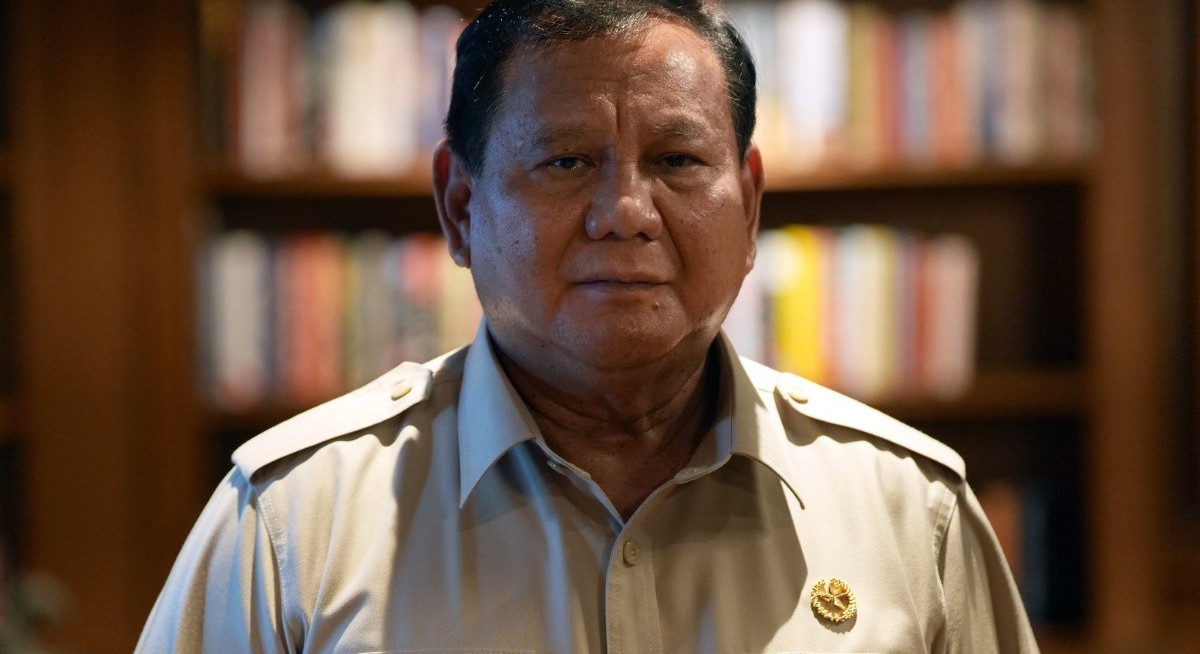


(May 20): Indonesian President Prabowo Subianto laid out plans to tighten state control over some of the country’s biggest commodity exports as the government contends with mounting fiscal pressures and a plunging rupiah.
Prabowo, speaking before lawmakers on Wednesday in an annual address usually led by the finance minister, said that starting with palm oil, coal and ferroalloys, the government would require sales to be conducted through a state company appointed by the government to act as sole exporter.
“There is under-invoicing and under-accounting” in exports, causing hundreds of billions of dollars in losses, Prabowo said. The gap between what is reported and “what is actually happening” is often stark, he said.
He also criticised commodity prices that he said were set outside Indonesia.
“We find it strange that Indonesia is the world’s largest palm oil producer, yet palm oil prices are determined by other countries,” he said. “This must not continue. We must set our own prices. If they do not want to buy, then we will use our palm oil ourselves.”
Bloomberg reported plans for the new agency on Tuesday, citing people familiar with the matter.
See also: Indonesia plans to tighten state control over commodity exports — Bloomberg
The country’s benchmark stock index gave up gains as the president spoke, trading as much as 2.4% lower midway through his speech. The rupiah, down about 6% this year against the dollar, was largely unchanged.
Palm oil futures traded in Kuala Lumpur, used as the global benchmark, jumped 2% to a two-week high after the announcement, adding to about 4% in gains over the previous three sessions.
The new state company would be Prabowo’s most drastic move yet to shore up state revenue to support his expensive flagship policies, including a free meals programme for more than 80 million people and plans for thousands of new cooperatives across the archipelago nation.
See also: Geo Energy signs offtake agreement with Trafigura; engages mining contractor
Indonesia is the world’s biggest producer of nickel and the top exporter of thermal coal and palm oil, meaning greater state control of shipments could have a far-reaching impact on global markets. Jakarta has previously banned some natural resource exports to boost downstream manufacturing and shore up domestic supplies, and has attempted to lift prices by curbing output or forcing sales at government-set benchmarks.
Further details on how the new export body will operate weren’t immediately available.
“I am worried about the governance of this entity as there’s no precedent yet and it’s not proven yet how the good corporate governance principle will work,” said Christopher Andre Benas, the head of research at PT BCA Sekuritas. “It’s also too early to tell whether this body will be efficient to keep exports proceeds onshore.”
Prabowo’s speech comes with markets closely watching Indonesia’s fiscal position as the government moves forward on expensive initiatives while also facing higher energy prices and a sharply weaker currency.
The country’s markets have been among the hardest hit in Asia by the surge in oil prices, with the rupiah hitting successive record lows, bond yields at a one-year high and stocks sliding to the lowest in more than a year. On Tuesday, the finance minister said the country had begun buying back as much as US$113 million ($144.76 million) of government bonds daily as part of efforts to win back investors.
Prabowo also criticised Indonesia’s broader system of economic management, saying that despite economic growth averaging around 5% over the past seven years, the country’s middle class had shrunk while the number of poor people had risen. “The answer is most likely that the economic system we are running is on the wrong trajectory,” Prabowo said.
Prabowo also unveiled proposed assumptions for the 2027 budget, saying he was personally delivering them this year given the many global pressures and conflicts facing the country.
To stay ahead of Singapore and the region’s corporate and economic trends, click here for Latest Section
He proposed growth of 5.8% to 6.5% — which would mark the biggest expansion in Southeast Asia’s largest economy in more than a decade — and targeted a budget deficit of 1.8% to 2.4% of gross domestic product, well below the cap closely watched by international investors.
He said the budget assumptions were based on crude oil at US$70 to US$95 a barrel next year, and a rupiah improving to an average of 16,800 to 17,500 per dollar.
Uploaded by Tham Yek Lee




