




(May 15): It’s not just China’s sheer size that makes competing against its manufacturers so hard — but also the nation’s vast disparity in development.
That’s according to new research from the China Finance 40 Forum, which said China effectively contains multiple economies within one national market. Known as CF40, it’s one of the most influential economic think tanks in China and counts many economic officials as well as prominent economists among its members.
In a report titled “Why Chinese Manufacturing Appears to Compete with All Countries”, CF40 researchers argued the country’s prowess across everything from producing T-shirts to electric vehicles stems from its internal divides rather than state policies designed to give it a competitive edge.
The findings help explain why China’s dominance in global manufacturing across the value chain is proving so hard to combat. On his visit to Beijing this week, US President Donald Trump has prioritised securing big-ticket Chinese purchases and stabilising economic relations, in contrast with last year’s tariff salvos.
For years, China has faced calls to allow more currency appreciation and reduce its support for industry as its economic reach extended around the world. The report suggests these prescriptions likely don’t stand a chance.

See also: China’s economy is entering another quarter of K-shaped growth
CF40 makes a case that China’s economy consists of four distinct tiers, each with its own advantages that would render such policy proposals ineffective, since they would do little to reduce the regional income gaps.
Its richest cities, including Beijing, Shanghai, Shenzhen and Guangzhou, have income levels similar to those of Japan and South Korea, while poorer regions still resemble middle- or even lower-middle-income economies such as Mexico, Thailand or Vietnam, they found.
Effectively, China contains within itself “more than half of Japan + nearly 6 Malaysias + 5 Mexicos + 4 Thailands + 1.4 Vietnams”, said analysts at the think tank’s research arm CF40 Institute. The authors include Yu Fei and Guo Kai, formerly an economist at the International Monetary Fund and an ex-official at China’s central bank.
See also: China and the new trade reality
“Reducing subsidies and currency appreciation will not narrow the development gap between China’s various tiers, nor will they immediately change the development levels of China’s different regions,” they said. As a result, they “will not alter the current situation of China competing with the rest of the world in manufacturing”.
International financial institutions tend to take a more one-size-fits-all approach.
TS Lombard’s Rory Green even suggested in a report on Tuesday that an implicit agreement for the yuan to appreciate could be part of a broader deal with the US during Trump’s visit this week.
The IMF has meanwhile recommended halving industrial subsidies — which it estimates have amounted to about 4% of gross domestic product in 2023 — as part of a shift toward a growth model more reliant on domestic consumer spending.
“State-led and debt-financed investment and unwarranted industrial policy support have resulted in weakening productivity, build-up of financial vulnerabilities, and excess supply in some tradable sector,” the fund said in its annual review of China’s economy in February.
For CF40, however, China’s uneven development lets it stay competitive across the full industrial spectrum, moving up the value chain to challenge the likes of Germany without ceding much ground in lower-skilled industries.
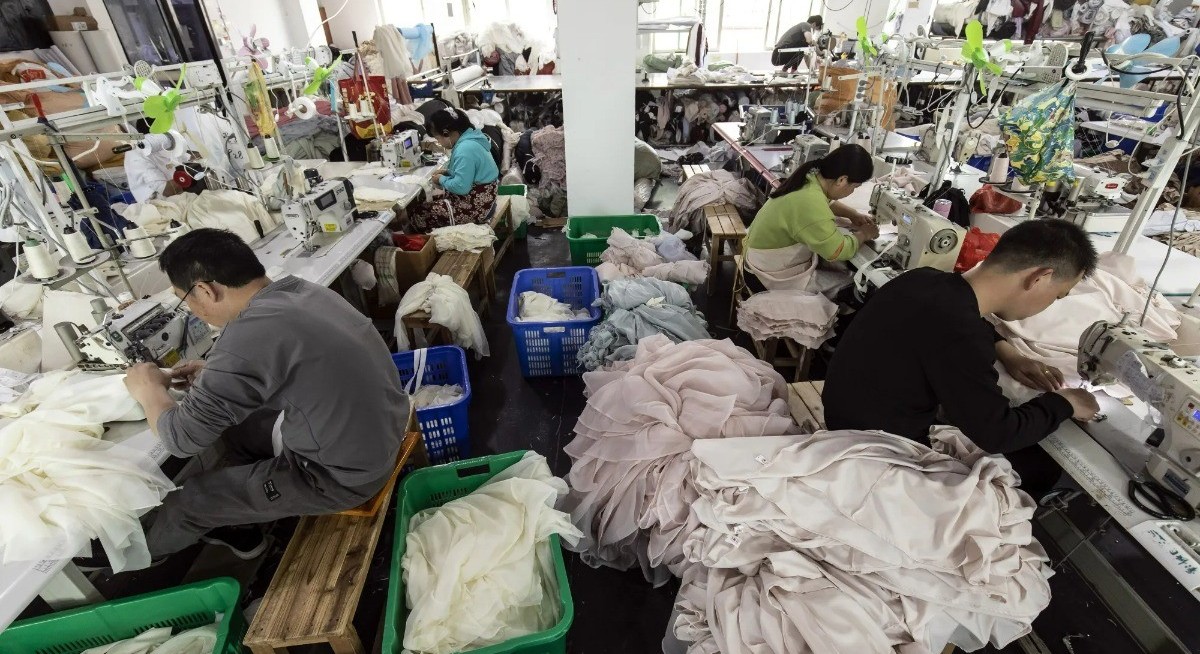
As wealthier regions make inroads in advanced manufacturing, lower-income provinces continue to absorb labour-intensive production that, in other countries, would have shifted overseas as wages rose, according to the report.
To stay ahead of Singapore and the region’s corporate and economic trends, click here for Latest Section

Combined with China’s rapid development and sheer scale, that helps explain why its export share has risen in low-, medium- and high-technology goods simultaneously, CF40 economists said. China’s share of global manufacturing output climbed from 8.5% in 2004 to a peak of just over 30% in 2021.
To ease tensions, they said, China should lean on greater outbound investment and infrastructure spending abroad, which could allow its trade surpluses to flow back into trading partners and drive employment there, they said.
“The pattern of China competing with all countries in manufacturing is difficult to change in the short term, and commonly proposed policies such as reducing subsidies and currency appreciation may not be effective remedies,” they said.
Uploaded by Chng Shear Lane




