


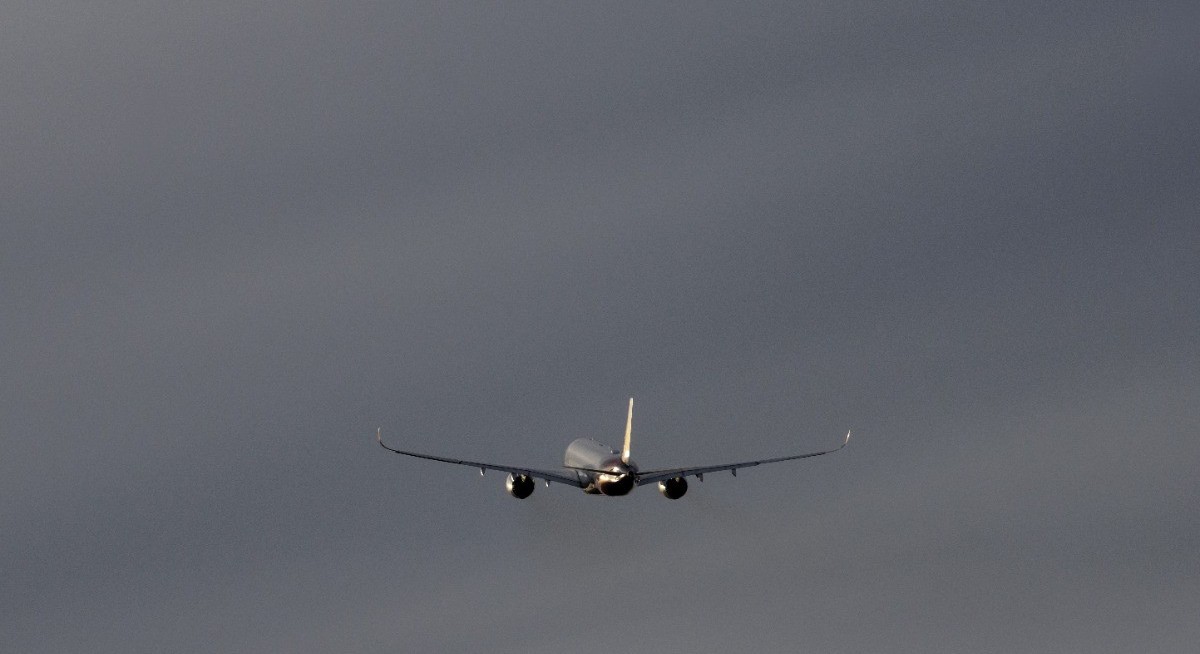


(June 9): The European Union wants to extend charges for carbon emissions to foreign flights and use the revenue to support its transition to clean energy, a move that risks backlash from foreign airlines and governments.
The proposal is set to be unveiled next month as part of a reform of the Emissions Trading System, according to an EU document seen by Bloomberg News. Currently, carriers ranging from Delta Air Lines Inc to Air China Ltd are exempted from the requirement to pay for the pollution caused by flights into and out of the region.
“The review should ensure that all sectors under the ETS contribute fairly to the EU’s climate targets,” the European Commission said in the document ahead of an EU commissioners' debate on Wednesday, which is meant to steer work on the reform.
Launched in 2005, the EU ETS imposes gradually shrinking emissions caps on more than 10,000 energy and industrial facilities. When the system expanded to aviation in 2012, the EU decided to limit its scope to intra-European routes under pressure from international airlines and criticism from countries such as China, the US and Brazil.
The aviation sector has urged the EU to stick to the current geographical scope of the ETS. Five industry associations, including Airlines for Europe and Airports Council International, wrote in a letter to the commission last week that “Europe must avoid measures that weaken its aviation and aeronautics sectors” at a time of mounting global competition.
The reform of the ETS, due to be unveiled on July 15, will aim to bring it in line with a new climate goal to cut 90% of emissions by 2040 compared with 1990 levels.
See also: Bombardier to invest US$78 mil expanding Singapore service hub
Other elements of the review will include slowing the pace of annual emission reductions to avoid the cap dropping to zero in 2039 under the system’s current design. The commission also plans to account for carbon removals and redesign automatic supply controls embedded in the so-called Market Stability Reserve.
To accelerate investment in the deployment of renewable, homegrown energy, the EU will need a “predictable ETS signal", according to the document. The commission wants to offer more free allowances to industry on the condition that companies invest in clean technologies in Europe.
There will also be changes affecting governments, which will need to spend more of their national revenues from auctions of ETS permits on decarbonisation.
Uploaded by Arion Yeow




