


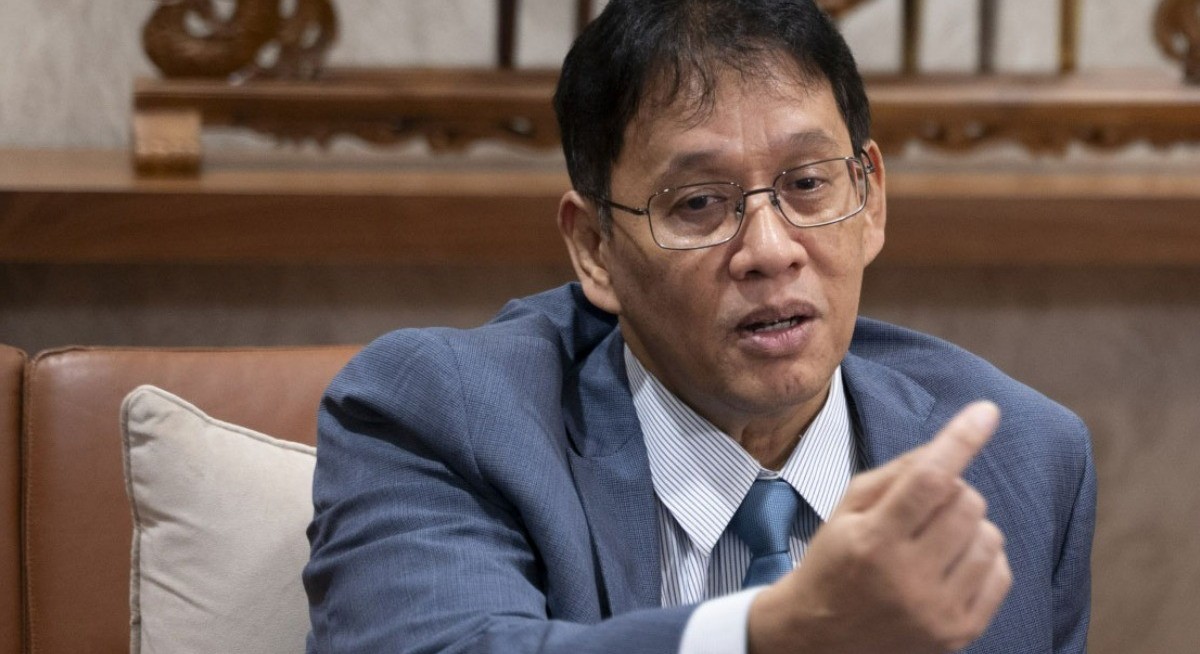


(June 5): Indonesian Finance Minister Purbaya Yudhi Sadewa defended his economic track record and said he’d stay in his job after the rupiah plunged to a record low, pointing to inflows into the debt market as proof investors remain optimistic.
Government bonds and central bank debt securities “saw inflows in the second quarter through early June”, Purbaya said at a briefing in Jakarta on the country’s budget situation. While equities did see outflows in the period, the net figure remains positive, he added.
“This addresses the doubts held by many people, including those expressed in the media,” he said, referring to a Bloomberg News story about investors selling Indonesian assets. “As we can see, optimism about the Indonesian economy remains strong. So don’t be swayed by a single news report.”
Indonesia’s benchmark stock index is the worst performer this year among more than 90 global gauges tracked by Bloomberg, extending declines in Friday afternoon trading to the lowest level since December 2020. The rupiah, which was little changed on Friday, this week weakened beyond 18,000 per dollar for the first time ever.
For a second day in a row, Purbaya stated that he is remaining in his post, denying speculation he would resign as finance minister less than a year into the job. Talk of Purbaya’s possible departure spread fast on Thursday amid deepening concerns about the economy and a graft probe involving President Prabowo Subianto’s US$15 billion ($19.26 billion) food programme.
“I’m not the type to quit,” the finance chief said Friday.
See also: Bank Indonesia chief touts higher bond yields to investors
Indonesia saw a budget deficit of 0.7% of gross domestic product in the year through May, Purbaya said at the briefing.
Purbaya said he met visiting officials from S&P Global Ratings on Thursday, assuring them that the government will not breach a legally mandated deficit cap of 3% of GDP. S&P had said Indonesia’s credit rating is the most at risk in Southeast Asia from any prolonged Middle Eastern conflict.
“The president was very clear that the deficit must be below 3% and, in fact, the president wants the deficit to be at 1.8% next year,” Purbaya said. “So the commitment to the fiscal deficit is very strong.”
See also: Indonesian authorities query Maybank staff over Salim exports — Bloomberg
He said “significant improvements” in tax and customs collection helped, even as spending growth continued to accelerate as the government pushes priority programs.
“The run rate on the fiscal deficit has certainly come down in the past two months, which is helpful,” said Oversea-Chinese Banking Corp economist Lavanya Venkateswaran. “However, perceived risks have broadened beyond the fiscal equation to policy clarity on the new commodities export policies and capital flows” so the onus remains on the authorities to provide greater clarity on these latest developments, she added.
Purbaya became finance minister in September after Prabowo ousted investor-favourite Sri Mulyani Indrawati in the wake of cost-of-living protests. He vowed to turbocharge Indonesian economic growth, which accelerated to 5.6% in the first quarter, though some economists are sceptical about the numbers.
“There’s a false impression that fiscal policy is being poorly managed. All of the president’s policies have been calculated accurately and in detail by the president and us,” he said Friday. “Investors need to know that we’re not implementing fiscal policy recklessly. Rapid economic growth isn’t because we’re sacrificing fiscal health, but because we’re managing spending efficiently and effectively.”
Purbaya has repeatedly said observers often get Indonesia’s economy wrong, and earlier this year publicly rebuked a Citigroup Inc economist for lacking a doctorate. In an interview with Bloomberg News in April, he offered assurances to investors worried about the Indonesian economy and state spending.
Still, Moody’s Ratings and Fitch Ratings have both changed the outlook on the country’s credit score to negative. Other investor concerns include an ongoing MSCI Inc review of the country’s investability.
Uploaded by Chng Shear Lane




