


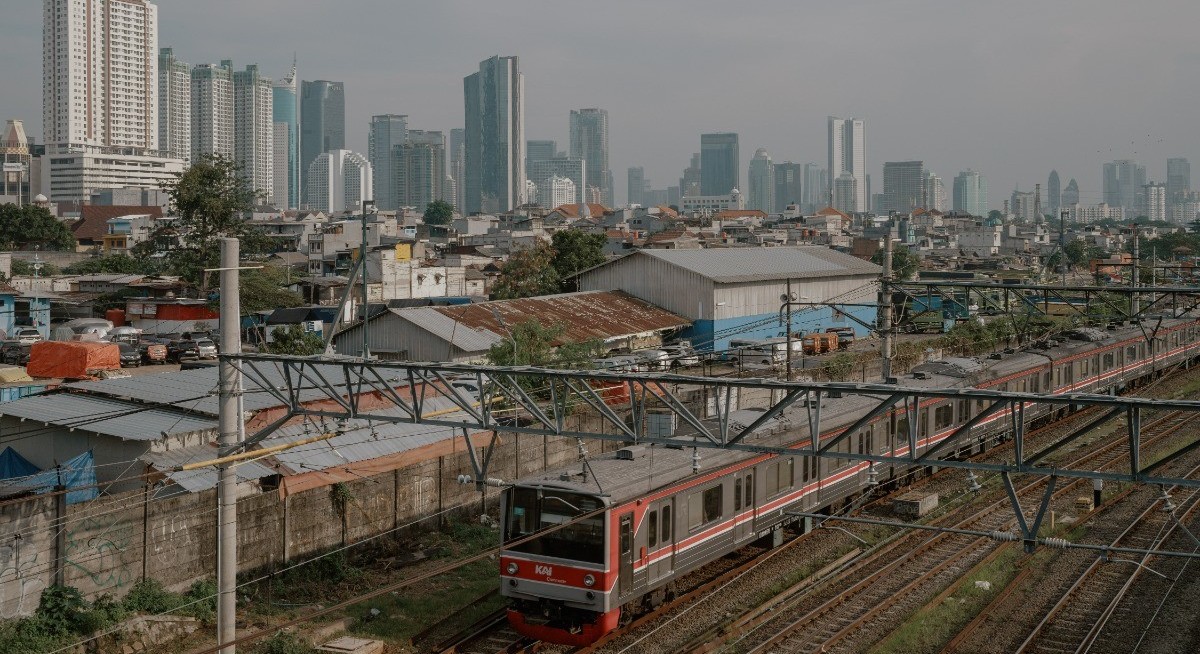


(June 8): Indonesia’s markets slumped on Monday, led by a sharp sell-off in sovereign bonds, after the government’s latest attempt to shore up the currency failed to ease concern over its economic management.
The 10-year bond yield surged 36 basis points to the highest in more than a year, after Bank Indonesia (BI) said on Saturday that it’s working with the government to boost returns so as to support the rupiah. Still, the currency touched another low and the benchmark equity index fell.
Policymakers vowed on Saturday to stabilise the rupiah and attract inflows, as concerns over the nation’s fiscal spending plans and President Prabowo Subianto’s interventionist economic agenda unsettle investors. The market sell-off picked up momentum last week as lawmakers expanded supervision of the central bank, a corruption probe was launched, and new rules governing commodity exports were unveiled.
“The sharp move higher in Indonesia bond yields suggests foreign outflows,” said Khoon Goh, the head of Asia research at ANZ Bank. Investors are “demanding higher yields before they are willing to step back in”.
Over the weekend, BI governor Perry Warjiyo and Finance Minister Purbaya Yudhi Sadewa pledged in a joint parliamentary briefing to maintain sufficient liquidity in the market and work together to boost bond yields to lure more inflows.

See also: Vietnam stocks see biggest foreign inflows in nearly six years
The currency has sunk more than 8% this year, while the stock index has tumbled 37% to become the worst performer this year among global gauges. The nation’s 10-year bond yields have surged to 7.24%, up more than 120 basis points from a low in January.
The authorities need to manage the increase in borrowing costs, “because if the yields are too high, the government’s interest burden will be heavier at a time when it needs more funding to run various programmes,” said Adra Wijasena, a fixed income senior analyst at Shinhan Sekuritas in Jakarta.
The bond sell-off was exacerbated by the absence of BI in the market, according to three traders familiar with how it usually transacts.
See also: Indonesian market rout resumes as interest rate hike bets mount
Rate decision
The central bank meets next week for its policy decision, and had raised interest rates by a bigger-than-expected 50 basis points last month to defend the currency. It has also been intervening in the markets on a regular basis as the rupiah weakened from 16,725 a dollar at the start of the year to Monday’s low of 18,180.
The efforts, and the government’s debt payments, are contributing to a decline in the nation’s foreign-exchange reserves, which fell for a fifth straight month in May to US$144.9 billion ($186.6 billion).
“BI will continue to manage the rupiah’s movements to prevent excessive fluctuations,” said senior deputy governor Destry Damayanti via a text message on Monday, adding that the currency’s move was in line with other emerging-market peers. She also said there are no changes to the policy meeting scheduled for June 17-18.
The rupiah fell 0.9%, pacing a broader decline also seen in the ringgit and rupee.
“For the rupiah to strengthen back to below 18,000 levels, BI would need to hike interest rate by more than 50 basis points,” said Lionel Priyadi, a macro strategist at PT Mega Capital Sekuritas in Jakarta, who expects a 75-basis-point increase.
Global investors have pulled out a net US$3.6 billion from local stocks this year — already exceeding equity outflows in 2020 — and another US$422 million from bonds amid concerns over the president’s spending plans and the nation’s deficit. On Saturday, the central bank also said it will increase the interest rate for government cash placed with it.
To stay ahead of Singapore and the region’s corporate and economic trends, click here for Latest Section
The government has around 300 trillion rupiah (US$16.5 billion or $21.3 billion) placed at major state-owned banks, with part of the funds intended to support lending growth and the remainder available for purchases of government bonds.
“The statement on Saturday can be a start to reduce market pressures, but it’s still not enough to sustainably turn the market direction,” said Josua Pardede, the chief economist of PT Bank Permata in Jakarta. Authorities need to provide details on the remuneration rate, the scale of government deposits and the implications for BI’s costs and the government’s bond issuance, he said.
Since taking office in October 2024, Prabowo has pledged to boost annual growth to 8%, rolled out a nationwide free school meal programme, expanded the state’s role in the economy and channelled billions of dollars into sovereign wealth fund Danantara. More recently, his move to take direct control of key commodity exports to curb tax evasion triggered a sell-off in exporter stocks.
“Pressures are beyond just exchange-rate volatility, but are related to risk perception toward Indonesia,” said Pardede. “Investors are not only attracted by high returns, but also by their belief that Indonesia’s economic outlook remains credible.”
Finance Minister Purbaya Yudhi Sadewa said last Friday that he had met visiting officials from S&P Global Ratings, assuring them that the government will not breach a legally-mandated deficit cap of 3% of gross domestic product. S&P had said Indonesia’s credit rating is the most at risk in Southeast Asia from any prolonged Middle Eastern conflict.
The cost of insuring Indonesian sovereign dollar bonds against default climbed by three to four basis points on Monday, traders said, extending a recent sell-off that has made the country’s credit one of the region’s worst performers.
Credit-default swap spreads on the nation’s five- and 10-year dollar bonds widened by at least 7.7 basis points last week to the highest levels since late March, according to Bloomberg-compiled data. That compares with a rise of less than one basis point in the Markit iTraxx Asia ex-Japan Investment Grade index over the same period.
Another near-term catalyst is MSCI Inc’s decision on whether to downgrade Indonesia, a risk that has cast a months-long shadow over its stock market. Speculation over a possible reshuffle of economic policymakers is also keeping many investors on the sidelines.
“The next two weeks are critical,” said Mohit Mirpuri, a partner of SGMC Capital Pte Ltd in Singapore. “The market is looking for clear signs of fiscal discipline, policy consistency and a strong commitment to macroeconomic stability.”
Uploaded by Tham Yek Lee




