




Large gains despite short holding period
The average holding period was about 4.9 years, with a median of 4.6 years. In other words, most owners were not holding for long periods to achieve gains. In addition, the 25th to 75th percentile range of holding periods was 3.8 to 5.7 years, further suggesting that profitability has been achieved fairly consistently with short holding periods.
Profitability in D5 also improved over time, with median overall profit rising from $130,000 in 2020 to $300,000 in 2024 before dipping slightly to $288,375 in 2025.
The largest gains came from bigger units, mainly from new‑launch‑to‑resale flips. The most profitable projects, based on the total number of transactions and cumulative gains, were Parc Clematis, Parc Riviera, Whistler Grand, Clavon and Normanton Park.
See also: Tengah Garden Residences, Vela Bay propel April new home sales to six-month high

In terms of absolute gains, the most profitable individual transactions generated seven-figure profits. The highest gain was $2.16 million from a four-bedroom penthouse unit at Botannia, achieved over an eight-year holding period and yielding an annualised return of 10%.
Parc Clematis accounted for four of the top 10 most profitable transactions, with annualised gains ranging from 10% to 26%.
See also: Government may adopt ‘wait-and-see’ stance on further property cooling measures: OCBC analyst

Steady price growth over last decade
While the area is not yet fully transformed, residential prices in D5 have already been rising. Over the past decade, median psf prices in the district have risen by about 70%, from $1,200 psf in 2016 to $2,038 psf as of April this year.

New launches underpin D5’s price growth
Much of that growth was underpinned by the new launch market. Median new sale prices surged more than 95% over the same period, climbing from $1,314 psf in 2016 to $2,566 psf in April.

The district has seen a steady pipeline of launches over the last decade, including Parc Riviera, The Clement Canopy, Parc Clematis, Clavon, Normanton Park, Lyndenwoods and Bloomsbury Residences.
That said, price growth in the new sale segment has begun to moderate over the past three years. In fact, median new launch prices slipped slightly in 2025 before rebounding by around 5% between 2025 and April this year.
That moderation came even as transaction activity surged. New sale volumes surpassed the 1,000-unit mark in 2025, sharply higher than the low hundreds recorded in earlier years. The jump was driven largely by stronger take-up at newer launches, particularly Lyndenwoods, which sold 94% of its units during its launch weekend in July 2025.

Resale and new sale price gap closes
The widening and subsequent moderation of the price gap between resale and new sale units further highlight shifting market dynamics. The gap widened significantly to 58% between 2023 and 2024 during the wave of higher-priced launches, before easing slightly to below 40% between 2025 and April this year as resale prices caught up.

Median resale prices rose by approximately 73% over the past decade, from $1,068 psf in 2016 to $1,854 psf in April. The pace of growth accelerated over the past six years, with resale prices climbing by more than 50%.
Together, the narrowing price trends could make upcoming new developments appear increasingly palatable to buyers, as the premium commanded by new launches gradually narrows relative to the resale market.

Leasehold projects outperformed freehold counterparts
A comparison between leasehold and freehold developments in D5 shows that 99-year leasehold projects have generally delivered stronger price growth over the past decade.
Based on transactions caveated by URA Realis, median psf prices for 99-year leasehold condominiums rose by 73%, outperforming the 60% increase for freehold projects.

The divergence was even more pronounced in the resale market. Median resale psf prices for 99-year leasehold developments climbed by 85% over the same period, compared to a 53% increase for freehold projects.

A similar trend was observed in the new sale segment, where median prices for 99-year leasehold launches surged by 94%, well above the 63% recorded for freehold developments.

Transformation under URA Master Plan
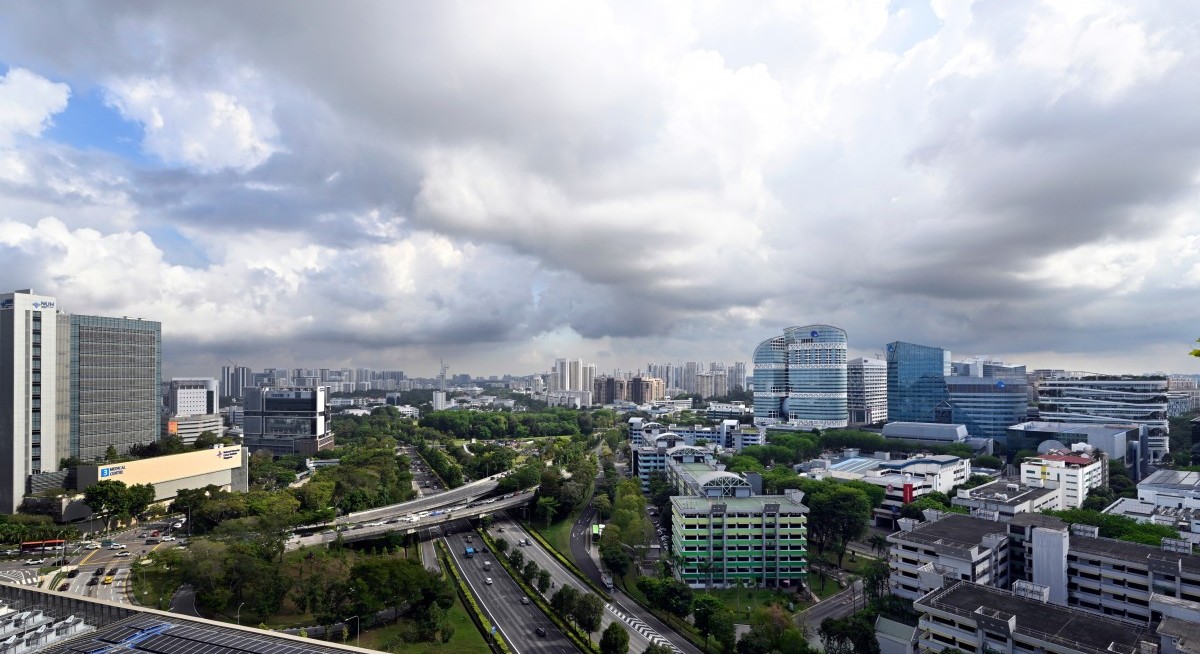
The Greater one-north precinct is increasingly attracting attention as the area gains momentum under the URA Master Plan and JTC’s broader development initiatives.
Dubbed Singapore’s Silicon Valley, the area is anchored by research hubs, tech giants and new residential developments such as Lyndenwoods, Bloomsbury Residences and the upcoming Hudson Place Residences.
Other upcoming developments in the precinct include Kampong AI, Singapore’s first integrated start-up community with both work and living spaces, slated for completion in 2028. This will be developed alongside the headquarters of major technology firms such as Grab and Razer, new lifestyle offerings and a growing residential area.
Against this backdrop, upcoming launches such as Hudson Place Residences and Qingjian Realty’s future project on the Dover Drive government land sales site could benefit from growing buyer demand driven by the transformation.
Coupled with sustained price growth, resilient resale profitability and the narrowing resale and new launch prices, D5 continues to be one of Singapore’s most closely watched residential markets in the near term.
Charts: City & Country
Data: URA Realis




