




EZA Hill made headlines last year for its regional acquisition spree. In August 2025, EZA Hill acquired four properties from industrial asset-focused CapitaLand Ascendas REIT as part of a $353 million transaction.
In November 2025, EZA Hill announced its foray into Thailand with the acquisition of a US$40 million ($50.84 million) logistics facility leased to DHL.
EZA Hill now counts portfolio assets in three Southeast Asia markets; in November 2024, it acquired a three-asset logistics portfolio in Indonesia valued at US$148 million from a fund managed by ESR Group. EZA Hill had also jointly acquired five logistics assets in Singapore from ESR REIT in 2023.
EZA Hill appears to be going against the grain with its sector choice. “Investing in Southeast Asian logistics warehousing, when the tariff situation is destabilising global trade, is arguably contrarian in approach,” says Ng to City & Country. “Yet, we see that to date the industrial [and] logistics [sectors] in most of Southeast Asia — particularly in Singapore, Malaysia and Indonesia, where we continue to target investments — have held up well.”
See also: Dubai luxury property sales climb, aided by pre-war deals

The former portfolio manager and head of transactions at PGIM Real Estate adds: “Off-market can mean to look where no one is looking before everyone floods in.”

See also: NYC is racing to secure unstable Midtown Manhattan building
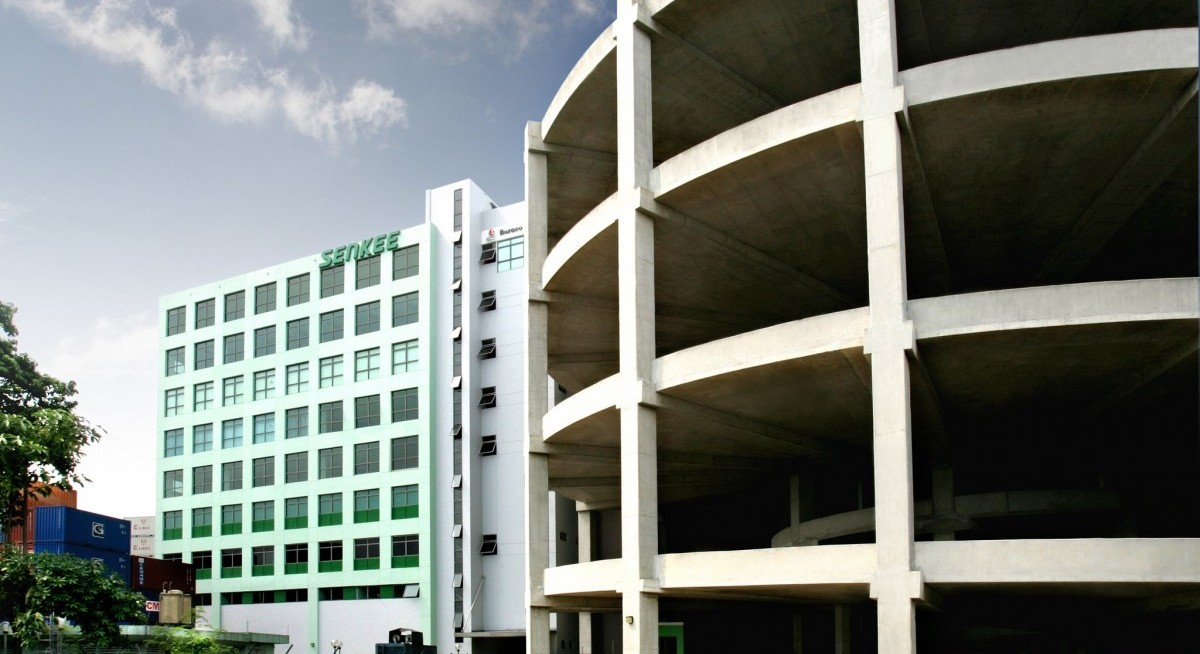
3 Pioneer Sector 3, a four-storey ramp-up warehouse EZA Hill acquired from ESR REIT in 2023
Old economy values
With an investment motto of “new economy infrastructure, old economy values”, EZA Hill claims there is “large unaddressed demand” for new economy infrastructure solutions in its target Southeast Asian markets.
It aims to invest in three types of industrial and logistics assets: automated e-commerce warehouses, cold-chain warehousing and industrial hightech manufacturing facilities.
In addition to its three present markets, EZA Hill is eyeing Vietnam, Malaysia and the Philippines. “Our mission is to simplify Southeast Asia for tenants and investors alike — to be local and operate in all six very diverse Asean markets.”
Ng lists three “thematic pillars” supporting EZA Hill’s investment strategy.
“Firstly, we target buying income-producing properties that we believe have more upside in value. By investing in the properties, working with tenants to optimise tenant mix and reverting properties to market rentals, we have been able to enhance the properties’ performance and returns while taking on some leasing risk,” notes Ng.
“Secondly, we have been identifying sale-and-leaseback opportunities from sellers with strong tenant covenants, long tenancies and stable, predictable income. These opportunities focus on long weighted average lease expiries (WALEs), stable cashflows and tenants with solid covenants to provide cashflows as the rate cycle moves toward lower interest rates,” he adds.
“Lastly, we focus on developments in emerging markets where infrastructure is underinvested and where, in Southeast Asia, we have been able to capture some of the ‘China+1’ flows as manufacturers based in China continue to diversify out of China to lower-cost production hubs,” says Ng. “The Southeast Asia markets also serve as new markets for China to diversify away from the US.”
Focus on Asean
There is still “very strong demand” for modern logistics warehousing in Southeast Asia, says Ng, as both goods and investment flows “continue to shift out of China and into the region”. “Singapore, Indonesia, Thailand and Malaysia have all been net beneficiaries even though there is the counterfactual [argument] that the region could have grown even more in an environment more supportive of global trade.”
That said, Ng acknowledges that there are supply-side issues in some markets for more specialised warehousing. “For instance, Jakarta is seeing an oversupply right now of cold chain warehousing as the market remains largely an owner-occupier market rather than one comfortable with leasing from third-party developers, shrinking the demand pool.”
In Malaysia, the increasing number of automated warehouses under construction could add excess capacity, he warns. “It remains unclear how these spaces could be multi-tenanted and subleased rather than operated by one third-party logistics (3PL) operator.”
Singapore listing?
Since its launch, Rava Partners has committed more than US$3 billion on behalf of funds managed by Rava Partners and Hillhouse to 18 real estate companies across the region.
The EZA Hill team is now 35 strong across Singapore and Indonesia. Here, EZA Hill has a joint venture management company with JD Property called Primus, which manages local assets. In Indonesia, EZA Hill has a “full team” handling asset management, property management and leasing management nationwide, as well as a development management and legal team that works across regional portfolios, says Ng.
Reports emerged last year of a potential REIT listing of EZA Hill’s portfolio.
Ng, however, declined to comment, saying: “We are unable to comment on any S-REIT listing at the moment except to say that we will explore all potential options for the sizeable asset portfolio we have built in the region.”
Photos: EZA Hill




