


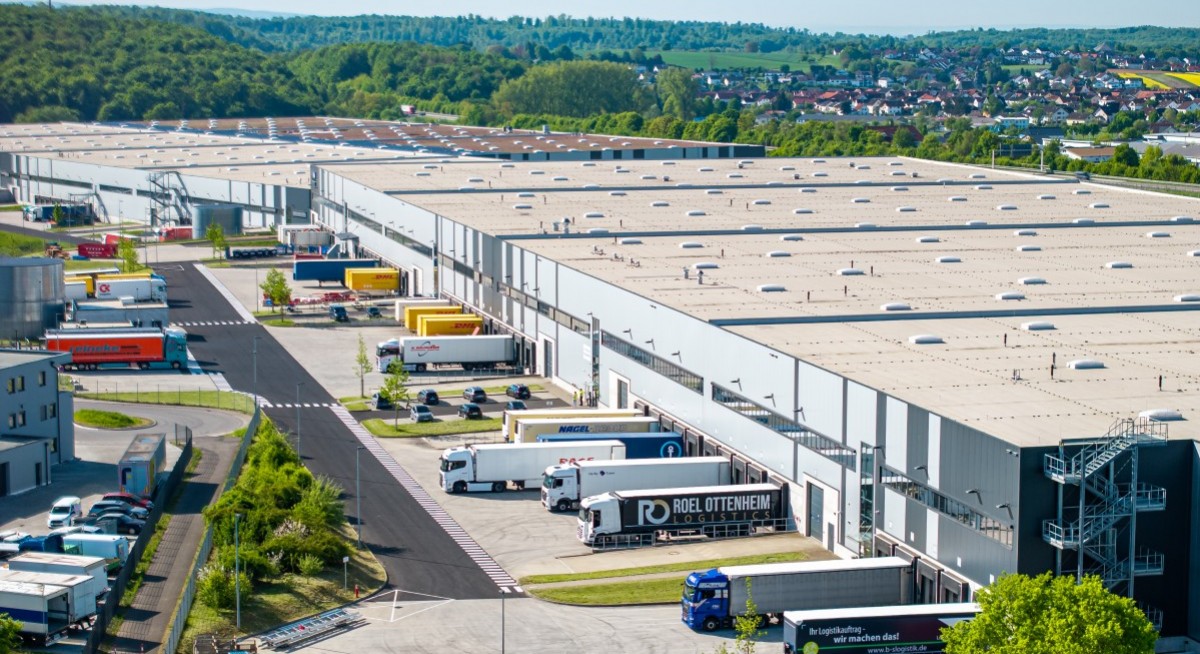


As a sector, European logistics is central to considerations around sovereignty, supply chain dependence and the state of Europe’s industrial base. Because of this, it is relatively demand inelastic.
Logistics is also a partial inflationary hedge (on an absolute basis as well as relative) to residential, retail or office sectors, given the occupier’s ability to absorb rental increases, which represent a small proportion of its cost structure. This is compatible with various different types of defensive risk management in institutional portfolios.
In my experience building out European warehouse and logistics company Logicor’s value proposition, and today in founding pan-European private real estate investment manager Boreal IM, European logistics has a huge amount of latent potential.
This is set to be accelerated by deglobalisation, offering investors in Asia a new investment lane that is fundamentally advantaged by structural tailwinds and the information asymmetry present in different European submarkets.
Given that context and when layering on how vastly undersupplied high-quality stock is in Europe due to land availability, permitting constraints and competition with other uses, it is easy to see why gaining exposure to this asset class is ranking higher in investors’ priorities.
The challenge, however, is access. Europe’s fragmented markets harbour ideal pricing conditions for durable returns, but the heterogeneity of the continent’s different submarkets widens barriers to entry.
Because of these dynamics and the opacity of Europe from the outside, selecting a trusted partner with boots on the ground is a non-negotiable for investors in Asia. This is a complicated process, made harder by the huge gap in capabilities from manager to manager. Larger managers offer generally beta-driven, sector momentum strategies, while sector specialists seek alpha through active asset management approaches.
For aligned investors, sector-specialist platforms that have the operating capability to access multiple geographies are doubly preferential because diversification reduces country-specific risks while widening the pool of available deployment opportunities and, in turn, the frequency of pricing inefficiencies.
Considered managers with this sort of reach will not spread capital aimlessly, but employ a targeted approach to asset selection across several geographies. France, Germany, Spain and Italy, for example, suffer from similar structural constraints that look attractive on the surface, but the transactional and fiscal environment, motivations of asset owners and growth dynamics are fundamentally different in each country, with nuances and retail-to-institutional pricing gaps that are not obvious on the surface.
Relatively low cap rates and a new tolerance for higher interest rates have further turned the screws on a manager’s margins for error. European logistics is, for that reason, an opportunity set that depends on rich data, deep market intelligence and active asset management to unlock value, rather than the premium once derived from bulk purchases and asset aggregation that has thinned out considerably in recent years.
Careful, accretive portfolio growth is in summary essential to consistent performance. Together with geographic reach and more detailed understanding of European submarkets to support asset selection, the best-positioned managers also cover a broader range of active asset management capabilities, from strategies that manage assets to core income profiles. These include refurbishment-led brown-to-green strategies and lease and site optimisation, in order to create assets with best-in-class sustainability credentials.
Underwriting value, therefore, relies on selecting a partner with a few specific qualities. They should be genuinely pan-European, with proven history across multiple geographies; and they should have years of contact in its selected markets. They should also be data-driven, with on-the-ground teams supporting origination to maximise off-market dealflow and exploit pricing inefficiencies in fragmented and opaque submarkets.
Unlike logistics in its nascency, which focused more on the premium that existed in asset aggregation, more granular capabilities are affording investors access to alpha in the asset class today. For these reasons, outbound investors in Asia must keep these attributes top of mind as they explore how European logistics can materially contribute to their investment objectives and the positions they have already developed at home.

Louis-Simon Ferland is the founder and CEO of Boreal IM. Founded in 2022, Boreal IM’s partners have invested over EUR13 billion across 156 transactions and 493 assets in 21 European countries on behalf of global institutional investors
For more property trends and breaking news, visit City & Country’s microsite at theedgesingapore.com/cityandcountry




