


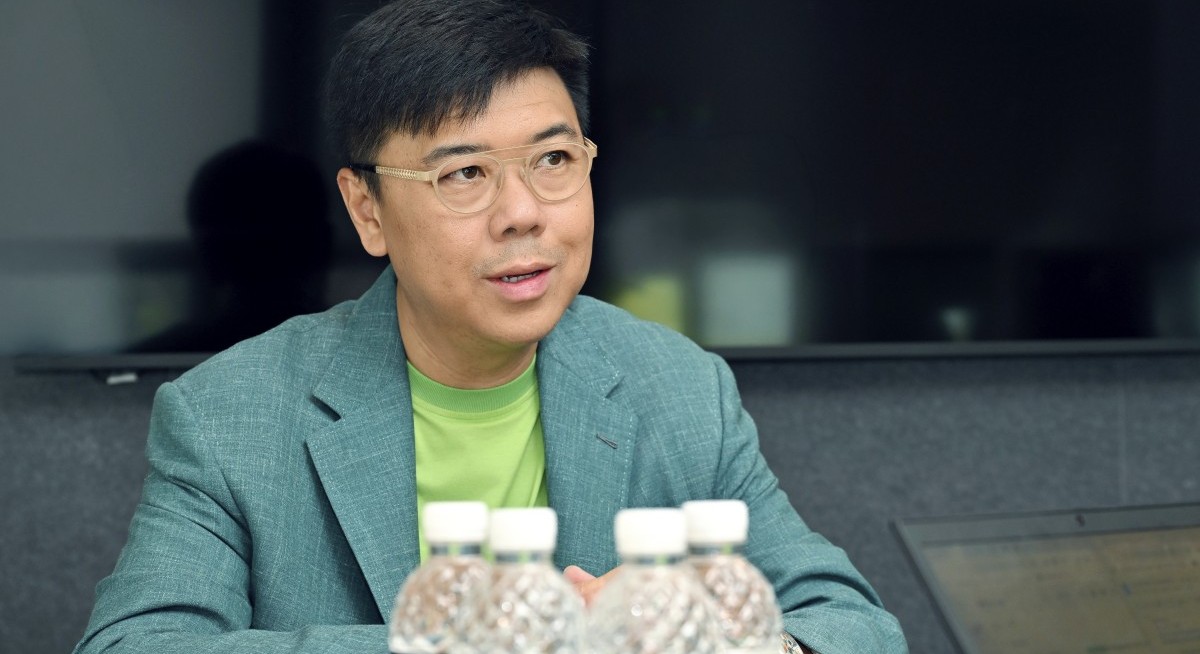


“We organise a lot of community events to engage our tenants [and] external parties who wish to take a look at what co-living is about. Our event last Saturday was quite successful; we had a turnout of 60% over what we had expected,” says Lim, who is also executive chairman and executive director of Coliwoo’s parent company LHN Group.
Held over an afternoon in April, Rave4Cake brought together three DJs and five boutique bakeries, offering attendees the chance to vote for their favourite cake flavours. Organised by B2B marketing and events firm Better Say Yess, the event was sponsored by LG Electronics, Oatly and Singtel. Coliwoo residents across the island were invited to participate.
Building “stickiness” to these accommodation offerings is among the group’s priorities this year, says Lim. He believes such social events are right up the alley of Coliwoo’s long-stay resident profile, which is evenly split between students and expatriates.
Also of interest to them is health and wellness. Opened in March, the 212-key Coliwoo Midtown features a fully-equipped gym — the largest in Coliwoo’s portfolio. Occupancy here has ramped up to around 50%, driven by expat demand. “We are working with physical trainers to roll out courses [here], which our residents can attend for free,” Lim tells City & Country. “The sessions are also open to the public [for a fee].”
See also: Work+Store to expand as demand for space grows and evolves

Opening doors
Coliwoo Midtown, formerly the GSM Building, reportedly underwent a $20 million redevelopment after Coliwoo purchased it for $80 million in 2023. Some minority owners had objected to the sale, saying the price was too low, but the High Court of Singapore approved the sale in April 2024.
See also: CapitaLand unveils R&D gem Geneo
Coliwoo Midtown was the first new property announced following Coliwoo’s IPO on the Singapore Exchange (SGX) last year. The LHN subsidiary debuted on Nov 6, 2025 with nine cornerstone investors and reported on May 6 its first full quarter of results for 2QFY2026 ended March 31.
“Last year, we spent a lot of time getting ready for Coliwoo’s IPO; that includes meeting bankers, investors, lawyers et cetera. We also had a lot of coverage on what we do and our new projects,” says Lim. “This year is our execution year; we’ll concentrate on delivering for our investors.”

Among the concerns weighing on Lim’s mind is the outbreak of war in the Middle East, which is expected to drive up costs for a range of items essential to Coliwoo’s business. “Utility costs have gone up, and even transportation costs are going up. The cost of buying mattresses and linen have gone up… We use vinyl flooring [and] I think very soon, the price will also go up, because it’s a [form of] plastic,” says Lim.
While costs have already been “locked in” with pre-committed projects, Lim tells City & Country that his team will have to factor in higher costs for future Coliwoo projects. Coliwoo’s cost of sales increased by 20.8% y-o-y to approximately $7.7 million in 1HFY2026. This increase was mainly due to rising site maintenance and utilities costs as well as employee benefits.
For 1HFY2026, the co-living operator posted patmi of $13.4 million (up 43.9% y-o-y). With adjustments from IPO listing expenses and net fair value gain on investment properties, Coliwoo’s 1HFY2026 adjusted patmi is a lower $8.6 million, 13.9% higher y-o-y.
Rental income from leased properties rose 19.7% y-o-y to some $19.1 million, making up the bulk of the half-year $26.9 million in revenue. According to Coliwoo, the uplift in rental revenue reflects the full-period contributions from the 24-room Coliwoo Hotel Kampong Glam and the 62-room Coliwoo Bukit Timah Fire Station, coupled with the initial contributions from the newly launched Coliwoo Midtown in early March.
Meanwhile, Coliwoo’s average occupancy rate across its entire portfolio stands at 97.0% as at March 31. At Coliwoo’s results briefing in May, management says there has been no notable demand impact from the war so far.
Analysts satisfied
Analysts have cheered Coliwoo’s strong showing despite its stock falling some 15% since its IPO. Coliwoo’s 1HFY2026 patmi of $13.4 million trends above DBS Group Research’s full-year forecast of $22.6 million, and analyst Geraldine Wong has a “buy” call and 88-cent target price on Coliwoo.
While RHB Bank Singapore’s Vijay Natarajan has a similar “buy” call on Coliwoo, he has a more measured 82-cent target price. Taking into account Coliwoo’s 1-cent interim dividend per share for 1HFY2026, Coliwoo offers an “attractive” 5% FY2027 yield based on a “conservative” 40% dividend payout, according to Natarajan.
Maybank Securities’ Eric Ong has the lowest target price on the street, at 74 cents, with yet another “buy” call. In a May 7 report, Ong highlights that Coliwoo is looking to pursue overseas expansion through “value-add acquisitions”, with plans to enhance and stabilise these assets before eventually executing sale-and-leaseback arrangements.
Optimising space
Lim, a second-generation leader of LHN, is clear-eyed about the group’s “space optimisation” business. “We identify under-utilised property and through [an] acquisition or master lease, we optimise the space and lease it out for financial returns or profits. The underlying skill is in identifying the property, executing our concept and leasing out the space in a swift and constant manner; maintaining the occupancy is also very important.”
The co-living sector is maturing in Singapore and the region, reads a special report by OCBC Group Research’s Ada Lim, released on May 26. According to JLL’s 2025 Co-Living Investor Sentiment Survey, 65% of investors now target internal rates of return (IRR) of less than 15% for this asset class, a significant increase from just 27% in 2023.
Coliwoo, however, observes a minimum IRR of 30%, says Lim. “We need returns on investment on our capex in the fastest possible time in order to be ‘risk-free’.”
JLL Research estimates that Singapore’s top five players — Coliwoo, Cove, Lyf, Habyt and The Assembly Place — hold an aggregate market share of 65.3% as at 2Q2025.
Established in 2018, Coliwoo is not the biggest player here. According to Knight Frank, that title belongs to The Assembly Place, which listed on the SGX in January. The Assembly Place says it has more than 3,400 keys under management and operation, while Coliwoo will reach 3,568 rooms after counting 1,021 rooms currently under renovation. Both groups are aiming to hit 10,000 rooms each by 2030.
Lim says there are benefits being under the LHN ecosystem. LHN’s self-storage subsidiary Work+Store (the focus of City & Country’s cover story in Issue 1235) partners Coliwoo to offer residents storage solutions while they are away.

“Whenever a student goes back [home] for holiday, they can leave their belongings here [in a Work+Store facility] and return the room to us. When they return, they can pick up their belongings and take up a room again. Similarly for expats, if they have to travel for more than a month, they can store their belongings in our self-storage [facilities]. That’s the flexibility and curated service that we provide,” Lim adds.
Co-living, like co-working, has taken off in land-scarce Singapore. Given LHN’s “space optimisation” expertise, which other asset classes could be ripe for a shared model? Lim thinks the same concept could be applied to “laboratories, music studios and classrooms”.
LHN is “in the midst of reinventing” itself and “growing its existing concepts”, adds Lim. According to him, the group is “in the midst of curating” a new concept that will “help elderly people” in Singapore — a product that will offer “more than assisted living”.
Upcoming projects
Next on Coliwoo’s pipeline is Coliwoo Resort Changi, the group’s first “resort-style co-living chalet project” located at 159 Jalan Loyang Besar in Pasir Ris, which will open this August.
The 380-room project spans 10,695 sq ft of commercial area. Coliwoo had submitted to the Singapore Land Authority the second-highest monthly rental bid of $225,000 for the site, just $900 below dormitory operator Tee Up.

The site has a land area of 380,869 sq ft and has a total gross floor area of 106,949 sq ft, with a three-year lease tenure and the option to extend the lease for two terms of three years each. It is in the vicinity of popular leisure spots Downtown East and Wild Wild Wet.
According to management, Coliwoo expects demand from air crew and some displacement demand from the recent en bloc of the 362-unit Loyang Valley condominium.

159 Jalan Loyang Besar is a “huge, sprawling ground” with more lifestyle offerings, says Lim. “We don’t only provide rooms; we provide event spaces as well. We have a very large swimming pool, a larger gym [than the one at Coliwoo Midtown] and in-house cafeteria and convenience store. We are also working with an operator to set up pickleball and padel courts.”
Also in Coliwoo’s pipeline are 368 rooms at 2 Changi Business Park Ave 1 (expected to be operational in 1QFY2027), 153 rooms at 1 King George’s Avenue (4QFY2027) and 120 rooms at 50 Armenian Street (1QFY2028).

Coliwoo announced on March 27 the acquisition of the hotel strata lot at 2 Changi Business Park Ave 1 for $101 million. It currently comprises a hotel building featuring more than 250 rooms and ground-floor retail space. The redevelopment will cost some $10 million.
According to Coliwoo, the asset’s location in Changi Business Park provides access to an established corporate tenant base, while its proximity to Changi Airport enables the property to serve multiple market segments, including transit passengers, aviation personnel and professionals engaged in the Changi Airport Terminal 5 construction project.
Managing growth
More transactions are expected to come. According to RHB’s Natarajan, Coliwoo is in talks to divest five of its owned assets, which are currently valued in the books at some $130 million.
The group had launched in March a portfolio of seven freehold assets for sale at a combined indicative price tag of $218.5 million. The properties, which include two assets currently under management contracts, are located across River Valley Road, Balestier Road and Rangoon Road. According to Coliwoo, several expressions of interest have been submitted for these properties, and negotiations are about to begin.
“While there has been healthy demand from family offices for its centrally located assets (River Valley, Rangoon Road), pricing for a few have fallen short of expectations — likely due to current market uncertainties,” writes Natarajan.
As at March 31, Coliwoo owns 12 properties, leases 11 properties and manages five others. The total portfolio count of 28 assets includes the four under renovation. Coliwoo’s portfolio is currently split 70:30 between rooms on master lease and self-owned rooms, and the group expects to maintain this ratio for the foreseeable future.
Coliwoo is prioritising its expansion via master lease agreements and management contracts, with an eye on reaching its target of approximately 4,000 rooms in Singapore by end-2026.
Coliwoo’s properties at 268 River Valley Road and 453 Balestier Road are under management contracts, and so are 701 beds at Boundary Close and Ulu Pandan Road under a foreign healthcare working accommodation contract signed with MOH Holdings. In addition, Coliwoo is currently engaged in a management contract to operate an accommodation project for a transport operator.
“By unlocking liquidity and realising the value created from its stabilised assets, Coliwoo can scale at a faster pace without being hindered by heavy capital investments,” reads Coliwoo’s 1HFY2026 results announcement. According to management, it takes around six months for new property stabilisation, with the breakeven point at three to four years for master lease properties.
Lim says he has seen many real estate players “come and go” over the past 30 years. “Everybody wants to be a co-living operator… Sometimes, when the craze is there, you see a lot of competitors, but after the dust settles, maybe they will know that it’s not so easy, then they will give up.”
Coliwoo is always on the lookout to grow its room count, he adds. “It’s part and parcel of the space optimisation business.”
Photos: Albert Chua/The Edge Singapore, Coliwoo




