




This shift reflects a growing recognition that complexity, scale and longevity are inseparable. Major sports and infrastructure projects are rarely short-term undertakings, often requiring more than a decade to plan and deliver.
Economic returns, from employment and urban regeneration to community benefit and environmental performance, accrue progressively — not instantaneously.
This is particularly true in Singapore, where the long view is codified through Sport Singapore’s Vision 2030, which positions sports infrastructure as a driver of participation, well-being and everyday community use.
Rather than simply hosting occasional elite competitions, continuity must be built into infrastructure, ensuring it integrates into everyday urban rhythms and remains relevant as demographics, lifestyles and technologies change.
See also: KIT announces proposed acquisition of 39% of Keppel Merlimau for $128.1 mil
These expectations are reinforced by regulation. In Singapore, sports facilities are governed under the same Building Control (Environmental Sustainability) Regulations as other non-residential developments. In practical terms, they are assessed against similar standards of energy performance, environmental impact, and operational efficiency as offices, retail assets or logistics facilities.
The clear regulatory signal is that civic status does not exempt an asset from long-term performance discipline, making life-cycle planning essential.
Leveraging technology to prolong lifespan
See also: Sembcorp’s acquisition of Alinta met with worries over impact on balance sheet
Digital delivery and planning tools have become practical enablers of this shift. Building Information Modelling (BIM) is now a baseline capability, but its growing value lies in enabling data-led scenario testing, life-cycle modelling and early interrogation of operational trade-offs.
When combined with advanced analytics and design processes assisted by digital solutions, these tools allow teams to stress-test utilisation patterns, energy demand and maintenance regimes long before construction begins.
The outcome is tangible: higher utilisation, greater operational reliability and the capacity to evolve the user experience incrementally rather than through disruptive retrofits.
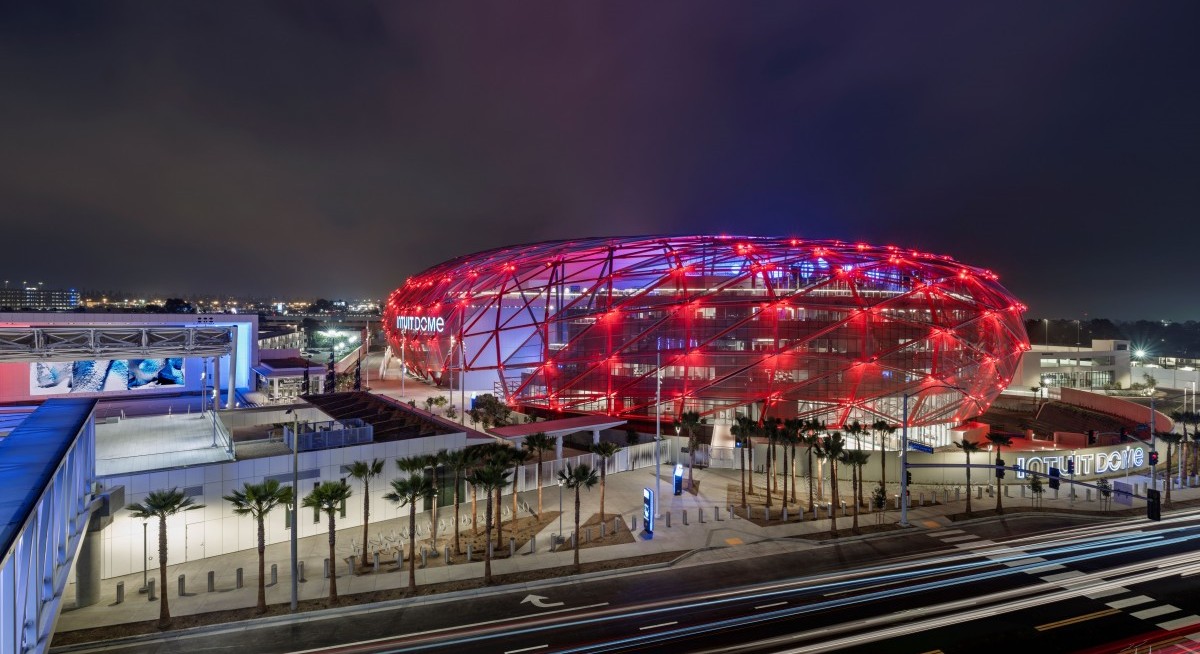
Internationally, arenas like the Intuit Dome in the US demonstrate how digital-first planning can support year-round destinations rather than sporadic event spaces. The key lesson is timing: early decisions — made when flexibility is greatest — shape asset performance for decades.
Since opening in 2024, the Intuit Dome has been recognised with 34 design and sustainability awards, but the more instructive lesson lies beyond the accolades: long-term value is the product of early decisions carried through consistently over time.
This is reflected across major event planning, from London 2012 and Rio 2016 to Hangzhou’s Asian Games Sports Centre, and the upcoming Los Angeles 2028 and Brisbane 2032 Games, where long-term social, environmental and economic outcomes are prioritised over short-term spectacle.
Inherent sustainability benefits
Long-term performance inevitably intersects with sustainability. Late-stage decisions around structure, materials and building systems often lock in higher life-cycle costs, operational inflexibility and embodied carbon. Addressing these issues at inception highlights how sustainability directly affects cost certainty, durability, maintenance intensity and long-term operational reliability.
As the Intuit Dome demonstrates, upfront material and system choices shape not only environmental footprint but also financial and functional resilience.
This challenges the assumption that sustainability “adds cost”. When viewed through a life-cycle lens, many sustainability-led decisions — on energy consumption, maintenance, adaptability, utilisation and relevance — are simply good asset management. They reduce exposure to volatility, extend useful life and protect against obsolescence in a tightening regulatory environment.
Nowhere is this convergence clearer than in the relationship between sports infrastructure and real estate investment frameworks. Increasingly, major sports facilities are assessed under similar criteria as REITs, with rubrics such as energy efficiency, operational resilience and the credibility of ESG disclosures.
In Singapore, many listed REITs now target the highest Green Mark/Platinum Super Low Energy standards, reinforcing expectations for long-life assets.
For investors, this is not a philosophical but financial shift — assets that cannot demonstrate efficiency and adaptability risk facing higher costs and diminished long-term value.
Social utility
Utilisation is central to this equation. The economic and social performance of a sports facility is defined more by non-event days than marquee nights. Accessibility, integration with surrounding land uses and ease of everyday use determine whether a venue becomes a genuine community asset or remains dormant between events.
The Singapore Sports Hub illustrates this locally — delivering value is not confined to international fixtures, but expressed through daily activity, public access and its role within a broader precinct.
When done well, such integration supports sustained footfall, diversified revenue and wider district regeneration.
Grappling with governance and delivery
Still, governance and delivery remain complex. Sports infrastructure projects often span long timelines, multiple stakeholders and shifting economic conditions.
What distinguishes assets that endure is not the absence of complexity, but early alignment. Clear principles — established at the outset and reinforced through continuous engagement — allow projects to withstand political change and market cycles. This brings us back to the idea of the “big night”.
Opening ceremonies and landmark events will always matter. But the venues that endure are judged by a broader, more demanding test: consistent performance, operational credibility and relevance over time. In that sense, sports infrastructure is no longer exceptional. It is held to the same standard as other long-life assets in the city.
The most successful projects recognise this quietly. They are designed to not only host moments, but also support everyday life; not only impress at launch, but also perform reliably long after the spotlight has moved on. In a city like Singapore, that may be the most meaningful measure of success.

Bill Hanway is executive vice president and global sports and social infrastructure leader at AECOM




