


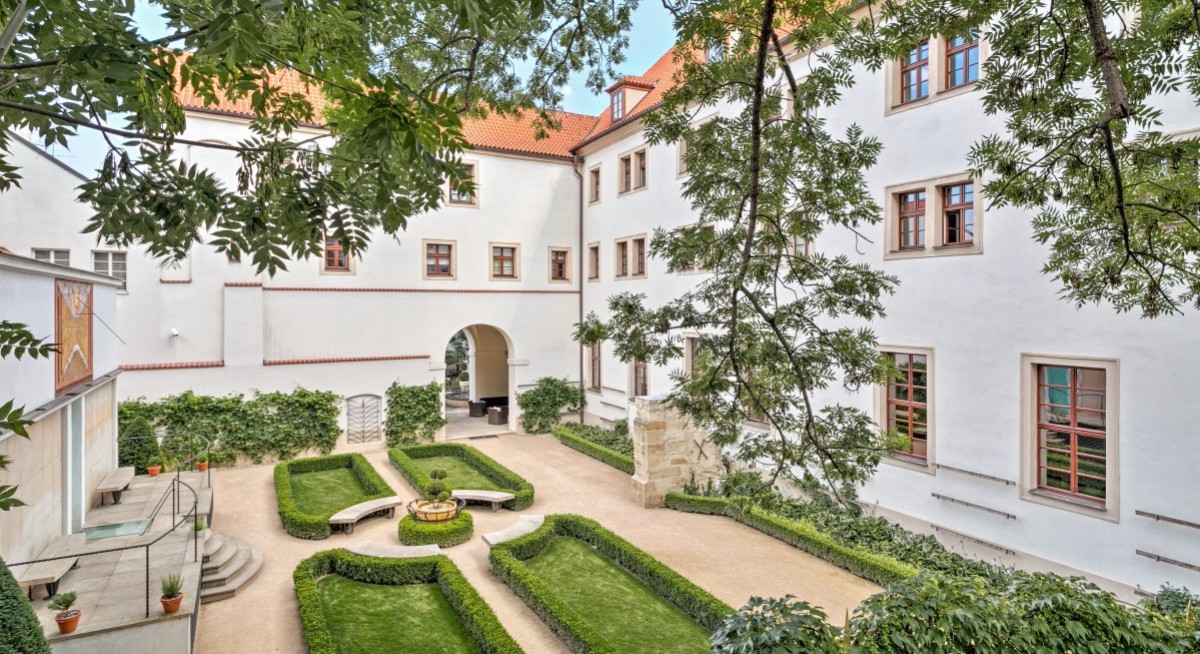


The wholly owned acquisition marks a significant step in Kempinski Hotels’ shift towards an “asset-heavier approach” to its global portfolio under CEO Barbara Muckermann, who was appointed in May 2024 as the first woman to lead the group.
The acquisition reflects Kempinski’s broader strategic recalibration towards direct investment and ownership of landmark properties “to control the guest experience from beginning to end”, says the group in an April 2 announcement.

Muckermann says: “Opportunities to acquire hotels like Augustine Hotel, Prague are exceptionally rare. This investment offered a unique and compelling opportunity to secure a heritage asset in a top-tier European luxury destination while also creating a grand showcase for… the future of Kempinski as an ultra-luxury brand.”
See also: 268-suite Waldorf Astoria Kuala Lumpur open for bookings from January
Located in Malá Strana (Lesser Town) beneath Prague Castle, the Augustine Hotel, Prague stands within the walls of the Augustinian Monastery of St. Thomas — a historical site dating back more than 800 years that remains a living, working community for Augustinian monks.

The property occupies a “carefully delineated portion” of the historic site, says the group, creating an “extraordinary dialogue” between past and present, maintaining age-old scriptures that hold learnings from centuries of contemplative life.
See also: 128-room Varel Singapore, a Tribute Portfolio Hotel, rises from former Selegie Centre site
The 101 guest rooms at Augustine Hotel, Prague includes 20 suites, “many of which feature original vaulted ceilings and wooden beams”, says the group, retaining the authentic structure of the monks’ former living quarters.
The hotel also boasts specialty restaurants, including two distinct bar concepts; one is The Refectory Bar, previously the monastery’s former dining hall.
A library hall houses a collection that spans centuries of theological and scientific thought. The hotel also contains over 400 sqm of meeting space and more than 650 sqm of outdoor terraces and gardens.
Muckermann adds: “Rather than pursuing uniformity, we believe that Kempinski’s brand strength lies in its collection of highly individual properties, many of which are historic, architectural landmarks and are deeply resonant of the destinations’ culture and community. As a storied hotel that is recognised for its deep history, cultural significance and architectural heritage, Augustine Hotel, Prague is not only an ideal addition to Kempinski’s heritage-led, global portfolio, it is set to become the first truly physical and experiential representation of the ‘Kempinski of the future’.”
Under Kempinski’s ownership, Augustine Hotel, Prague will operate as a white label, luxury hotel until late 2026. Kempinski says it will invest in “design-led refurbishment” of all rooms and public spaces while preserving the buildings’ architectural integrity and historic character.
The hotel will be reflagged as Kempinski in late-2026.
Rasha Lababidi, Kempinski’s chief product and experience officer, says: “As traditional luxury still operates within fixed frameworks, our strategy is to take a bold, intentional approach — integrating product and experience with the cultural depth and character of every destination we operate in. Augustine Hotel, Prague marks a defining moment in how we bring Kempinski’s next chapter to life. It is an exciting opportunity to reimagine a true historic icon in a way that’s relevant to modern day travellers.”
According to Kempinski, Prague ranks among Europe's top five most-visited capital cities, with growing demand for luxury hospitality. The city has been at the crossroads of European history, art and ideas for more than a thousand years, blending Gothic, Renaissance, Baroque and modern influences into a remarkably preserved urban landscape.
Prague’s Vltava River flows directly through the historic centre and connects to the Elbe River, one of Central Europe’s major waterways, creating year-round tourist demand.
Created in 1897, German luxury hotel management firm Kempinski Hotels is Europe’s oldest luxury hotel group. Today, the Geneva-headquartered group operates 82 hotels and residences in 34 countries and currently has more than 25 projects under development around the globe.
Photos: Kempinski Hotels




