


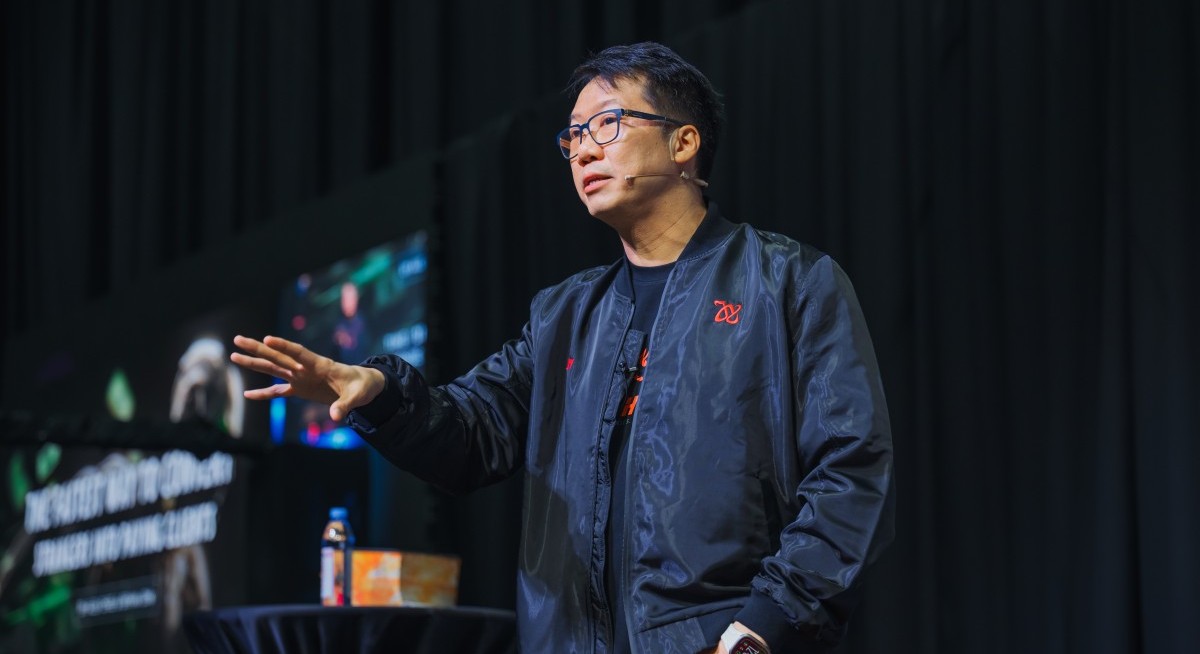


In City & Country’s earlier feature, Yap reminded readers that each individual has “four animal signs” — a sign for your Year, Month, Day and Hour of birth. “Most people only look at their Year sign, which is like judging a whole book by its spine.”
The Fire Horse year provides “heat, speed and momentum”, says Yap. In the previous feature, Yap offered his outlook on which real estate sectors could see opportunity for growth — based on fengshui — and which zodiac signs can expect a more prosperous year.
In this issue of City & Country, Yap shares his advice for those who may be expecting a tougher 2026, and how fengshui may be applicable to those new to Chinese culture.

See also: Fengshui consultant Joey Yap’s outlook for 2026: Year of the Fire Horse
C&C: How would you advise someone who may be facing a more challenging year ahead?
Joey Yap (JY): The first thing I always tell people is this: a “challenging year” is not a punishment; it is usually a signal. And it certainly is not caused by one unlucky animal sign.
Most people forget that every person has four different zodiac signs in their bazi chart; each one governs a different part of life. So, when people say “my Year sign is bad this year”, they are only reading a quarter of their story.
See also: Fully Charged
A challenging year simply means certain parts of the chart are asking for adjustment.
For example, the Rat is in direct clash with the Grand Duke this year. Clash means change, movement and disruption. People dislike change not because it is bad, but because it is abrupt. If someone resists change, they interpret the year as difficult. If someone adapts quickly, that same year becomes a turning point.
Another example is the Ox. The Ox actually has strong positive stars, but one of them, “Brutal Defeat”, warns of emotional resilience. If someone has a victim mindset or gives up easily when obstacles appear, they turn small problems into giant setbacks.
In fengshui terms, they lose the qi before the battle even starts. If they stay steady and responsive, those same stars help them achieve breakthroughs.
Even the Horse, which is the Grand Duke this year, does not always mean crisis. It means high energy and heightened visibility. If someone avoids attention or refuses responsibility, they feel pressure. If they step forward, the year amplifies their presence and their leadership.
My advice is simple: challenges do not define you; your response does.
A challenging year is usually telling you one of three things:
• You need to change something. Clash years push you out of situations that have expired. They are uncomfortable only if you cling to the old pattern.
• You need stronger emotional resilience. Stars like “Brutal Defeat” are not warnings of ruin; they are reminders to toughen the mindset. If you expect the road to be smooth, you suffer twice.
• You need to step into visibility. Some years demand that you show up, speak up or take the lead. Avoiding that responsibility creates friction.
The Fire Horse year has strong energy. For some people, it feels like pressure. For others, it feels like momentum. The difference is not the zodiac sign; the difference is whether you lean into the energy or hide from it.
If someone is facing a challenging year, I would advise them to see it not as a wall, but as a training ground. It is a year that grows capability, builds clarity and pushes you into the next version of yourself.
That is the real purpose of challenge in metaphysics; the chart does not block your path — it shows you where you must grow so that you can walk it.
C&C: Is fengshui advice applicable across cultures and countries? How would you introduce your work to those who may not be familiar with fengshui?
JY: Absolutely! Fengshui works across cultures because it is not based on culture — it is based on how people behave and respond in physical space. The ideas came from China, but the principles themselves are universal.
Every country has sunlight, wind, pathways, human habits and architecture; fengshui simply studies how those elements influence people.
When I explain this to audiences overseas, I do not start with dragons or lucky colours. In fact, there is no such thing as a lucky colour.
I start with a simple idea — environments affect behavior. Where you sit changes your focus. How energy flows through a room affects communication. How light enters a space influences mood. These concepts are not “Asian” — they are human.
In our work, we take this universal foundation and apply it with a modern, data-driven approach. My team and I analyse layouts, directions, timing and human decision-making. We look at how environmental design supports performance, well-being and clarity.
Whether the client is in London, Dubai or Tokyo, the question is the same: Does the space help you function at your best, or does it fight you quietly every day?
This is why fengshui fits well across cultures. It does not require belief; it requires observation. Once someone sees how the flow of a house affects productivity, or how an office layout influences team communication, the idea becomes obvious.
They may not call it fengshui, but they recognise the effect instantly. To foreigners, I introduce fengshui as a human optimisation system that uses environmental design, timing and personal strategy. It is a framework for making better decisions and creating better spaces.
To be honest, the moment people see results, the cultural question disappears. They only care that it works. My team’s role is to make it practical — not mystical. We translate classical formulas into insights that CEOs, homeowners and businesses can apply in real life.
For us, fengshui is not superstition or decoration; it is a strategic tool that helps people shape environments to support their goals.
Yes, fengshui is culturally portable. People everywhere want better homes, better offices and better clarity. Fengshui simply offers the tools to get there.
Also, I need to emphasise that fengshui is also not a religion. There is no central divine being you have to worship, no prayers and no rituals of devotion.
It is no different from practices like taichi or yoga. Taichi may have emerged from Taoist ideas, just as yoga has roots in ancient Indian philosophy, but nobody calls taichi a religion.
Fengshui falls into the same category. It was developed from observing natural laws, yin and yang dynamics, and how people interact with their environment. It asks you to think, not to believe.
You do not pray to fengshui; you apply it, you test it and you use it the same way you use good architecture or good ergonomics, as a practical method to improve the way you live and work.
Joey Yap shared his predictions last month in Issue 1223 of City & Country:
Fengshui consultant Joey Yap’s outlook for 2026: Year of the Fire Horse
For more property trends and breaking news, visit City & Country’s microsite at theedgesingapore.com/cityandcountry




