


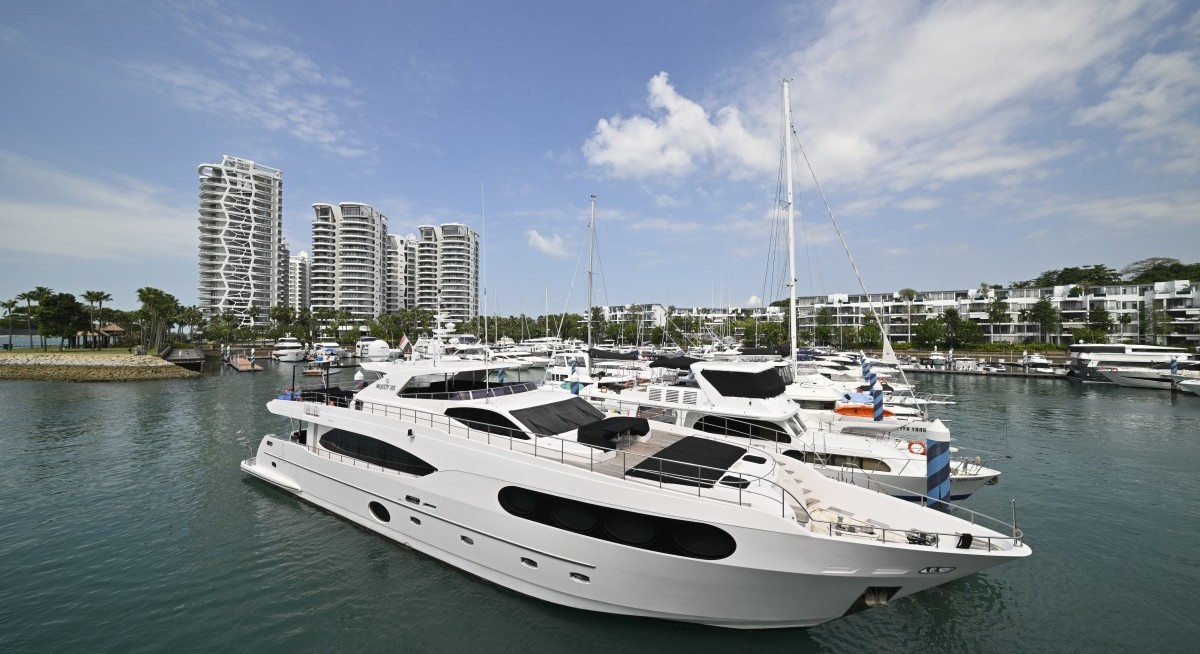


Sentosa Cove’s property market paints an equally grim picture. More than one in three strata-titled condominium units sold there changed hands at a loss, according to City & Country’s analysis of 938 transactions based on Urban Redevelopment Authority (URA) Realis data since 1995.
Nearly two decades after prices peaked, the area’s median psf price stands at $1,728 psf so far this year, 24% below the 2010 high of $2,264 psf. By comparison, the broader District 4 (D4), which encompasses Telok Blangah, Harbourfront, Keppel Bay and Sentosa, saw its median psf price grow by 52% from $1,228 psf in 2010 to $1,868 psf in 2026.

That said, the few homeowners who managed to sell in the black have enjoyed substantial gains. Transactions in the Southern Islands — which includes Sentosa Cove — generated a median gross profit of approximately $332,931, equivalent to a median gain of 13.3% over a median holding period of 4.5 years.
See also: Nearly all D5 condos profitable over past decade despite short 4.9-year average holding period
That profit outpaces the broader D4 market. Across 4,201 transactions since 1995 analysed by City & Country, D4 sellers recorded a lower median profit of $250,000, despite holding their properties for a longer median period of 6.3 years.
District 4 performance
Of the 4,201 homes that changed hands in D4, 3,163 (or 75.3%) were profitable. The district recorded a median profit of approximately $250,000 and a median gain of 15.2% over a median holding period of 6.3
years.
See also: 96% of District 16 condo deals were profitable over the past decade
Much of that strength comes from projects in Bukit Merah and the Keppel waterfront precinct.
The Interlace, a 99-year leasehold development launched in 2009, recorded 527 profitable transactions (95.6%) out of 551 homes that changed hands. The median profit is approximately $307,900, with a median holding period of 6.4 years.
Similarly, Caribbean at Keppel Bay, which attained its temporary occupation permit (TOP) in 2004, saw 971 profitable transactions (90.0%) out of 1,079 homes that changed hands. The median profit is approximately $392,800, with a median holding period of 5.9 years.
The Pearl @ Mount Faber performed even better. Of the 236 homes that changed hands, 227 (96.2%) were profitable, with a median profit of approximately $440,000 and a median holding period of 5.1 years.
However, not every waterfront luxury project in D4 performed as well. One significant underperformer is Reflections at Keppel Bay.
Developed by Keppel Land and designed by renowned architect Daniel Libeskind, the 99-year leasehold project comprises six distinctive glass towers and 11 low-rise villa blocks overlooking Keppel Bay. When it was launched in 2007, the condominium was one of Singapore’s most prestigious waterfront developments.
Yet prestige did not necessarily translate into profits. Among the 592 transactions analysed by City & Country, only 254 were profitable — or 42.9%. Overall transactions recorded a median loss of approximately $56,000 despite a longer median holding period of 9.7 years.
One key reason for its underperformance is “timing of the launch”, says Huang Han, senior associate division director at PropNex.

Reflections at Keppel Bay was launched during one of Singapore’s strongest luxury property cycles, when “buyers were willing to pay a substantial premium for waterfront homes”, adds Huang. “Launch prices averaged about $1,900 psf back then, more than double the Rest of Central Region’s average of roughly $900 psf at the time.”
Huang says: “When you buy at more than 100% above the surrounding market; prices become stickier and it becomes much harder to achieve an appreciation later when you want to sell.”
Hence, less than half of the transactions since the condominium’s launch were profitable. “Some transactions eventually recorded losses running into half a million dollars,” adds Huang.
Still, property agencies City & Country spoke to believe the longer-term outlook for the precinct could improve as major infrastructure and redevelopment plans take shape.
Marcus Chu, CEO of ERA Singapore, says the trajectory of Singapore’s southern coast is set to change with the opening of the Keppel, Cantonment and Prince Edward Road MRT Stations on the Circle Line in July. “These are the last stations along the Circle Line to open, and their launch is anticipated to improve connectivity and make the Greater Southern Waterfront area more appealing.”
The launch of sites in the district under the government land sales (GLS) programme also “highlights the neighbourhood’s appeal”, adds Chu.
Recent GLS sites include the Telok Blangah Road plot, which was launched in November 2025. It attracted three bids, with the highest at $918.3 million, or $1,326 psf per plot ratio (ppr). Upcoming GLS sites include the Berlayar Drive plot, whose public tender is set to close in August; and the Berlayar Close site, which is planned for launch in December, notes Chu.
Caught in the bust

While Sentosa Cove has produced some of Singapore’s biggest residential gains, it has also produced some of the most painful losses.
The strongest-performing projects in the Southern Islands were generally the earliest developments launched in Sentosa Cove in the early 2000s. In contrast, projects launched from 2007 onwards have tended to record substantial losses upon resale.
The trend mirrors broader movements in Singapore’s residential property market. Private home prices rose 10% in 2006 and accelerated further in 2007, when luxury homes along Orchard Road began crossing the $5,000 psf mark. Against this backdrop, new launches at Sentosa Cove were marketed at close to $2,600 psf — an unprecedented price level at the time.

The exuberance prompted the Singapore government to step in with a cooling measure in October 2007, immediately withdrawing the Deferred Payment Scheme (DPS) for property purchases. At the same time, cracks were beginning to emerge in the US subprime mortgage market, which would eventually trigger the global financial crisis (GFC).
Although private residential property price growth moderated in 4Q2007, the market still recorded a 31% increase for the full year — the fastest annual gain since 1999. Transaction volume reached a then-record 40,650 units, up some 60% y-o-y, while developers sold a record 14,826 new homes.
Speculative activity was also rife. In 2007, there were 4,863 subsale transactions — nearly 10% of all private residential sales that year — reflecting a market where many buyers were purchasing properties with the intention of flipping them for short-term gains.
Against this backdrop, some of Sentosa Cove’s earliest projects, launched before the sharp increase in prices, delivered strong returns for owners.
The Berth by the Cove, a 99-year leasehold development along Ocean Drive that was launched in 2004 and obtained its TOP in 2006, recorded 181 profitable transactions (83.4%) out of 217 resale deals. The median profit is about $540,000 — equivalent to a median gain of 33.2% — over a median holding period of 4.1 years.
Similarly, The Azure — launched in 2005 and completed in 2008 — recorded 101 profitable transactions (77.1%) out of 131 resale deals. The median profit is approximately $578,318, or 24.9%, despite a relatively short median period of 2.8 years.
Interestingly, most of the projects that generated consistent resale profits were launched before 2007, before the onset of the GFC.
A different picture emerges for projects launched at the height of the boom after 2007. Developments such as Turquoise, Marina Collection and Seascape were launched between 2007 and 2010, a period when waterfront luxury homes in Sentosa Cove were commanding some of the highest prices seen then in Singapore’s residential market.
As a result, many buyers entered at peak valuations, leaving little room for further price appreciation in the years that followed.

Turquoise, a 99-year leasehold development launched in 2007 and completed in 2010, recorded only one profitable resale transaction out of 32 deals. The project recorded a median loss of approximately $2.58 million, representing a 43.2% decline in value. Notably, units were held for a median period of 10.1 years before being sold, suggesting that time alone was insufficient to offset the high entry prices.
The 124-unit Marina Collection exhibited a similar pattern. The 99-year leasehold project, launched in 2007 and completed in 2011, recorded just two profitable resale transactions out of 28 deals. The median loss is about $1.92 million, representing a 32.4% decline, despite a median holding period of 12.4 years.
Among the three projects, Seascape fared relatively better, although losses remained significant. Launched in 2007 and completed in 2011, the 99-year leasehold development recorded a median loss of approximately $1.97 million, or 32.8%, with a median of 9.2 years.
Bank valuation below transacted price
While the transaction data captures completed sales, it does not include the current valuations of units where owners decide not to sell.
Huang recalls “dropping” a Sentosa Cove listing after marketing it for about seven months, as the owners “could not accept a bank valuation that is lower than their purchase price”.
The owner of the 3,025 sq ft unit at The Berth by the Cove purchased the home in 2007 for around $4.5 million as its second owner. However, based on recent bank valuations listed in PropNex’s property analysis tool, the unit is valued at around $3.5 million today, representing about a $1 million decline in price even after nearly two decades.
Huang attributes this to “the lower and rather muted transaction volume for such large-sized and high-priced assets in the area”, which resulted in “stagnation of property prices”. One key factor valuers take into account is the prices of nearby transactions for properties of a similar size.
Huang adds that the owners were not “desperate to sell either”; they would rather rent out the unit than sell it at a loss as rental income is still “quite substantial”. The unit can fetch approximately $10,000 in monthly rental income, according to Huang, noting that “any rental that is equivalent to or above $10,000 is considered high and uncommon”.
He adds that there is a dynamic unique to Sentosa Cove, where many owners — mostly foreigners — purchase these properties as second or vacation homes. Hence, without the urgency to sell, most owners can “afford to wait”.
Christine Sun, chief researcher and strategist at Realion Group (OrangeTee & ETC), agrees. “Private homes in Sentosa have historically been acquired as secondary homes, holiday residences or investment assets. This area experienced heightened interest from foreign purchasers during the 2007 property market boom. However, implementing multiple regulatory measures targeting foreign buyers has resulted in a subsequent decline in demand.”

The latest increase in additional buyer’s stamp duty (ABSD) for foreigners to 60% in 2023 has also affected transaction volume in the Southern Islands. Since then, the number of foreign purchasers has fallen by more than 55%, dropping to single-digit levels.
Data from URA Realis shows that foreign demand for homes in the Southern Islands peaked between 2006 and 2007. During those two years, 106 and 80 foreign buyers purchased homes in Sentosa Cove, respectively, accounting for 29% of all transactions in the enclave in each year.
Big homes, small buyer pool
Sentosa Cove’s proposition as a “resort-style enclave” also narrows its buyer pool, says Leonard Tay, head of research at Knight Frank Singapore. “Families prioritising proximity to reputable schools may gravitate towards established residential districts instead.”
Indeed, the lack of “essential amenities” like schools, malls and hawker centres has rendered the location “less attractive” to locals, says Sun. Instead, local investors have shifted their focus to the Downtown Core and Orchard districts, which offer various “competitive real estate options”, she adds.
Compared to mature estates, Sentosa also suffers from poorer integration into Singapore’s public transport network, says Tay. “Commuting often requires reliance on private transport or feeder connections, which can be perceived as less convenient for daily routines. [This] narrows the buyer pool primarily to car-owning households.”
Larger luxury units in Sentosa Cove could remain on sale for even longer periods. Huang says the buyer pool shrinks dramatically as quantum prices rise. “Out of 100 buyers, maybe only one would specifically think about buying in Sentosa; most people wouldn’t even consider it.”
The challenge becomes particularly acute for larger four- or five-bedroom units, with price tags above $4 million that “buyers find hard to stomach”, he adds.
Greater Southern Waterfront

The Greater Southern Waterfront (GSW) — first announced in 2013 — comprises 30km of coastline stretching from Marina East to Pasir Panjang and 20,000ha of land. One of Singapore’s largest urban transformations will include a slew of new housing developments, attractions and offices in the precinct.
Since 2025, Build-to-Order projects have also been launched in the precinct, with more projects planned this year. “Together, these developments are expected to deliver about 7,000 HDB units, [with] the influx of public housing likely [boosting] the development of amenities and [increasing] demand for private housing [alongside] 3,000 new private homes,” says ERA’s Chu.
Greater Sentosa — a key component of the GSW vision — will see Sentosa and Pulau Brani redeveloped into a recreational island with new attractions, hotels, waterfront promenades, event spaces and transport infrastructure.
Together, the development will “boost the neighbourhood’s appeal”, says Chu.
Commenting on connectivity, Knight Frank’s Tay says the proposed enhancements to road networks and pedestrian-friendly waterfront promenades would better integrate the area with the rest of Singapore. “Improved public transport access would address one of the longstanding concerns particularly about Sentosa’s relative detachment from the main island.”
The attractiveness of homes in the Keppel Bay and Sentosa vicinity is “expected to strengthen” as the development introduces more live-work-play elements and the southern coastline is transforming into a more vibrant mixed-use district, adds Sun.
In the longer term, the proposition for the area could be further enhanced as more housing, commercial offerings, public spaces and improved connectivity are introduced, adds Sun. “As the district matures, residents may benefit from a more complete ecosystem with greater convenience and lifestyle options. The area has also demonstrated healthy rental demand.”
Based on URA rental data, Reflections at Keppel Bay has consistently ranked among the “more actively rented city-fringe developments,” says Sun, suggesting that tenants are attracted to its “waterfront setting and connectivity”. “Over time, [when] more waterfront residential projects are introduced under the broader transformation, future developments could potentially command stronger pricing due to their location attributes and the wider uplift from surrounding infrastructure and amenities.”
The recent yacht fire is but a blip in the history of luxury homes in Sentosa Cove, though “some mild perceived effects might heighten sensitivity briefly”, says Knight Frank’s Tay. “Such incidents are generally viewed as isolated operational or safety events rather than systemic risks tied to the residential environment itself. Sentosa Cove’s appeal is anchored in its unique offering of waterfront living, marina access and exclusivity, which remains fundamentally unchanged.”
Charts: City & Country, PropNex
Data: URA Realis
Infographic: URA
Photos: Albert Chua/The Edge Singapore
For more property trends and breaking news, visit City & Country’s microsite at theedgesingapore.com/cityandcountry




