


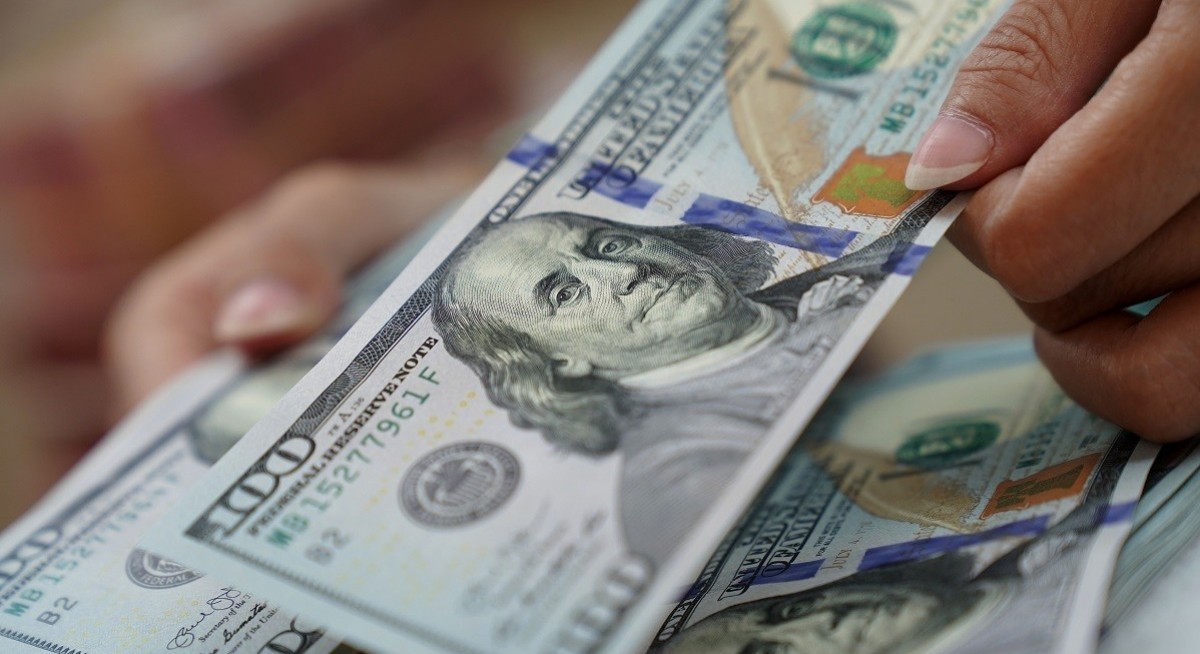


BofA’s survey, which ran from May 8 to May 14, involved 200 panellists with US$517 billion ($660 billion) in assets under management. Based on the survey’s findings, fund managers have reduced their cash levels from 4.3% in April to 3.9% in May, the biggest monthly drop since February 2024. BofA says that a cash level below 4% can be read as a sell signal for markets. The same survey found a record monthly surge in allocation to equities. Half of the respondents said they are overweight on stocks in May, up from 13% in April, representing the highest allocation to equities since January 2022.

To be sure, it is hard to fault fund managers for going nearly all in on the market. The euphoria and confidence in the AI boom have allowed the market to brush aside earlier fears about how the war in Iran could affect the economy. While oil prices have hovered at around the $100 mark after the blockade of the Strait of Hormuz, stock valuations for AI-related counters have only continued to climb.
In May, memory chip giants Micron, Samsung and SK Hynix all passed US$1 trillion in market value for the first time. South Korea’s flagship Kospi index — with Samsung and SK Hynix making up half its market capitalisation — is up nearly 109% year to date as of June 1. That is on top of the trillion-dollar valuations that Anthropic, OpenAI, and SpaceX are gunning for in their planned IPOs.
See also: Valuing companies using discounted assets
High-net-worth individuals (HNWIs), however, think differently about holding cash. According to a survey published by Swiss private bank Lombard Odier on May 28, HNWIs in Asia Pacific who hold cash and other highly liquid assets are looking to increase their exposure to these assets.
Lombard Odier’s study was conducted from December 2025 to February, before the Iran war broke out. The survey captured responses from over 390 HNWIs living in Asia Pacific, including Australia, China, Hong Kong, Japan, Singapore, Taiwan, Thailand and the Philippines. Respondents had at least US$1 million in net investable assets.
Based on the survey, 73.7% of respondents say they are already invested in cash and highly liquid assets, the highest percentage among all the assets polled. Listed equities came in second at 67.5% of respondents.
See also: China market headed for another upcycle, says T Rowe Price’s Zheng
Show me the money
Notably, 38.9% of respondents who already hold cash and highly liquid assets say they intend to increase their allocation to these assets over the next 12 months. That number is even higher among those not currently exposed to that asset class: 43.7% say they plan to invest in cash and highly liquid assets in the next 12 months, the highest share of any asset class.

“This is hardly surprising in uncertain times, with quick access to investments hugely desirable at a time of geopolitical and macroeconomic uncertainty,” the report writes. “Furthermore, Apac has recently witnessed volatile interest rates in some markets and significant regulatory changes, which reinforce the need for flexibility.”
That trend is even more pronounced in certain countries. 50.0% of respondents from China say they intend to increase their exposure to cash and highly liquid assets. In fact, 20.8% of them say they are looking at a major increase of 10.0% or more. Similarly, in Taiwan, 46.0% of respondents intend to increase their exposure, with 19% expecting a major increase.
Interestingly, Taiwanese investors are keener on equities than Chinese investors. Some 81% of respondents from Taiwan hold equities, compared with just 37.5% from China, the lowest among the Apac markets surveyed by Lombard Odier. That said, 58.3% of Chinese respondents plan to increase their exposure to equities over the next 12 months.
Support from Chinese investors will be critical to sustaining the rally in China’s equity market. According to a March 31 HSBC report titled Looking beyond the uncertainty, Mainland Chinese households and funds bought nearly US$200 billion of Chinese equities in the Hong Kong market last year.
For more stories about where money flows, click here for Capital Section
“Mainland Chinese households and institutions are likely to continue rotating into equities,” HSBC’s analysts write. “On our estimates, there is plenty of cash in China for them to acquire more local equities in either Hong Kong or Shanghai and Shenzhen. Albeit perhaps not at the velocity they acquired stocks last year.”
Not all investors, however, are raring to hold more cash. For instance, in Thailand, only 23.1% of respondents say they will increase their exposure, while 50% of them plan to reduce their allocation. Respondents in Malaysia shared similar sentiments, with 47.6% looking to decrease their exposure to cash and highly liquid assets.
While it may make sense to hold cash or other liquid assets during times of geopolitical uncertainty, such as now, investors need to be mindful of the trade-offs involved.
“The irony is that whilst you are hoarding cash, you are implicitly damaging your longer-term earnings potential,” says John Woods, chief investment officer and head of investment solutions at Lombard Odier Asia. “Cash tends not to attract or generate the type of returns that, for example, equity markets are doing.”
“Holding cash at 20% or 30% is not really a meaningful strategy,” Woods continues. “It hurts performance. It speaks, frankly, to a lack of professionalism in managing liquidity and assets generally. Were there a structured asset allocation, typically that cash would be allocated and [would] work harder than, for example, sitting in the bank.”
Don’t go wild with crypto
Lombard Odier’s survey found that digital assets and cryptocurrencies are popular amongst the younger generation. About 31.2% of millennials (aged 29 to 44) and 20% of Generation Z (aged 28 and below) have exposure to digital assets, compared with 8.4% of Baby Boomers (aged 61 and above) and 12.7% of Generation X (aged 45 to 60). Notably, 47.2% of millennials surveyed say they plan to increase their allocation to digital assets or cryptocurrencies.
Cryptocurrency prices have been fluctuating wildly over the past year. Bitcoin, for instance, has gone from hero to zero, with prices falling by over 40% to about $71,000 on June 1, down from an all-time high of over US$126,000 in October. While some might be keen to speculate on cryptocurrencies given their high volatility, Woods argues that investors should not make cryptocurrencies the centrepiece of their entire portfolio.
“We tried to introduce crypto into a discretionary private mandate, and it was just too volatile,” Woods adds. “It was just throwing the whole signature for the portfolio out of whack continuously, and so we had to abandon it.”
“I have issues around crypto as an asset, but as a component in a multi-asset portfolio, it was just far, far too volatile. When I see Gen Z and millennials expressing such an open appetite for this type of asset, as long as it’s a satellite rather than the core, I have no problem with it. When it becomes part of the core, I do start to get a bit nervous.”
Differing attitudes to gold
When the war in Iran first broke out in late February, investors who were betting on a flight to safety into assets like gold were left disappointed as gold prices remained muted. Gold is currently trading at around US$4,500, down from its January peak price of around US$5,600.
Yet, that has not dampened investors’ appetite for gold. Based on Lombard Odier’s survey, over or around a third of investors in China (42.9%), the Philippines (36%), Hong Kong (33.3%), and Malaysia (31.8%) are planning to invest in gold in the next 12 months, higher than investors from Japan (19.4%), Australia (17.5%), and Singapore (16.0%).
Woods says the immense popularity of gold in countries such as China is mainly due to their cultural and policy attitudes toward the precious metal. “The Chinese authorities have actually promoted the ownership and holding of gold, more broadly among citizens, and of course they have responded aggressively,” he adds. “In fact, there are also cultural artefacts around the ownership of gold.”
“Where there’s a cultural preference or certainly a governmental mandate to own gold, levels of ownership are higher, but where other countries [who prefer to hold] simple, liquid assets, then it tends to be a lot more market-oriented.”
Lombard Odier remains overweight on gold because of its value as a “portfolio hedge,” says Woods. The bank expects gold prices to rise by US$800 to US$900 over the next 12 months.
“It earns and competes favourably among other commodities in our overall asset allocation approach,” adds Woods. “Gold has been doing really well until recently. I sense that it’s likely to bounce.”




