


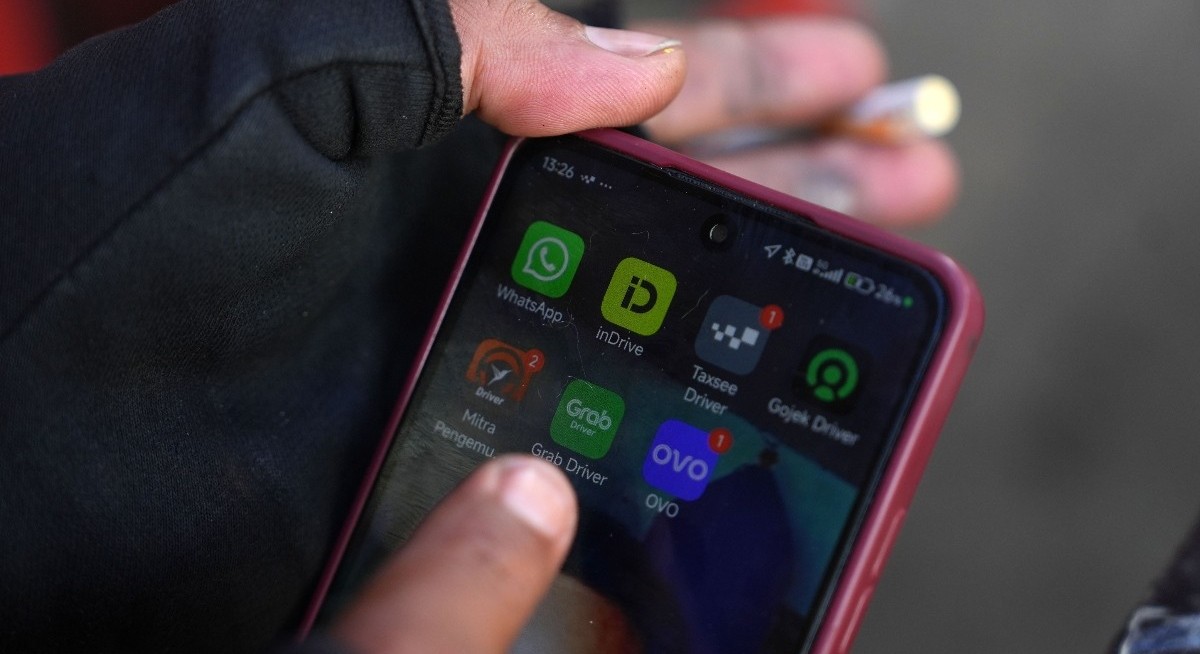


To this end, Grab expressed confidence in its long-term financial outlook, providing upbeat 2028 guidance. Maybank Securities analysts Hussaini Saifee and Etta Rusdiana Putra note that Grab’s introduction of extended financial targets is based on its belief that it has reached “escape velocity”, as evidenced by platform scale, deepening product-led engagement, and unlocking AI efficiencies.
“[This is] a framing that investors broadly welcomed, particularly as the targets are positioned ahead of street expectations,” the analysts add. Maybank has a “buy” call on Grab with a target price of US$4.46.
For one, Grab is targeting US$1.5 billion in adjusted ebitda by FY2028, with an adjusted free cash flow conversion rate of 80%. In comparison, CGS International’s (CGSI) adjusted ebitda forecast for the same period stood at US$1.37 billion. The company reiterated its confidence in achieving these targets and emphasised greater flexibility to accelerate platform expansion while continuing to deliver shareholder value, notes analyst Jacquelyn Yow.
In FY2026, Grab guided revenue of US$4 billion to US$4.10 billion, slightly below market expectations of US$4.13 billion. Ebitda guidance of US$700 million to US$720 million is also below the consensus of US$736 million.
See also: It’s a hit for MIS specialist Intuitive Surgical
CGSI’s Yow forecast FY2026 adjusted ebitda at US$718 million, 43% higher y-o-y. This is underpinned by 20% y-o-y on-demand GMV growth, supported by higher MTUs and gradual margin expansion, driven by operating leverage and greater deployment of technology, such as AI, to enhance efficiency.
“Management also reiterated its confidence in achieving breakeven for the financial services segment by the end of FY2026. This will be supported by stronger loan book expansion, particularly within the micro, small and medium enterprise segment, leveraging on Grab’s ecosystem data and backend technology to strengthen credit underwriting and risk management capabilities,” she adds. CGSI has maintained “add” on Grab, with a lower target price of US$6.25 from US$7.20 previously on valuation change for its financial services segment.
DBS Group Research analyst Sachin Mittal describes the potential financial services breakeven as a “key catalyst”, projecting Grab’s group-adjusted ebitda CAGR of 46% for FY2025–FY2027. The analyst also forecast a 17% CAGR in on-demand GMV.
See also: Singtel’s Thai associate is its new divestment tap to fund capex, dividends and buybacks
“Excluding financial services, adjusted ebitda CAGR is projected at 30%, driven by gradual margin expansion in the deliveries [segment],” says Mittal. DBS has maintained a “buy” rating on Grab, with a revised target price of US$5.93, down from US$7.55 previously.
Meanwhile, analysts at HSBC Global Investment Research expect adjusted ebitda CAGR of 42% over FY2025–FY2028 to US$1.44 billion by 2028, citing multiple levers for ebitda growth. Analysts Piyush Choudhary, Rishabh Dhancholia and Jeffrey Ng maintain their “buy” rating with an unchanged target price of US$6.20.
First foray outside Southeast Asia
On March 23, Grab announced the acquisition of Delivery Hero’s foodpanda business in Taiwan for US$600 million. The all-cash deal marks Grab’s expansion into its ninth market and its first outside of Southeast Asia. Slated for regulatory approval in 2H2026, the full migration of users, merchant-partners and driver-partners from foodpanda to the Grab app should be completed by early 2027.
Surprised by the move, Citi analysts Alicia Yap and Monique Pollard believe Grab may find the opportunity “too attractive to pass”. That said, they point out that Uber’s previous move to acquire foodpanda’s Taiwan business in May 2024 for US$950 million was blocked by Taiwan’s Fair Trade Commission, leading to the deal’s termination without an appeal.
Jefferies analysts Thomas Chong and Zoey Zong highlight that Grab’s deal reflects a discount of more than 30% to the US$950 million acquisition price proposed by Uber. They add that Taiwan’s population is about four to five times that of Singapore, with a high GDP per capita. Post-acquisition, Grab will have a presence across 21 cities in Taiwan.
The foodpanda business generated about US$1.8 billion in GMV in 2025, and was profitable on an adjusted ebitda basis in 2025. Despite expecting Grab to incur costs, including for system integration and branding in 2026 and 2027, the analysts believe the business is able to generate incremental profit in 2028.
For more stories about where money flows, click here for Capital Section
Through foodpanda Taiwan, Grab will mainly compete with Uber Eats, Citi analysts further note. “We believe it could also extend its mobility business into Taiwan after the integration is complete. In addition, with some overlap between on-demand grocery and e-commerce demand, Grab might also face competition from Coupang and Shopee.” Citi has a “buy” call on Grab with a target price of US$7.20.
Grab has been making a bigger push into AI, looking to AI efficiency and cloud optimisation to help lower its corporate costs. The company is currently equipping its merchants and drivers with an AI agent and AI ride-guide, with over 90% of rides fully dispatched with AI, Jefferies analysts point out. Grab is also improving credit underwriting with AI, they add. Jefferies is keeping “buy” on Grab, lowering its target price to US$6.70 from US$7.
Meanwhile, Grab has also recently announced the full acquisition of Stash Financial, which operates the AI-powered investing platform Stash. This is not to be confused with another fintech company, StashAway, a Singapore-headquartered regional robo-advisory service which also operates in Malaysia, Hong Kong, Thailand and the Middle East.
Regulated by the US Securities and Exchange Commission, Stash is a subscription-based app with over one million consumers and US$5 billion in assets under management. The app features AI tools, including AI Money Coach, a “financial companion” offering guidance and execution. Interactions with AI Money Coach are auditable and configurable through defined policies and controls.
Grab plans to support Stash’s continued growth in the US consumer market while exploring opportunities to introduce solutions, such as AI Money Coach, in Southeast Asia, though no timeline has been established. The transaction is expected to close in 3Q2026.
Grab has emphasised that the acquisition is not a strategic pivot into the US market, CGS’s Yow says. It is, however, a way to acquire technology, talent and capabilities.
Stash will remain a standalone brand in the US, led by its existing leadership team. Grab expects Stash to report about US$60 million in adjusted ebitda in 2028. This illustrates the potential for profitable scale within Grab’s expanded fintech ecosystem, says Yow.
Grab’s growing lean towards AI comes amid an AI-driven industry shift currently impacting its single-vertical peers.
DBS’s Mittal says Grab’s diversified super-app model integrates food, mobility, groceries and fintech on a shared driver and payments infrastructure, creating higher switching costs and cross-vertical synergies. This strengthens Grab’s market position. “Management sees AI-optimised bundling as a key margin driver,” he adds.
Robotaxis in Southeast Asia
Aside from these business verticals, AVs or robotaxis are another business that Grab is actively rolling out this year. The company is currently testing Ai.R — a public autonomous ride service that it operates with Nasdaq- and Hong Kong-listed AV technology company WeRide — in the Punggol district. The Ai.R fleet comprises 11 AVs — 10 five-passenger GXRs and one eight-passenger Robobus.
In Singapore, Grab has secured strategic partnerships with WeRide and Tencent-backed AV start-up Momenta. Although Grab is well-positioned to spearhead the robotaxi rollout in Singapore, says DBS, it has no large-scale commercial robotaxi service, aside from pilot programmes such as Grab’s Ai.R autonomous fleet in Punggol, which is still in early trial stages. “The market is expected to start very small, with only a fraction of the taxi fleet transitioning to AVs initially,” says Mittal.
The country’s small geography and concentrated urban transport demand also favour a partnership with an existing operator like Grab instead of permitting foreign players to deploy independent fleets, he adds. “By 2030, robotaxis could cover a meaningful portion of urban trips in Singapore, though adoption is expected to lag in other countries in the region with lower driver wages and less organised traffic management.”
On March 4, it was announced that the public will be able to ride AVs within Punggol for free from April 1. However, when revenue services start in the middle of 2026, the rides will cost a flat fare of $4 per passenger, drawing criticism that it is too high a price to pay for such a short ride within the district.
Merger deal or no deal?
In June last year, a momentum pick-up was observed amid discussions of the US$7 billion Grab-GoTo merger deal, which has been ongoing since 2020. This follows Indonesia’s decision to investigate potential risks associated with the high-profile deal. On Nov 7, Reuters reported that a decision “would come soon”, citing the country’s presidential spokesperson.
Speaking to CNBC in an interview last month, Grab chief financial officer Peter Oey acknowledged the market chatter, despite adding that there are no updates on the deal. “There are a lot of rumours going around and that is what they are. We continue to focus on Indonesia. It’s a very critical market for us; a lot is going on in Indonesia. We have more cities to penetrate there. We are working with the government and [there are] various initiatives that we want to support at the same time.”
On the deal, Maybank analysts note investors’ concern that Grab’s newly announced US$500 million share buyback signals a reduced near-term appetite for large inorganic transactions, or whether it simply underscores balance-sheet flexibility. Valuation discipline remains their central concern, with a degree of scepticism over the risk of overpaying for GoTo assets, particularly as global ride-hailing and platform multiples have moderated.
“Importantly, consolidation is not viewed as core to most investors’ base case thesis on Grab, which remains anchored on organic growth, profitability scaling and cash conversion. That said, we do think that a transaction at reasonable valuations could unlock meaningful synergies, especially across mobility, driver supply, incentives and overlapping cost structures.”
If GoTo’s acquisition price is set at IDR100 (0.76 cent), DBS’s Mittal estimates a negative impact of 22 US cents per share on his target price of US$5.93. That said, he thinks that the deal would likely be value-accretive below IDR87, with 10% ebitda synergies easily achievable, which is above the 6%–7% realised in Indonesian telecom consolidations.
Three structural advantages will drive this. First is the migration of GoTo volumes onto Grab’s superior mapping and dispatch stack, which enhances driver utilisation and lowers incentive intensity. This is followed by meaningful headquarters and corporate cost rationalisation across duplicated regional functions, as well as the integration of GoTo’s profitable fintech arm, which enables higher margin cross-sell and underwriting efficiencies.
To this end, DBS expects Grab to benefit from the potential acquisition of GoTo’s fintech business. Mittal says the attraction lies in GoTo fintech’s asset-light lending model, in which a large portion of loans is funded off-balance sheet, primarily via Bank Jago, while leveraging strong distribution channels such as TikTok Shop.
“This structure enables scalable credit growth without materially increasing balance sheet risk. For Grab, acquiring the fintech arm would accelerate its digital financial services ambitions in Indonesia, deepen ecosystem engagement and enhance monetisation across its mobility and deliveries user base.




