


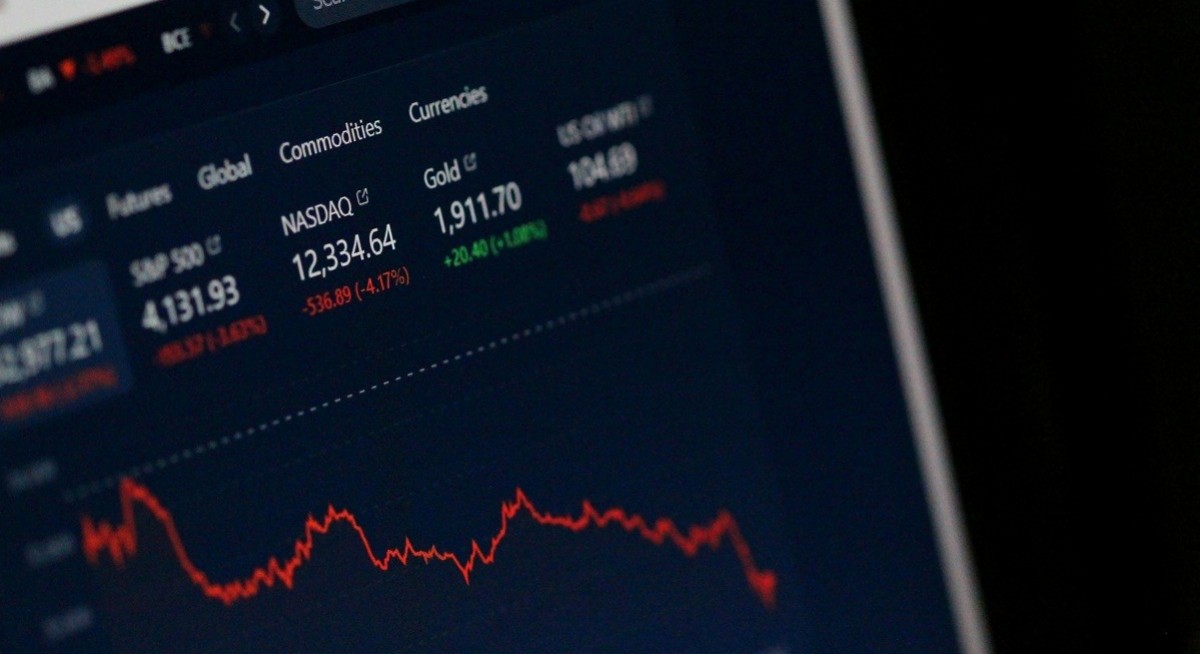


A lower price does not always equate to better value. Sometimes a sell-off reflects short-term nerves, excessive pessimism or a temporary mismatch between price and fundamentals. At other times, it may point to something more serious: weaker earnings expectations, stretched valuations, changing industry dynamics, higher financing costs or a business model under pressure.
That distinction sits at the heart of disciplined investing. Instead of simply asking, “Is this cheaper than before?”, investors may benefit more by asking, “Does this lower price improve the risk-reward of my portfolio?”
Not every pullback is created equal
A broad market decline is very different from a fall in an individual stock. When a diversified global index falls, long-term investors may benefit from greater protection because their risk is spread across many companies, sectors, and regions. However, when an individual stock, sector fund or thematic exchange traded fund (ETF) falls, investors are effectively making a more concentrated bet on one company, industry or investment theme.
This requires a deeper level of analysis. Investors should consider whether the decline is driven by short-term sentiment or by a real deterioration in fundamentals, such as weaker earnings, higher debt costs, loss of pricing power or disruption to the business model.
See also: Banks offload risk on US$500 bil of corporate loans in Europe — and regulators are watching
For example, if the MSCI World Index falls 10% during a broad market sell-off, a long-term investor knows that this is a diversified investment which should have a good chance of recovery and long-term growth.
Compare that to Nasdaq-listed Peloton, often cited as a value trap. After peaking at about US$167.42 on Jan 13, 2021, the stock continued falling through 2021 and 2022 as demand weakened and profitability deteriorated. The lower price did not automatically represent good value. Instead, it reflected a genuine deterioration in the company’s prospects.
What makes today’s environment feel different
Today’s environment feels different because of the speed. During the Global Financial Crisis in 2008, markets took many months to hit bottom. By comparison, during the Covid-19 crisis, markets fell sharply within weeks but also recovered within months, whereas the post-2008 recovery took years. For many investors who remained on the sidelines, the fear of missing out (Fomo) became very real.
See also: Asian firms rush to sell bonds in busiest day in three months
Investors need to remember that time in the market generally outperforms timing the market because staying invested captures long-term growth and compounds returns, whereas trying to predict market highs and lows often results in missed opportunities and lower gains.
Having said that, investors can still time the market, but they should do so with a plan. For the average investor balancing investing with a full-time career, both time in the market and timing the market may play a role. Still, the balance should be calibrated to individual circumstances and financial objectives.
Start with the investor, not the market
One of the most common mistakes investors make is starting with the price chart. A stock has fallen. A fund is down. A headline says markets are weak. The investor then asks, “Should I buy?”
A better process begins somewhere else: with the investor’s own circumstances.
Before treating lower prices as opportunities, investors should assess three things: their goals, career stability and existing assets.
First, what is the money intended for? Capital needed for a home upgrade or purchase should be treated differently from capital for long-term retirement. A market dip may be attractive, but it becomes far less appealing if the funds are needed in the near term and cannot withstand short-term volatility.
Second, how secure is the investor’s income? In an environment where industries and job markets are changing quickly, career risk matters. If income is uncertain, a larger cash buffer may be needed before taking on additional investment risk. Portfolio risk should not be viewed in isolation from career risk.
For more stories about where money flows, click here for Capital Section
Third, what does the investor already own? Someone already heavily exposed to US technology stocks may increase concentration risk by buying more technology during a pullback.
Another investor sitting mostly in cash and fixed deposits may have the opposite problem: being under-invested for long-term goals.
This is why the same market opportunity can be suitable for one investor and unsuitable for another. Investing is personal before it is tactical.
Where investors may be at risk of reacting too quickly
Retail investors are most vulnerable when speed replaces process.
One key area of risk involves complex or leveraged investment instruments. Products such as contracts for difference, leveraged ETFs and short-dated options can magnify both gains and losses. They may appear attractive in volatile markets because they offer rapid exposure, but they require discipline, risk limits and a clear understanding of how quickly losses can compound. For example, in 2020, a Robinhood customer saw a negative US$700,000 balance and tragically took his own life after misunderstanding his trading exposure.
Another risk is Fomo. Investors may feel compelled to chase a stock simply because others are discussing it, because it performed strongly in the past, or because they fear being left behind. In many cases, Fomo can disguise itself as conviction.
For example, on Nov 3, 2025, Palantir Technologies reached an intraday high of US$222.05, driven by massive enthusiasm for its AI Platform (AIP) and government contract wins. By January, however, the stock had retraced to approximately US$170. For a retail investor who bought at this level, the price looked like a 23% discount on a market leader. Yet by late April, the stock was trading around US$141.33 ($180.93). Despite reporting a strong 1Q2026 revenue growth of 85%, the share price fell further to around US$137.06 as of May 7.
In situations like these, investors may believe they are acting decisively when, in reality, they are reacting emotionally. Averaging down simply because the price is lower can compound a mistake. Investors should therefore ask themselves a simple but important question: “If I did not already own this investment, would I still buy it today?”
Averaging into positions requires specific rules
Averaging into positions can be a powerful way to manage uncertainty. Rather than trying to identify the exact bottom, investors deploy capital gradually in accordance with a predefined plan. This reduces the emotional pressure of making one large decision at the wrong time. However, averaging only works when the rules are clearly defined.
Investors should decide in advance how much capital they are willing to commit, at what levels they may add, and what would cause them to stop. Without rules, averaging in can become an excuse to keep buying something simply because it continues falling.
The role of advisers in encouraging more disciplined decision-making
In volatile markets, the value of advice is often less about predicting the next market move and more about improving decision-making.
A good adviser helps investors return to their plan: What are the goals? What is the time horizon? How much liquidity is needed? How stable is the investor’s income? How concentrated is the portfolio? What risks are already present?
Advisers can also serve as behavioural guardrails. When headlines become alarming or markets are moving too quickly, investors may feel pressure to act impulsively. A structured conversation can slow the decision-making process down and bring it back to fundamentals.
For couples and families, this can be especially important. Investment decisions often affect shared goals, shared assets and shared responsibilities. Bringing a spouse or partner into the discussion can reduce misunderstandings and help align decisions with the household’s broader financial plan.
Discipline and logic
Buying the dip can be a sensible long-term strategy, but not every decline represents an opportunity. Lower prices alone should never be the sole reason for investing.
Successful investing is less about perfectly timing market bottoms and more about maintaining discipline, managing emotions, and ensuring every investment decision aligns with long-term financial goals and overall portfolio risk.
Brian See Toh is a financial services manager with Phillip Securities




