


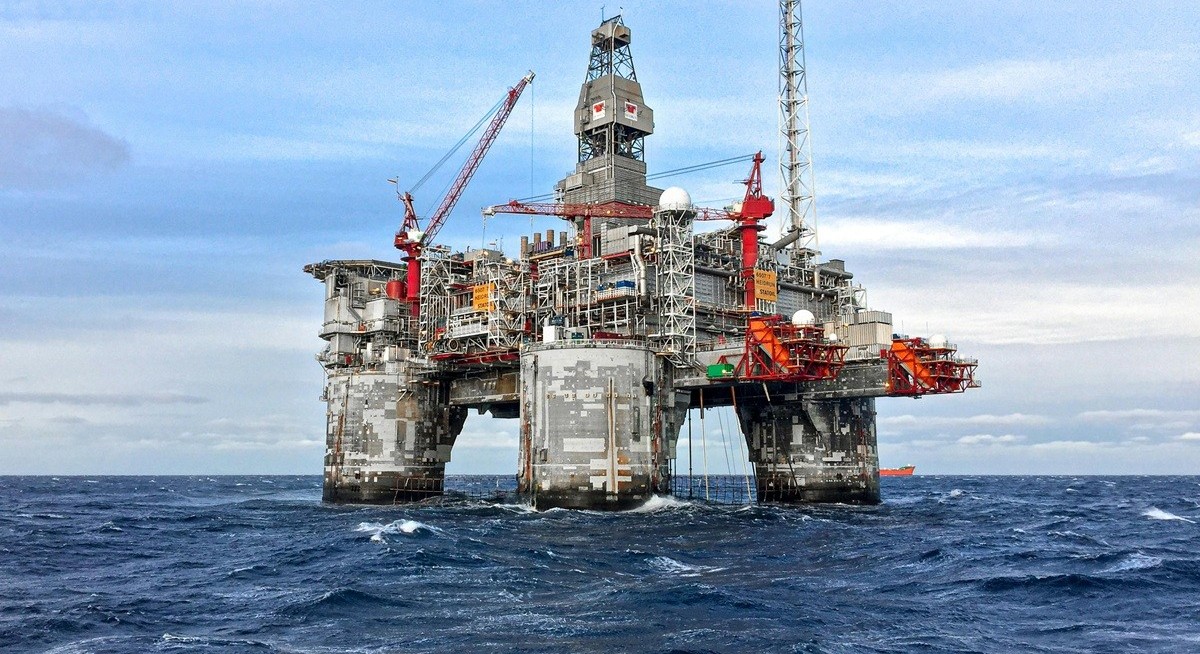


Loh and Mo consider Seatrium’s contract win for bp’s FPU Tiber in November as well as other significant projects — Eni’s Coral Norte FLNG and ExxonMobil’s Hammerhead which reached FID, or final investment decision, — as “promising signs” for both rigs and offshore vessel demand over the next one to two years.
The pair point out that rig utilisation and leasing rates are “holding up well”, with day rates (for the four types of rigs they monitor) increasing from 5% to 34%. Of particular significance was the deepwater submersible rate which has exceeded US$300,000 per day, a level that has “not been sustained since 2017”. Except for 400-foot jack-ups, utilisation rates have also “firmed up” across the board y-o-y.
With regards to oil demand, the analysts reported that the US Energy Information Administration (EIA) raised its OECD and non-OECD oil demand forecasts for 2025 and 2026. They wrote that this indicates a pattern of surprising “upside” oil demand and note that the EIA is projecting “reasonably robust” growth demand of around 1.1 million bpd for both years.
The duo also analysed offshore wind, noting that there is still optimism on achieving long-term offshore wind targets despite US policy reversals. They highlight the EU’s 300GW target which has helped fortify day rates of wind vessels. They did point out near-term pressures including project level challenges such as high capital requirements and policy risk.
See also: CGSI, citing subdued job market, maintains 'hold' call on HRnetGroup
Company outlook
For Seatrium, Loh and Mo expected the FPU Tiber contract win on the back of FPU Kaskida. They note that since bp has stated its intention to concentrate production efforts in the Paleogene area where the two FSUs are based, there is potential for at least one more project to commence in the 2031 to 2035 period. Hovering between $2.1 to $2.15, Seatrium’s share price represents more than a 25% discount to the pair’s TP of $2.96.
The other top pick, Marco Polo Marine, is the analyst’s “favoured way” to play offshore wind. The company’s strong growth momentum, earnings visibility and $198 million offshore research vessel contract win have prompted the duo to lift their TP for the company by 36% to 18.8 cents, representing a 2026 forecasted P/E of 20.5 times with an upside of around 20% of the current price. With burgeoning demand for offshore wind in Asia, Marco Polo Marine’s proposed listing of its offshore wind Taiwanese subsidiary, PKR Offshore, is a potential catalyst for the counter.
See also: RHB calls recent drop in Raffles Medical shares an 'attractive' entry point
In the report, Loh and Mo also reiterated their “buy” call for ASL Marine with a TP of 33 cents, representing around 20% room for growth for the counter which is at 26 cents. They highlighted the counter’s stronger-than-expected 1QFY2026 results with net profit increasing 15 times to $8.3 million along with expansion of both ebitda and net profit margins. Both stressed that ASL’s recovery was supported by fundamentals and earnings visibility. These include higher day rates for ship chartering, $82 million of new chartering contracts, $83 million orderbook for newbuilds and $55 million of vessel-sale contracts.
In addition to exploring the offshore sector, the report also observed that the global container shipping fleet exceeded the 7,000-vessel mark for the first time. This was attributed to a 24% increase in vessel numbers and a 41% increase in capacity over the past ten years. Loh and Mo added that they foresee newbuilds in this segment as the fleet ages with 46% more than 15 years-old.
While the report did not explicitly analyse Yangzijiang Shipbuilding, the observation on container vessels is a potential catalyst for the counter, which has a TP $4.10, around 70 cents more than the current share price hovering around the $3.40 range.




