


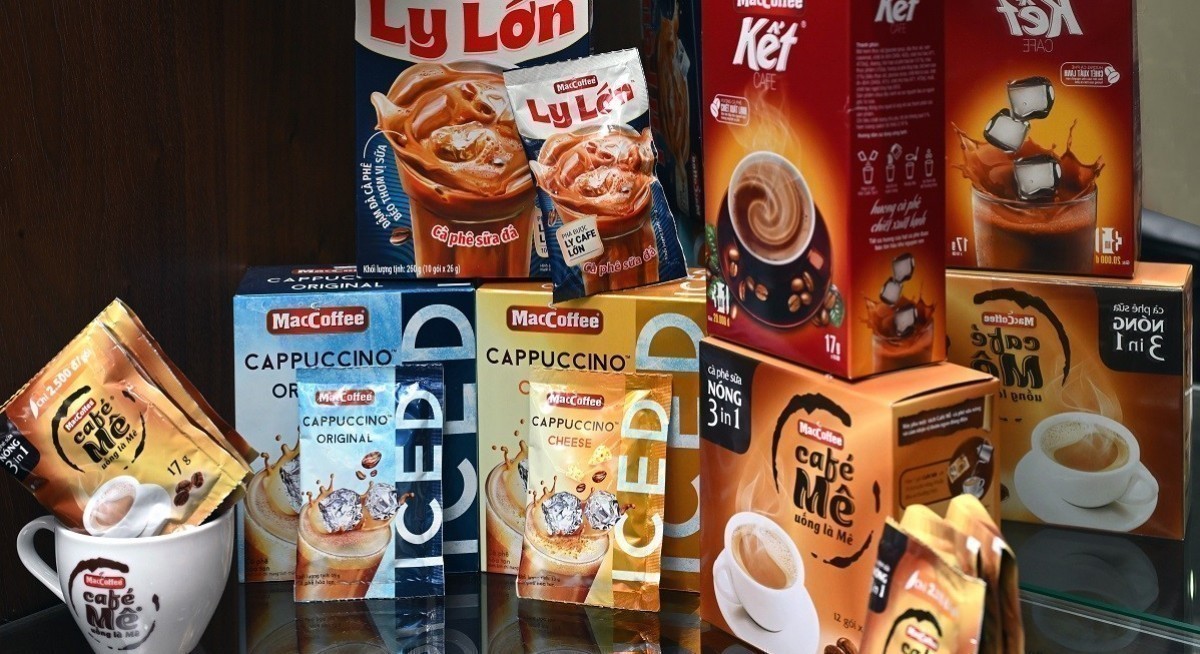


“We estimate total addressable market in Food Empire's three core markets (Vietnam, India, Russia) was US$8.4 billion [or $10.8 billion] (and up to US$37.4 billion across all of Emerging Asia, Eastern Europe and Russia),” they add. “The company's products remain affordable (based on product/margin curve) as it is focusing on 3-in-1 instant coffee; premiumisation provides further upside.”
The analysts also like Food Empire’s exposure to Russia and the Commonwealth of Independent States (CIS) despite possible risks from the ongoing Russia-Ukraine conflict, as they see it as a source of excess return for shareholders. With this, the analysts estimate that Food Empire is generating a higher EBIT and return on equity (ROE) of 3.7% and 6.2% compared to its Asia-only peers. That said, they have factored in 2.5% per annum (p.a.) of annual currency depreciation as a buffer for profitability.
Looking ahead, Vantarakis and Tan expect Food Empire’s revenue to reach US$1 billion to US$1.2 billion in the long run. In FY2026 to FY2028, the analysts have estimated the company to bring in US$635 million to US$756 million, based on planned capacity expansion and rising utilisation.
Food Empire is tipped to spend US$117 million in FY2026 to FY2028 to expand capacity in Vietnam and India while its new plant in Kazakhstan should start contributing to revenue in the same period.
See also: Broker's Digest: OUE REIT, HPH Trust, JustCo, CapitaLand Investment, Addvalue, CICT
In FY2027 to FY2028, the analysts expect underlying patmi to increase to US$84 million to US$93 million versus its bottomline of US$46 million to US$67 million in FY2024 to FY2025. They also expect to see earnings per share (EPS) growth of 7% to 8% over FY2026 to FY2028 driven by volume growth.
Vantarakis and Tan’s target price of $3.67 is based on an FY2027 P/E multiple of 18 times. “Food Empire’s superior ROE and ROIC (return on invested capital) versus [its] Asean peers justifies a premium multiple, in our view,” they write.
Shares in Food Empire closed at $3.21 on March 20.




